
What is meant by urban craftsmanship today
Searching for new spaces to express one's creativity is a stimulating challenge for those who wish to grow as an artisan or a manual hobby enthusiast. In Italian cities, the phenomenon of modern urban craftsmanship offers concrete opportunities to discover innovative techniques and enhance local heritage. Workshops and labs become places where tradition and modernity meet, transforming every passion into real skill and a sense of belonging to an active community.
Table of Contents
- Definition of Modern Urban Craftsmanship
- Main Types and Categories in Cities
- Social Role and Impact on the Territory
- Regulatory and Logistical Challenges for Artisans
- Practical Workshops and Creative Opportunities
Key Outcomes
| Point | Details |
|---|---|
| Evolution of Craftsmanship | Modern urban craftsmanship combines tradition and innovation, utilizing manual skills and digital technologies. |
| Social Role | It generates social cohesion and territorial development, contributing to the cultural identity of communities. |
| Learning Opportunities | Craft workshops offer practical experiences for beginners and experts, fostering personal creativity. |
| Regulatory Challenges | Artisans face regulatory and logistical hurdles, requiring collaborative solutions to operate effectively. |
Definition of Modern Urban Craftsmanship
Modern urban craftsmanship represents a significant evolution of classic artisan tradition, set within the dynamic context of the contemporary city. It is not simply about creating objects by hand, but a complex phenomenon that combines tradition and innovation, incorporating both traditional manual skills and digital technologies.
The contemporary definition of urban craftsmanship includes various forms of artistic and technical expression in the urban public space. These range from graffiti and lettering to personalized ceramic and textile creations. Each form reflects contemporary culture and actively contributes to the visual and cultural identity of the community.
The Distinctive Elements of Urban Craftsmanship Today
Modern urban craftsmanship is characterized by specific peculiarities that distinguish it from traditional artisanal practices:
- Creative spontaneity: arises from personal impulses and the search for self-expression in urban spaces
- High aesthetic value: combines refined technique with contemporary artistic sensibility
- Social meaning: communicates messages of territorial identity, constructive protest, and cultural inclusion
- Accessibility: opens doors to anyone who wishes to learn and practice, regardless of prior experience
Urban craftsmanship intertwines personal creativity, technical knowledge, and aesthetic values in a phenomenon that transforms public space into a living gallery.
This form of expression does not represent a mere material production. It actively participates in the construction of economic and cultural identity in urban areas, creating communities of practitioners, teachers, and enthusiasts who meet in workshops and public spaces.
How it Differs from Tradition
While traditional craftsmanship focused on production for trade or subsistence, modern urban craftsmanship prioritizes self-expression and community. It originates from an initially marginal and anonymous practice, which has evolved to include elaborate and recognized styles.
Contemporary urban artisans integrate ancestral manual skills with modern digital tools. A ceramist might use ancient modeling techniques alongside digital designs; a textile artist might combine traditional embroidery with computer-generated patterns.
Today's practice is more conscious and structured compared to its marginal origins. Urban artisans operate within organized communities, participate in workshops, manage collective workspaces, and openly share their techniques and stories.
Here's an overview of the main differences between modern urban craftsmanship and traditional craftsmanship:
| Aspect | Modern Urban Craftsmanship | Traditional Craftsmanship |
|---|---|---|
| Primary Objective | Personal expression and community | Production for subsistence |
| Technologies Used | Digital and manual tools | Historical manual techniques |
| Work Environment | Shared workshops, public spaces | Family workshops, private settings |
| Social Visibility | Strong impact on local communities | Enhancement of territorial identity |
Why it Matters in Cities like Milan, Florence, and Venice
In Italian cities, urban craftsmanship represents a bridge between the rich national artisanal heritage and contemporary creative needs. These urban centers have deep artisanal traditions, and modern craftsmanship regenerates them for new generations.
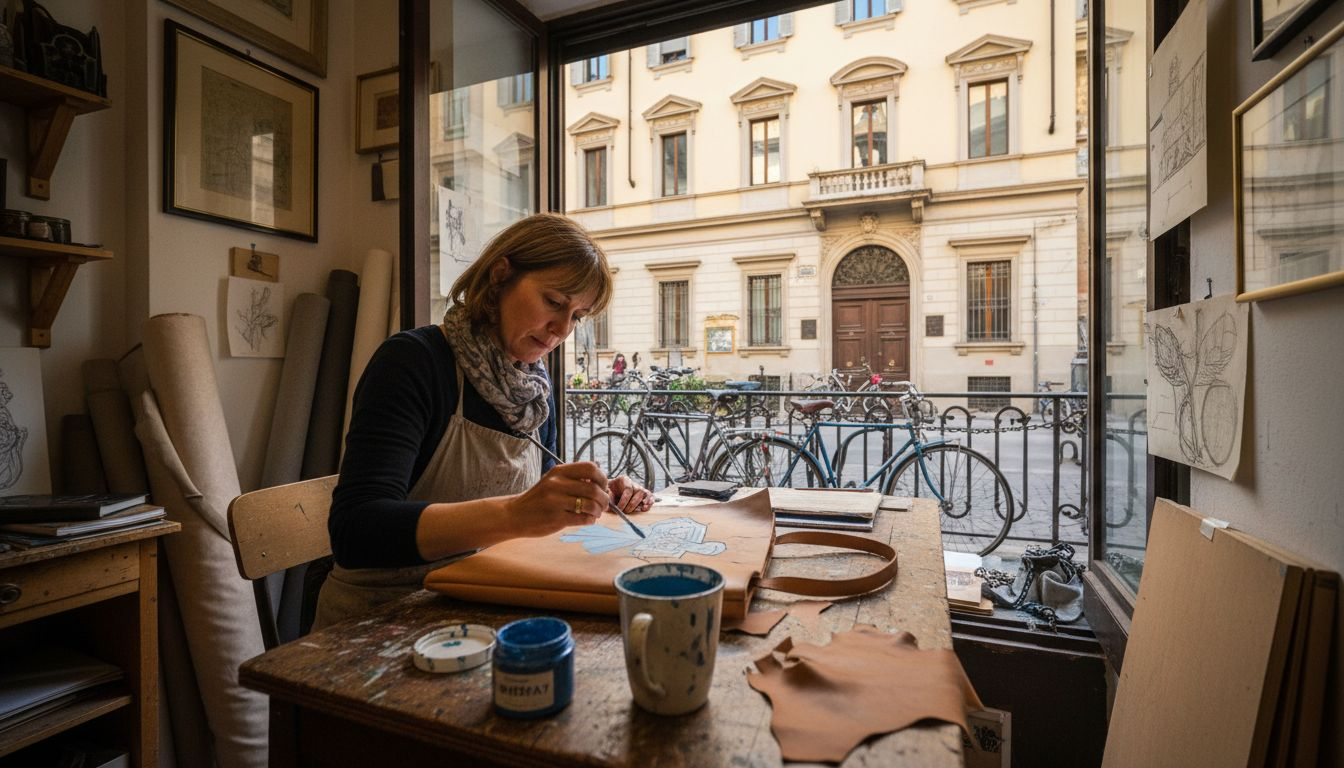
The growing interest in practical workshops and labs testifies to a genuine hunger for authentic connection with the manual creative process. People of all ages seek to develop concrete skills, detach themselves from the digital, and participate in communities that value tangible creativity.
Professional tip: Start exploring urban craftsmanship by choosing a technique that truly attracts you: ceramics, textiles, mural painting, or lettering. Participate in an introductory workshop in a city near you to discover how experienced practitioners transform curiosity into real skill.
Main Types and Categories in Cities
Modern urban craftsmanship is divided into various categories, each with its own technical and aesthetic characteristics. These practices coexist in Italian cities, creating a rich landscape of creative opportunities for those who want to learn and develop new skills.
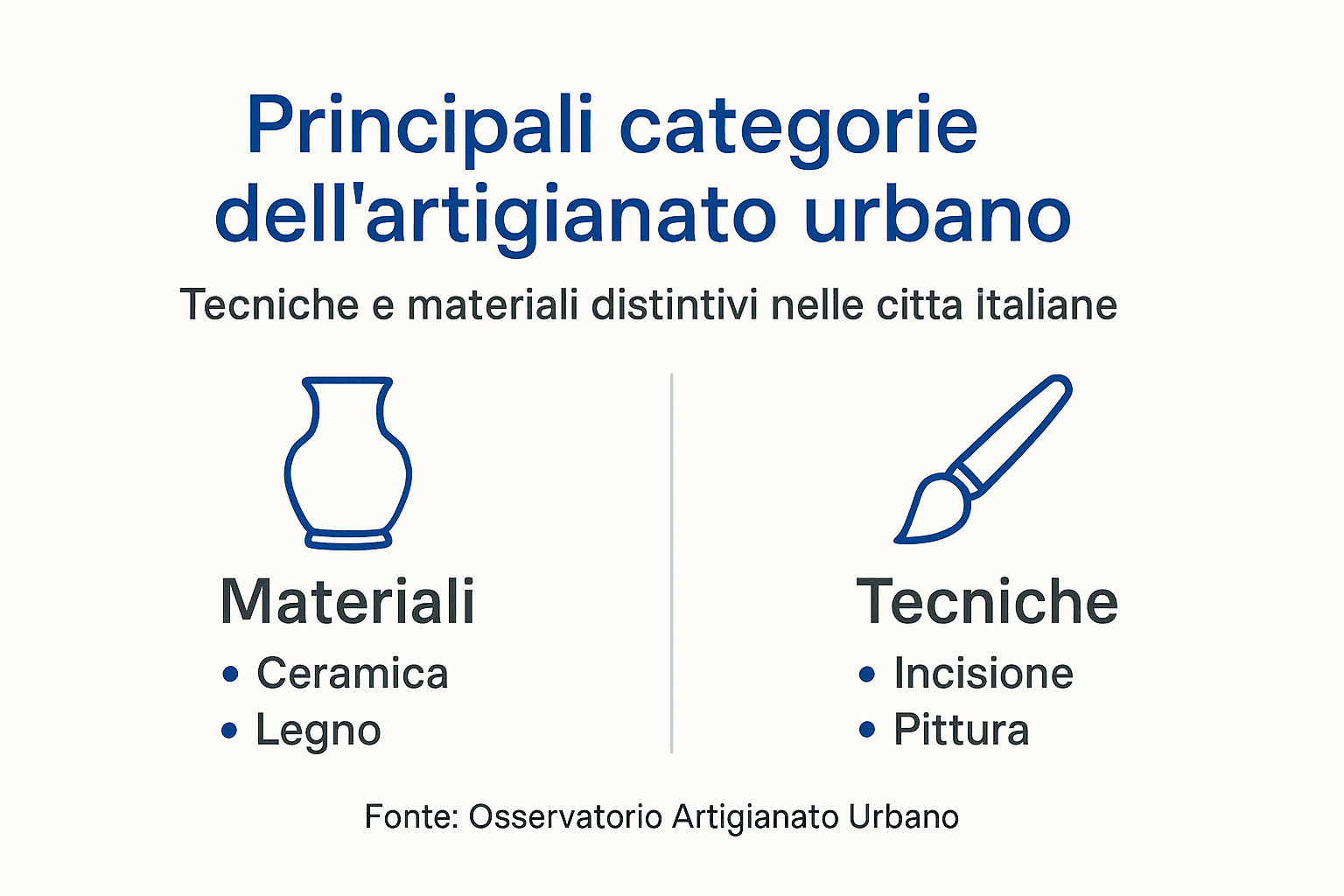
Categories range from traditional forms of urban intervention to contemporary artisanal practices. Graffiti, tags, bombing, and lettering represent the most visible forms in public spaces, while ceramics, textiles, and artistic craftsmanship constitute laboratory practices increasingly accessible to beginners.
Forms of Intervention in Public Space
The categories of street art and urban design include specific techniques with different levels of complexity:
- Lettering: personalized calligraphy and typography, a basis for many urban styles
- Tag: quick and simple interventions, the artist's stylized signature
- Bombing: more elaborate and detailed compositions on walls
- Graffiti: complex murals with figures, texts, and intricate scenarios
Each requires different technical skills and communicates different aesthetic messages. Lettering is ideal for beginners, while bombing and graffiti require prolonged practice and the development of a personal style.
Urban craftsmanship combines rapid street art practices with traditional laboratory arts, creating a complete spectrum of creative opportunities for all skill levels.
Traditional and Artistic Craftsmanship in Cities
More classical artisanal practices maintain strong roots in local cultures and respond to specific social needs. Ceramics, textiles, and woodworking represent forms of craftsmanship rooted in territorial tradition but constantly reinvented.
This category includes:
- Ceramics and clay: modeling, throwing, decorating, and firing
- Textiles and embroidery: weaving, natural dyeing, artistic embroidery
- Artistic craftsmanship: hybrid creations combining traditional techniques and contemporary vision
In cities like Milan, Florence, and Venice, these sectors have evolved, maintaining historical authenticity while embracing innovation. Workshops offer direct access to master artisans who pass on generational skills.
Popular and Contemporary Craftsmanship
Popular craftsmanship reflects the values and needs of the contemporary community. It represents forms of creation that combine utility and beauty, responding to desires for personalization and uniqueness.
These practices respond to various motivations: the search for creative awareness, the desire for authentic manual connection, the construction of territorial identity. Contemporary artisans often act as a bridge between tradition and modernity, using contemporary materials with ancestral techniques.
Professional tip: Discover which category resonates with you by participating in free or low-cost introductory workshops in cities: street art attracts those who love speed and visibility, while ceramics and textiles are perfect for those seeking creative meditation and a slow process.
Social Role and Impact on the Territory
Urban craftsmanship represents much more than a simple creative practice. It generates social cohesion and authentic territorial development, transforming communities and cities through inclusive economics and shared cultural identity.
This sector plays a crucial role as an economic and cultural infrastructure that nurtures the quality of local production. Craftsmanship maintains a connection with the territory through small businesses that promote sustainable innovation and a more human economy.
Cultural Regeneration and Collective Memory
Urban craftsmanship regeneratively reworks the historical memory of communities. It contributes to the continuous definition of the city's cultural identity, maintaining deep roots with the past while embracing contemporary innovation.
This practice responds creatively and sustainably to economic and social crises. Through workshops and meeting spaces, urban craftsmanship:
- Preserves ancestral artisanal knowledge from local communities
- Creates intergenerational connections between masters and apprentices
- Enhances raw materials and local design
- Builds territorial pride and a sense of belonging
Urban craftsmanship is a creative and sustainable response that regeneratively transforms historical memory into contemporary value, reconnecting people to the territory.
Economic and Employment Impact
Small artisan businesses generate direct and indirect employment in Italian cities. Milan, Florence, and Venice maintain thriving artisan ecosystems that attract talent, conscious tourists, and cultural investments.
The urban artisan economy creates:
- Skilled employment for artisans, teachers, and cultural curators
- Added value through the uniqueness and quality of productions
- Tourist attraction based on authentic experiences
- Economic models alternative to large industrial production
Artisans often operate as conscious micro-entrepreneurs, managing workshops, labs, and collective spaces that generate distributed wealth within the local community.
Social Cohesion and Inclusion
Urban craftsmanship workshops create spaces for meeting and sharing where different segments of the population converge. Young people seek identity and skills, professionals seek a creative break, and elderly individuals transmit knowledge.
These spaces respond to authentic social needs:
- Manual connection in digitized contexts
- Democratic access to creative practices
- Building communities and local networks
- Developing self-esteem through personal creation
Urban craftsmanship overcomes social and generational divides, creating contexts where anyone can develop skills, express creativity, and feel part of a conscious community.
Professional tip: Participate in workshops that operate radically in your territory: you will discover how local craftsmanship responds to specific community needs and contributes to regenerating historical memory through daily creative practice.
Regulatory and Logistical Challenges for Artisans
Urban artisans face complex obstacles related to fragmented regulations and logistical management in cities. These challenges require awareness and concrete strategies to operate legally, sustainably, and efficiently in the contemporary urban context.
The reality is that regulations for artisanal activities dependent on logistical platforms are often incomplete or absent at the national and regional levels. This creates difficulties in regulating the settlements necessary to support businesses.
Regulatory and Administrative Obstacles
Regulatory fragmentation represents the main challenge for artisans operating in public or collective urban spaces. Different requirements between municipalities, regions, and cities complicate operational planning.
Specific obstacles include:
- Multiple authorizations: permits for settlement, productive activity, use of public space
- Environmental regulations: waste management, emissions, energy consumption
- Safety and hygiene: specific standards for workshops and workspaces
- Civil liability: insurance and guarantees for activities involving the public
Each city and region applies different interpretations of national regulations, making compliance complex for artisans operating in multiple territories.
Regulatory fragmentation requires creative and concerted solutions among local authorities, artisans, and stakeholders to foster the sustainable development of urban craftsmanship.
Logistical and Supply Challenges
Managing goods, materials, and finished products in dense urban contexts presents unique complexities. Efficient urban logistics requires a balance between economic growth and environmental impact reduction, ensuring accessibility for artisan operators.
Practical problems include:
- Limited storage spaces in densely populated cities
- High transport costs for small volumes
- Inadequate infrastructure for small operators
- Conflicts between artisanal mobility and urban traffic
Many artisans solve these problems through coordinated sourcing, partnerships with other operators, or the use of shared logistical platforms.
Collaborative Solutions and Practical Strategies
Artisans successfully tackle these challenges by creating shared solutions. Collective workshop spaces, artisan hubs, and cooperatives allow them to:
- Share administrative and management costs
- Simplify regulatory compliance through centralized management
- Optimize logistics by aggregating orders and shipments
- Build relationships with local administrations
Regulatory awareness and agile adaptation to local legislation represent essential skills for contemporary artisans operating in urban contexts.
Professional tip: Before starting a workshop, contact your municipality to understand specific local regulations, considering trade associations and artisan networks that are already navigating the regulatory context of your city.
Practical Workshops and Creative Opportunities
Urban craftsmanship workshops are where theory becomes concrete experience. These environments transform curiosity into skill, creating practical learning, meeting, and creative experimentation opportunities for people of all ages.
Authentic workshops offer direct access to master artisans who teach traditional techniques through hands-on practice. Urban regeneration experiences create self-sufficient green spaces with opportunities for meeting and experimentation for citizens, workers, and manual creativity enthusiasts.
Types of Workshops Available
Urban craft workshops vary in format, duration, and technical specialization. Each type meets different learning and personal development needs.
The main categories include:
- Introductory workshops: short sessions (2-4 hours) to discover a new technique
- Ongoing courses: weekly programs over 4-8 weeks to develop solid skills
- Intensive workshops: 1-2 day immersions for rapid in-depth learning
- Open practice spaces: access to equipped facilities for guided autonomous practice
Each format creates different contexts: workshops introduce without long-term commitment, courses allow for progressive development, and open spaces encourage autonomous creation and personal experimentation.
Below are some types of urban craft workshops, with their respective advantages:
| Workshop Type | Duration | Main Advantage |
|---|---|---|
| Introductory Workshop | 2-4 hours | Easy and quick approach |
| Ongoing Course | 4-8 weeks | Develop solid skills |
| Intensive Workshop | 1-2 days | Rapid technical immersion |
| Open Practice | flexible | Autonomy and personal creativity |
Urban craft workshops transform abandoned sites and common spaces into environments where citizens develop creative skills and build conscious communities.
Creative Opportunities for Different Skill Levels
Urban craftsmanship welcomes absolute beginners, experienced hobbyists, and professionals seeking innovation. No artistic background is necessary to start.
For absolute beginners:
- Discover which technique truly resonates with you
- Learn fundamentals without performance pressure
- Build manual confidence in a supportive environment
- Meet a community of other beginners
For people with experience:
- Explore new techniques and styles
- Deepen specific specializations
- Develop conscious personal practice
- Transform hobbies into potential professional-level projects
Spaces and Facilities in Italian Cities
Milan, Florence, Venice, and other cities maintain rich ecosystems of accessible workshops. Craft hubs, fab labs, makerspaces, and traditional workshops offer access to professional equipment and qualified instruction.
Modern spaces combine:
- Shared professional-quality equipment
- Master artisans who teach and guide practice
- A community of practitioners with diverse levels of experience
- Opportunities to display and sell personal creations
Many workshops offer flexible access: evening classes for those who work, dedicated weekends, personalized programs. This allows anyone to find a format and time suitable for their life.
Pro tip: Start with a trial lesson at a workshop near you rather than choosing based solely on an online description: the atmosphere, the space, and the contact with the teacher are decisive in discovering if a practice truly appeals to you.
Discover the True Value of Urban Craftsmanship with Club Joy
If this article has shown you how urban craftsmanship unites tradition, innovation, and cultural identity in the cities of Milan, Florence, and Venice, then it's time to move from idea to concrete experience. The regulatory and logistical challenges, along with the richness of craft techniques, require a space where you can experiment and learn guided by master artisans and passionate professionals.

On https://clubjoy.it you'll find a platform dedicated to those who, like you, want to immerse themselves in practical workshops and modern urban craft workshops. From lettering to ceramics and textiles to mural painting, you can choose authentic creative experiences in Italy's most iconic cities. Act now to transform curiosity into real skill through courses designed for every level and interest. Visit Club Joy and start living your passion with tools and spaces that foster community.
Frequently Asked Questions
What is modern urban craftsmanship?
Modern urban craftsmanship is an evolution of traditional craftsmanship that combines tradition and innovation, incorporating manual skills and digital technologies.
What are the distinctive characteristics of urban craftsmanship?
Distinctive characteristics include creative spontaneity, high aesthetic value, social significance, and accessibility for anyone who wishes to learn and practice.
How does urban craftsmanship differ from traditional craftsmanship?
Unlike traditional craftsmanship, urban craftsmanship focuses on self-expression and community, integrating modern and traditional techniques and operating in collective workspaces.
What are the main types of public space intervention related to urban craftsmanship?
The main types of intervention include lettering, tagging, bombing, and graffiti, which vary in complexity and require different technical skills.
Recommendation
- Shape clay with a local artist – Club Joy
- Stencil art: how to customize fabrics and walls – Club Joy
- Paint Venice en plein air with watercolor alongside a local artist – Club Joy
- The best crafting tools: what you can't do without – Club Joy
- Urban Photography Tips Italy: Capture Stunning City Scenes
- Loft 1 - Mino Di Vita