
How to organize an effective creative workshop in 2026
Organizing a creative workshop might seem complex, but with the right guidance, it becomes a stimulating experience for both individuals and companies. Many face the challenge of designing engaging activities that produce concrete results, without knowing where to start. This article offers a practical and detailed roadmap for building effective creative workshops, from defining objectives to professional facilitation, with concrete examples for every type of audience. You will discover how to avoid common mistakes and create memorable experiences that leave a lasting impact.
Table of Contents
- Key points for organizing a creative workshop
- Defining clear objectives and identifying the target audience
- Structuring the creative workshop flow with multisensory activities
- Customizing formats and activities for individuals and companies: ideas and practical examples
- The role of the facilitator and how to avoid common mistakes in leading
- Discover Club Joy's guided creative experiences
- How to organize a creative workshop: frequently asked questions
Key Points
| Point | Details |
|---|---|
| Defining objectives and audience | Defining clear objectives and identifying the target audience is the foundation for designing targeted and measurable activities. |
| Multisensory flow | Design a journey that alternates introduction, practical exploration, and reflective closure to guide participants. |
| Role of the facilitator | The facilitator guides the experience, facilitates interactions, and maintains focus on the predefined objectives. |
| Adapting private company formats | Activities and timing should be adjusted based on the audience, considering power dynamics and organizational objectives. |
Key points for organizing a creative workshop
Before delving into operational details, it is useful to have an overview of the fundamental elements that ensure the success of a creative workshop. This table summarizes the essential concepts we will explore in the following sections.
| Key Element | Description | Main Benefit |
|---|---|---|
| Clear objectives | Define measurable and results-oriented goals | Ensures focus and effective evaluation |
| Target audience | Identify participants and their specific needs | Allows content customization |
| Structured flow | Organize activities with a logical rhythm | Maintains engagement and attention |
| Expert facilitator | Manage dynamics and timing neutrally | Creates a safe and productive environment |
| Adapted format | Customize for individuals or companies | Maximizes relevance and impact |
Defining clear objectives and identifying the target audience
The preparatory phase is the foundation of every successful creative workshop. Defining clear objectives and the target audience is the essential first step to designing an experience that yields tangible results. Without this initial clarity, you risk creating generic activities that satisfy no one.
Objectives vary significantly across different contexts. For companies, you might focus on team building to strengthen group cohesion, stimulate innovation through lateral thinking, or develop specific skills like visual communication. For individuals, objectives range from exploring new personal passions to discovering hidden talents, to learning concrete artisanal techniques. Each objective requires a different methodological approach.
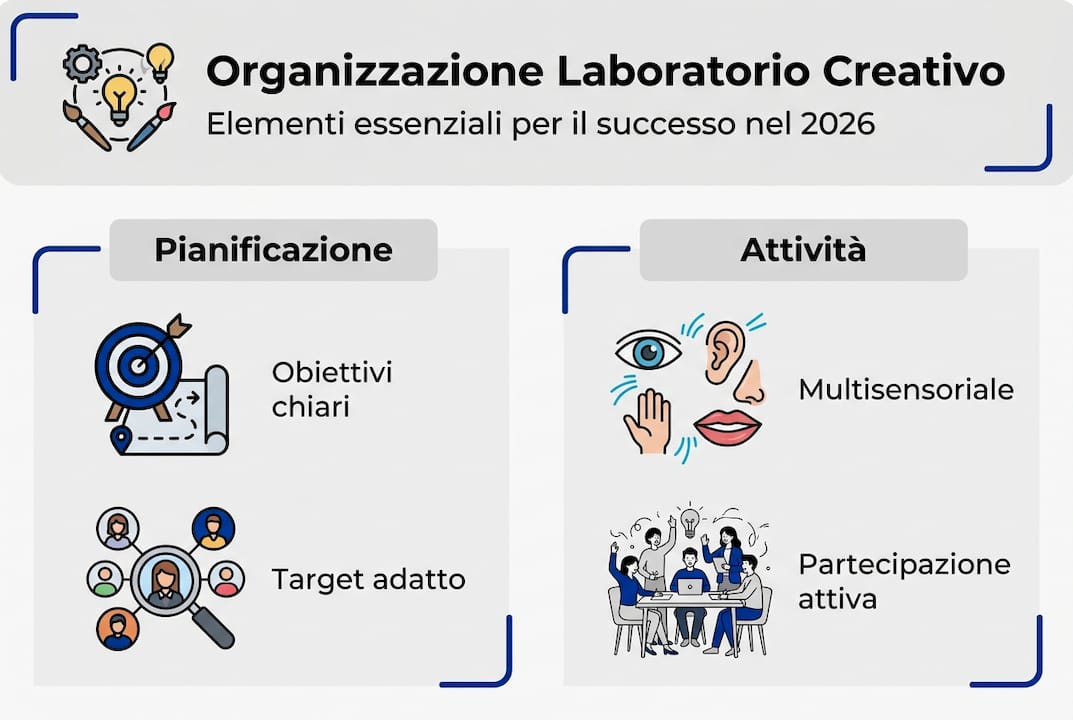
Audience analysis determines every subsequent choice. Private participants include children who need playful and sensory activities, passionate adults seeking technical in-depth knowledge, or beginners who want a first approach without pressure. Creative experiences for companies, however, require different considerations, such as power dynamics among colleagues, existing hierarchical levels, and organizational objectives to integrate.
The choice of format depends directly on these elements. A workshop for children typically lasts 90 minutes with frequent breaks, while a corporate workshop can extend over half a day with structured reflection moments. The location influences the atmosphere: a formal corporate space communicates professionalism, while an artistic studio stimulates spontaneous creativity. Also consider whether you prefer small groups for deep interactions or larger groups for energetic dynamics.
Pro Tip: Create a preparatory sheet that includes three essential questions: what do I want participants to be able to do by the end? What obstacles might they encounter? How will I measure success? This exercise forces you to transform vague intentions into measurable objectives and helps you discover creative hobbies suitable for your specific audience.
Measurable objectives allow you to evaluate the effectiveness of the workshop. Instead of saying "improve creativity," specify "each participant will create three different prototypes using learned techniques." This level of precision guides activity design and provides clear criteria for final feedback. Remember that overly ambitious goals generate frustration, while overly simple goals bore.
Structuring the creative workshop flow with multisensory activities
After defining the audience and objectives, let's move on to the architecture of the experience itself. Structuring the workshop with a logical flow that alternates introduction, multisensory exploratory activities, practical exercises, and reflective closure ensures effective results. Each phase has a precise purpose and prepares for the next.
Here are the fundamental steps to organize the temporal flow:
-
Welcome and icebreaker (15-20 minutes): Create connection among participants with light activities that lower defenses. For corporate groups, use exercises that mix usual roles. For individuals, propose creative presentations that reveal common interests.
-
Sensory explorations (20-30 minutes): Introduce materials through direct experience. Let participants touch, smell, observe the tools before explaining techniques. This multisensory approach activates natural curiosity and prepares the mind for practical learning.
-
Guided practical activities (60-90 minutes): The heart of the workshop where you apply the techniques. Alternate brief demonstrations with moments of autonomous practice. Circulate among participants offering personalized feedback without judgment.
-
Reflection and final sharing (20-30 minutes): Create a space to process the experience. Ask participants to share discoveries, overcome challenges, and personal connections that emerged. This moment consolidates learning and creates a sense of community.
The ideal duration varies by context, but the following table offers guidelines based on experience:
| Workshop Type | Recommended Duration | Breaks | Specific Notes |
|---|---|---|---|
| Children (6-10 years) | 90 minutes | Every 30 minutes | Short, varied activities |
| Adult beginners | 2-3 hours | Every 60 minutes | Balance theory and practice |
| Corporate workshop | 3-4 hours | Every 90 minutes | Includes structured debrief |
| Advanced intensive | Half/full day | Every 90 minutes | Technical in-depth study |
The use of visual canvases and different materials keeps attention high. Instead of verbally explaining a concept, draw it on a shared whiteboard where everyone can add ideas. Integrate tactile materials like clay, fabrics, or natural elements to engage multiple senses simultaneously. Experiential craftsmanship demonstrates how learning by doing produces more lasting results than theory alone.
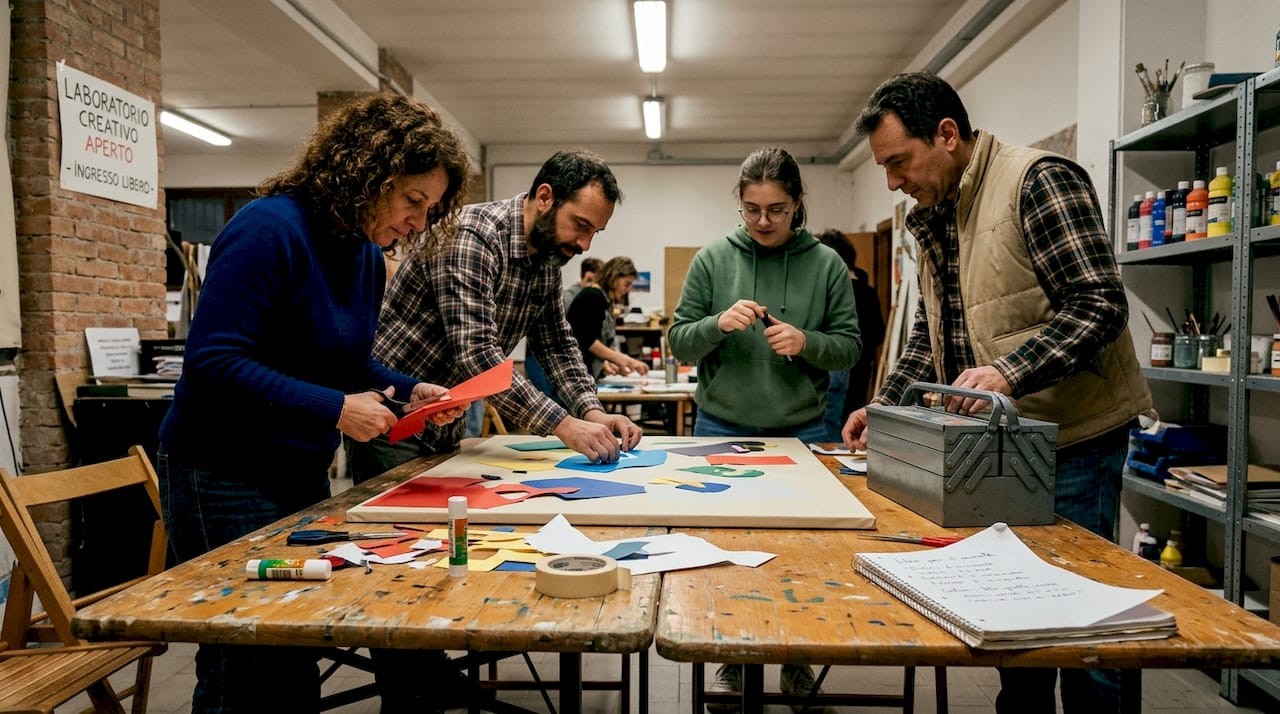
Expressive languages amplify emotional engagement. Incorporate moments where participants use their voice to describe their creations, their body to express sensations related to materials, or musical instruments to create rhythm during manual work. This variety prevents monotony and allows different personalities to shine through preferred expressive channels.
Pro Tip: Always prepare a Plan B for every main activity. If an exercise doesn't work or the group progresses faster than expected, having ready alternatives allows you to adapt without losing the thread. This flexibility distinguishes expert facilitators from beginners.
Multisensory engagement is not an aesthetic whim but a pedagogical strategy. The brain remembers experiences better that involve multiple senses simultaneously. When a participant touches clay, sees the shape emerge, hears the sound of the potter's wheel, and smells the wet earth, they create multiple neural connections that reinforce learning and memory of the experience.
Customizing formats and activities for individuals and companies: ideas and practical examples
Now that we have defined the general flow, let's explore how to adapt content and activities to the specific needs of different audiences. Customization transforms a generic workshop into a relevant and memorable experience.
For companies, the focus on team building and cohesion requires activities that stimulate collaboration and communication. Here are concrete tested examples:
-
Collaborative recycled sculptures: Divide the team into sub-groups that must create an installation using only corporate waste materials. This activity stimulates creative problem-solving and negotiation, revealing natural leadership dynamics.
-
Collective story writing: Each person adds a paragraph to a shared narrative, integrating elements of the corporate culture. The exercise improves active listening and the ability to build on others' ideas.
-
Shared corporate mural: Everyone contributes to a visual work that represents the team's values. The physical result remains in the offices as a tangible reminder of the shared experience.
For individuals, the emphasis shifts to personal exploration and the joy of discovery. Pottery workshops offer a perfect example of activities that combine technique, meditation, and tactile satisfaction. Other effective formats include:
-
Botanical painting workshop: Perfect for adults looking for a relaxing hobby with a naturalistic component. Combines scientific observation and artistic interpretation.
-
Children's music workshops: Building instruments with natural materials followed by improvised jam sessions. Stimulates creativity and motor coordination.
-
DIY puppet theater: Ideal for families, this format allows you to create puppets and invent stories together, strengthening bonds through creative play.
The comparative table below helps choose the right format:
| Activity Type | Main Objective | Ideal Audience | Typical Duration |
|---|---|---|---|
| Pottery on the wheel | Concentration and technique | Adult beginners/advanced | 2-3 hours |
| Collective painting | Collaboration and communication | Corporate teams | 3-4 hours |
| Instrument building | Sensory exploration | Children 6-12 years | 90 minutes |
| Creative writing | Personal expression | Passionate adults | 2 hours |
| Recycled sculpture | Problem solving | Corporate teams | 3 hours |
Customization goes beyond activity selection. Consider the language you use: with companies, maintain a professional tone that connects creativity to business results, while with individuals you can be more informal and playful. Also adapt the level of challenge: corporate professionals appreciate complexity that tests their skills, while private beginners need quick successes that build confidence.
Emotional engagement determines whether a workshop is remembered or forgotten. Create moments of surprise, such as revealing an unexpected material or inviting a guest artisan. Celebrate individual progress publicly but with sensitivity. Allow participants to take home their creations, transforming them into physical reminders of the experience and acquired skills.
The role of the facilitator and how to avoid common mistakes in leading
Even the best-designed workshop fails without competent facilitation. The facilitator is the invisible architect of the experience, the one who manages dynamics and timing neutrally, creating a judgment-free space where creativity can flourish.
The fundamental tasks of the facilitator include:
-
Active neutrality: Do not impose your aesthetic vision or your preferences. Your role is to guide the process, not the product. Ask open-ended questions that stimulate reflection instead of giving direct answers.
-
Mediation of dynamics: Observe group interactions and intervene when someone dominates or withdraws. Redistribute speaking turns, validate different contributions, and create psychological safety for everyone.
-
Time management: Maintain rhythm without being rigid. If an activity generates enthusiasm, allow a few extra minutes. If an exercise doesn't work, cut it short and move on without drama.
-
Meticulous preparation: Arrive well in advance to set up materials, test equipment, and create a welcoming environment. The well-prepared art studio communicates professionalism and respect for participants.
Common mistakes that sabotage even well-planned workshops are predictable and preventable:
-
Lack of clear objectives: Without a precise direction, the workshop becomes a series of disconnected activities that do not produce lasting learning. Participants leave confused about what they were supposed to achieve.
-
Overcrowded agenda: The desire to offer value drives many facilitators to overload the program. The result is stress, rushed activities, and no space for the reflection that consolidates learning.
-
Absence of follow-up: The workshop ends and participants return to routine without tools to continue. Always provide resources, contacts, or suggestions for the next step.
-
Inadequate conflict management: When tensions or frustrations arise, many facilitators ignore them hoping they will resolve themselves. Instead, openly acknowledge the difficulty and turn it into a learning opportunity.
As an expert facilitator observed:
Effective facilitation is invisible. Participants should feel they discovered everything themselves, when in reality every moment was carefully orchestrated to allow that discovery.
Measuring success requires criteria defined before the workshop. In addition to formal feedback through questionnaires, observe non-verbal cues during the activity: the level of spontaneous conversation, relaxed body posture, reluctance to stop when it's time to close. A positive atmosphere can be felt in the energy of the room.
Pro Tip: Record brief observation notes immediately after each workshop. What worked better than expected? What moments created difficulties? These immediate reflections are gold for improving future iterations and developing your sensitivity as a facilitator.
The preparation of the physical space profoundly influences the experience. Organize materials to be accessible but not chaotic. Create different zones for different activities: an area for demonstrations, spaces for individual work, a corner for reflection. Natural light is preferable, but if not available, avoid cold fluorescent lights that inhibit creativity. Also consider temperature and ventilation, often overlooked factors that impact comfort and concentration.
Discover Club Joy's Guided Creative Experiences
Now that you know the principles for organizing effective creative workshops, you might be looking for practical inspiration or professional support to realize your vision. Club Joy offers a curated selection of creative experiences led by expert artisans in various Italian cities, perfect for both exploring new personal hobbies and designing memorable team-building activities.
The platform features workshops in ceramics, painting, cooking, and other arts led by professionals who embody the facilitation principles described in this article. Whether you're looking for an experience for yourself or want to organize a corporate workshop, you'll find tested and optimized formats to maximize engagement and results. Explore the available options on clubjoy.it and transform the knowledge gained into concrete experiences that leave a lasting impact.
How to organize a creative workshop: frequently asked questions
How to choose the ideal location for a creative workshop?
The location should reflect the workshop's objectives and the audience's needs. For corporate workshops, consider neutral spaces outside the office that encourage divergent thinking. For private art workshops, studios with natural light and an informal atmosphere stimulate creativity. Always check accessibility, parking, and availability of basic services such as restrooms and a refreshment area.
What materials are essential to start?
It depends on the specific activity, but some elements are universal: paper and pens for brainstorming, basic materials for the chosen technique in abundant quantities to allow experimentation, cleaning tools, and an emergency kit for minor incidents. Invest in medium-quality materials, neither cheap ones that frustrate nor professional ones that intimidate beginners. Always prepare 20% more than needed to manage unforeseen events.
How to engage less motivated or timid participants?
Create a psychologically safe environment where there are no mistakes, only experiments. Assign pair or small group activities that gently encourage interaction before plenary exposures. Publicly validate diverse contributions, not just the most brilliant or artistic ones. Allow gradual participation: some start by observing and progressively open up when they feel secure. Never force public sharing.
How long should an effective creative workshop last?
The optimal duration balances deep learning and sustained attention. For children, 90 minutes is the maximum before concentration drops. Beginner adults benefit from 2-3 hours, allowing for introduction, practice, and reflection without fatigue. Complex corporate workshops require 3-4 hours or half a day to address articulated objectives. Avoid sessions longer than 4 hours without substantial breaks.
How to evaluate the success of the workshop after its conclusion?
Use quantitative and qualitative methods. Distribute short questionnaires measuring satisfaction, perceived learning, and intention to continue the activity. Analyze the completion rate of activities and the quality of final creations. Observe behavioral metrics such as subsequent information requests, registrations for future workshops, or spontaneous recommendations. The most valuable feedback often comes weeks later, when participants have processed the experience and applied the acquired skills.