
How to choose practical art workshops in 2026
Italy offers hundreds of art workshops, but choosing the right one can be a challenge. Many participants enroll in courses that are not suitable for their skill level, wasting time and money. This guide helps you identify the essential criteria for selecting creative experiences that lead to concrete benefits and personal satisfaction.
Table of Contents
- In Brief: How to Choose an Art Workshop
- Prerequisites and Required Materials for Participation
- How to Evaluate the Level and Duration of the Workshop
- Teaching Methods and the Importance of Personalized Feedback
- Common Mistakes to Avoid When Choosing an Art Workshop
- Expected Outcomes and How to Evaluate the Success of an Art Workshop
- Final Tips for a Conscious and Satisfying Choice
- Discover Practical Art Workshops with ClubJoy
- Frequently Asked Questions on How to Choose an Art Workshop
In Brief: How to Choose an Art Workshop
| Point | Details |
|---|---|
| Assess your level | Identify if you are a beginner, intermediate, or advanced to avoid frustration |
| Check materials and prerequisites | Verify what is included and what you need to bring before booking |
| Consider duration and costs | Balance available time, budget, and teaching methods |
| Avoid common mistakes | Don't underestimate cancellation policies and unsuitable levels |
| Expect concrete results | Look for workshops that produce finished works and usable skills |
Prerequisites and Required Materials for Participation
Before enrolling in any workshop, you need to understand what you actually need. Materials vary enormously between disciplines: a pottery workshop requires clay, modeling tools, and aprons, while a painting course needs brushes, canvases, and specific paints.
Most organizers provide detailed lists of materials. Some workshops include everything in the price; others require you to bring personal tools. Always check the policies before confirming your booking.
Physical and mental preparation matters as much as material preparation. If you participate in an intensive sculpture course, be prepared to stand for hours. If you choose a watercolor workshop, consider that it requires patience and precision.
Typically included materials:
- Basic raw materials (clay, paper, paints)
- Shared work tools
- Protective gear (aprons, gloves)
- Access to kilns, potter's wheels, or specialized equipment
What to usually bring:
- Comfortable clothes that can get dirty
- Notebook for personal notes
- Containers to take home creations
- Water and snacks if the session lasts over three hours
| Workshop type | Included materials | To bring |
|---|---|---|
| Basic Pottery | Clay, tools, kiln | Apron, transport container |
| Watercolor Painting | Paper, basic brushes, palettes | Rags, sketch notebook |
| Wood Carving | Raw wood, chisels | Safety glasses, closed-toe shoes |
| Mosaic | Tiles, adhesives, bases | Gloves, personal tweezers |
Many workshops require pre-registration and advance payment to ensure material availability. This is especially true for craft courses that develop creativity where organizers need to purchase specific supplies.
Read confirmation emails carefully. They contain crucial information about times, exact location, and logistical details that influence your experience.
How to Evaluate the Level and Duration of the Workshop
Choosing a workshop with the wrong level is the main cause of dissatisfaction. 30% of participants report frustration when the course does not match their skills.
Beginner workshops teach fundamental techniques without assuming prior knowledge. Instructors dedicate time to explaining terminology, basic movements, and safety. These courses are ideal if you have never touched clay, brushes, or specific tools.
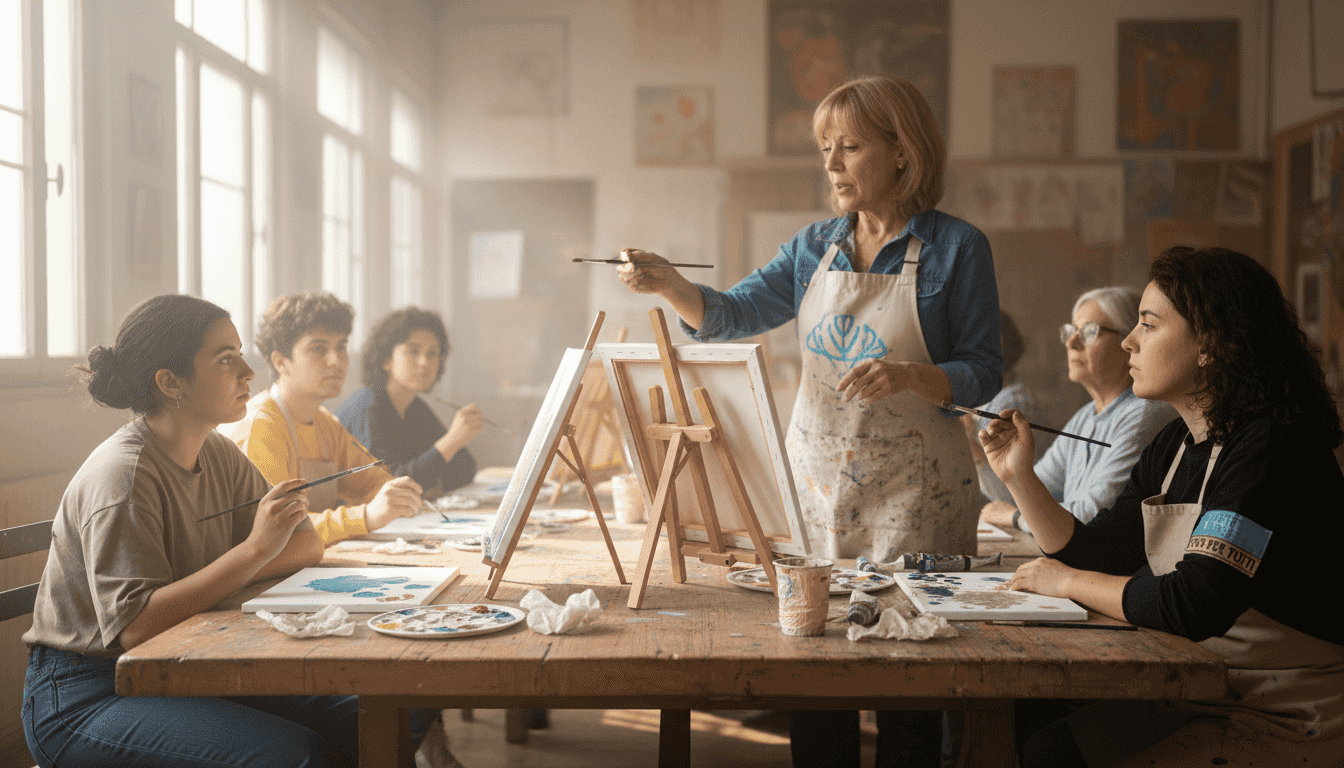
Intermediate courses require familiarity with basic tools and techniques. Teachers expect you to know the difference between a palette knife and a potter's wheel, between watercolor and acrylic. They skip elementary explanations to focus on more complex projects.
Advanced workshops are intensive and technical. They require a portfolio or documented experience. If you enroll without adequate preparation, you risk feeling lost and frustrated.
Indicators of beginner level:
- Description uses terms like "introduction," "discovery," "first approach"
- Short duration (3-4 hours) to avoid overload
- Promise to complete a simple work
- No explicit prerequisites required
Signs of intermediate or advanced course:
- Request for portfolio or previous experience
- Use of technical jargon in the description
- Complex projects requiring multiple sessions
- Higher costs for specialized materials
Duration profoundly influences the experience. Three-hour workshops are perfect for discovering local creative hobbies without excessive commitment. Full-day sessions allow for deeper exploration of techniques and completion of complex projects. Multi-day workshops create total immersion, ideal for those who want to turn an interest into solid competence.
Pro Tip: If you have little time or are undecided, start with short three-hour workshops. You can test the activity without excessive investment and decide whether to delve deeper.
| Duration | Suitable for | Typical projects | Time investment |
|---|---|---|---|
| 3 hours | Beginners, families | Small bowl, painted bookmark | Half day |
| 6-8 hours | Intermediates, enthusiasts | Decorated vase, complete painting | Full day |
| 2-3 days | Serious learners, professionals | Coordinated series, complex technique | Weekend or week |
Beginner pottery workshops often last four hours, enough to create and decorate a piece. Families appreciate workshops like those for creating puppets with children, which combine learning and fun in two-hour sessions.
Consult specialized guides on workshops in Venice for concrete examples of how duration and level influence the final experience.
Teaching Methods and the Importance of Personalized Feedback
A great teacher transforms a workshop from a simple activity into a transformative experience. Teaching quality depends on the student-teacher ratio and the methods used.
Small groups (maximum 8-10 participants) ensure individual attention. The instructor can correct posture, hand movements, and technical choices in real time. In large groups, you risk spending hours watching demonstrations without receiving personalized help.
The best methods balance theory and practice. The teacher briefly explains the technique, demonstrates the steps, then lets you try while observing and correcting. This continuous cycle of doing-observing-correcting accelerates learning.
Personalized feedback is crucial. A good teacher notices when you grip the brush too tightly, when the clay is too wet, or when the composition lacks balance. These immediate corrections prevent you from consolidating errors.
Signs of a good teacher:
- Circulates among participants during practice
- Adapts explanations to individual levels
- Encourages questions without making anyone feel foolish
- Provides concrete examples and live demonstrations
- Shares professional tricks gained through experience
Some workshops use the "learn by doing" method: minimal theory, maximum experimentation. It works for intuitive disciplines like abstract painting. Others require a structured approach, like pottery on the wheel where correct technique is essential.
Pro Tip: When booking, ask how many participants will be present. If there are more than 12 people for a single teacher, consider alternatives with smaller groups.
Creative art studios emphasize a collaborative environment where participants help each other under expert supervision. This dynamic creates multiple learning opportunities: from the teacher, from peers, and from direct observation.
Check if the workshop includes a final collective review. Seeing others' work and receiving group feedback enriches understanding and offers different perspectives on your own work.
Common Mistakes to Avoid When Choosing an Art Workshop
Even motivated people make predictable mistakes that ruin the experience. Recognizing them in advance saves you disappointment and waste.
1. Underestimating necessary materials
Many arrive unprepared because they haven't carefully read the instructions. Arriving without an apron for a painting class or without closed-toe shoes for a sculpture workshop creates avoidable discomfort.
2. Enrolling at an unsuitable level
Overconfidence pushes beginners into advanced courses, while insecurity holds intermediates back in basic classes. At least 30% of participants report dissatisfaction due to level mismatch. Honestly assess your skills.
3. Ignoring cancellation policies
Unforeseen events happen. Workshops with strict policies do not offer refunds if you cancel with less than 48 hours' notice. Read terms and conditions before paying, especially for expensive courses or those far from home.
4. Not considering hidden costs
Some workshops advertise base prices but require extra payments for ceramic firing, premium materials, or personal tools. Ask for the total final cost before committing.
5. Unrealistic expectations
A three-hour workshop won't turn you into a professional ceramist. Expect to learn fundamentals and complete a simple project. Mastery requires repeated practice over time.
"Most disappointments arise from expectations not aligned with the reality of the course. Being well-informed eliminates 90% of problems." - Art workshop organizers
If you want to delve into an art as a long-term hobby, consider structured multi-session courses instead of isolated workshops. Gradual progression builds solid skills.
Always check verified reviews and ask for references if you are investing significant amounts. Reliable platforms filter serious organizers from improvisers.
Expected Outcomes and How to Evaluate the Success of an Art Workshop
A quality art workshop produces measurable results, both tangible and intangible. Knowing how to recognize success helps you make better choices in the future.
The first indicator is the acquisition of practical skills. After the course, you should know how to use at least one basic tool, perform a fundamental technique, and recognize common errors. If you leave as confused as before, the workshop has failed.
The concrete production of finished works is essential. Even absolute beginners should complete at least one piece to take home. This tangible object confirms that you have applied what you learned and provides motivation to continue.
Personal satisfaction counts as much as technical skills. Did you have fun? Did you discover a passion for the activity? Do you want to delve deeper? These feelings indicate that the workshop has achieved emotional and creative goals.
Concrete results from a good workshop:
- Ability to independently repeat at least one basic technique
- At least one completed work to show or use
- Understanding of fundamental terminology and processes
- List of resources for continuing learning
- Connections with other enthusiasts or teachers
The feedback received during and after the course signals progress. An attentive teacher notices even minimal improvements and highlights them. Recognizing your progress, even small, fuels motivation.
| Success Indicator | How to measure it | Positive sign |
|---|---|---|
| Technical skill | Reproduce the technique at home | You independently complete a similar piece |
| Finished product | Quality of the work | You proudly use or display the creation |
| Motivation | Desire to continue | You book another workshop or practice at home |
| Understanding | You explain to others what you did | You describe the process without difficulty |
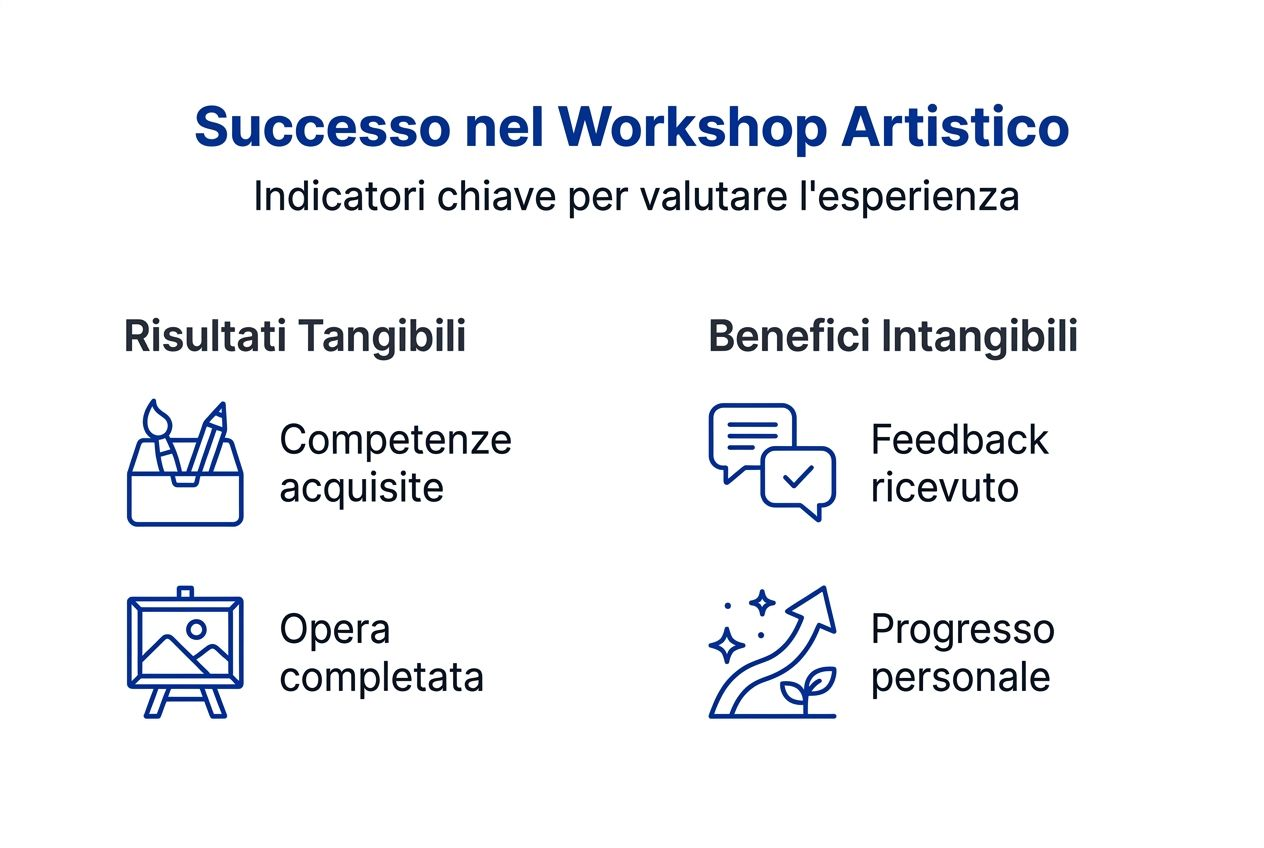
The true measure of success emerges in the weeks that follow. If you continue to practice, seek information on the subject, or consider investing in personal materials, the workshop has triggered lasting transformation.
Workshops linked to historical experiences like painting workshops often include cultural context that enriches the experience beyond pure technique.
Participating in craft communities after the workshop amplifies social benefits and keeps motivation alive through continuous exchange with other enthusiasts.
Final Tips for a Conscious and Satisfying Choice
Careful preparation distinguishes memorable experiences from wasted time and money. Before booking any workshop, dedicate time to thorough research.
Inform yourself by consulting complete descriptions, reading verified reviews, and contacting organizers for clarification. Do not rely solely on attractive photos or vague promises.
Balance budget and expectations realistically. Economical workshops can be excellent for beginners, while larger investments are justified for intensive courses with recognized masters. Avoid spending high amounts if you are unsure of long-term interest.
Final checklist before booking:
- Course level matches your current skills
- Duration compatible with available time and energy
- Included materials clearly listed
- Cancellation and refund policies understood
- Positive reviews from previous participants
- Total cost (including extras) within budget
Rely on specialized platforms that select reliable organizers and verify the quality of experiences. These intermediaries reduce risks and simplify the selection process.
Consider your personal context. If you have children, look for family-friendly workshops with flexible hours. If you travel for work, choose cities with a wide offering to make the most of your free time.
A conscious choice transforms a simple course into a catalyst for personal growth. Investing time in initial selection multiplies final benefits and satisfaction.
Discover Practical Art Workshops with ClubJoy
After understanding how to choose the ideal workshop, the next step is to find concrete options that meet quality criteria.
ClubJoy offers a curated selection of practical art workshops throughout Italy, from Milan to Venice, from Florence to Rome. Each experience is verified to ensure qualified teachers, adequate materials, and a stimulating environment.
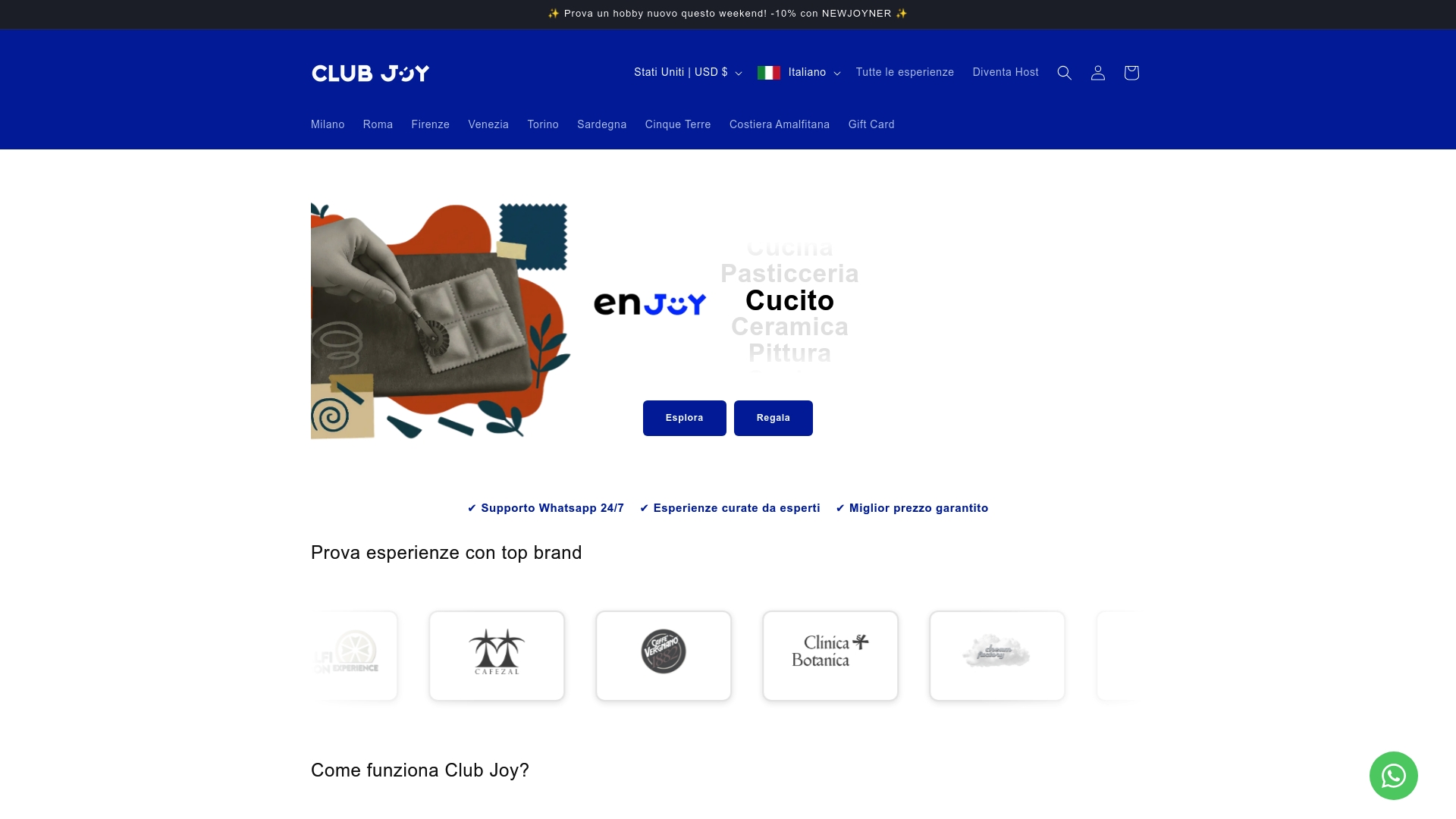
The platform simplifies booking with transparent information on level, duration, included materials, and clear policies. You'll find workshops for absolute beginners, intermediate courses, and advanced workshops in disciplines such as ceramics, painting, sculpture, and manual arts.
You can explore experiences like the expressive drawing workshop for creative team building, ideal for companies looking to stimulate collaboration through art.
If you are a skilled artisan or experienced teacher, consider becoming a host on ClubJoy to share your expertise with motivated enthusiasts.
Companies can organize personalized events through brand activation services that combine creativity and business objectives.
Frequently asked questions about choosing an art workshop
How do I know if my skill level is suitable for a workshop?
Carefully read the description, looking for terms like "beginner," "experience required," or "basic skills." If the course requires a portfolio or knowledge of specific techniques you don't possess, choose a lower level. If in doubt, contact the organizer for confirmation.
What materials do I need to bring and what is provided?
Every serious workshop provides a detailed list in the booking confirmation. Generally, raw materials and specialized tools are included, while you should bring comfortable clothes, personal protective equipment, and containers to transport your work. Always check before attending.
Is a short or long workshop better?
It depends on your goals. Three-hour workshops are perfect for trying out a new activity without excessive commitment. One-day or multi-day courses allow for in-depth technical study and the creation of complex projects. Beginners should start with short sessions.
Can children participate?
Many workshops specify a minimum age and offer family-friendly versions. Workshops for children use safe materials, shorter durations, and playful methods. Always check the descriptions to see if the experience is suitable for minors and if adult accompaniment is required.
How can I avoid spending too much without results?
Start with affordable workshops to test your real interest before making larger investments. Read verified reviews, check the teacher's credentials, and ensure the course produces at least one finished piece of work. Reliable platforms like ClubJoy filter quality experiences, reducing risks.
Recommendation
- How to discover local creative hobbies and participate in workshops – Club Joy
- 6 types of craft courses to develop creativity – Club Joy
- What is an artistic atelier and how it stimulates creativity – Club Joy
- Craft Community 2026: +15% Experiences & Benefits – Club Joy
- 7 Essential games for social skills at work