
How to discover local creative hobbies and participate in workshops
Choosing the right art workshop is not just about passion, but also about finding an activity that truly reflects your interests and style. Every pottery or painting enthusiast knows how important it is to express creativity authentically and to find environments where they can practice with others who share the same desire to grow. Discovering a creative hobby that improves mental well-being and keeps the brain young helps you select the most stimulating courses tailored to your local needs.
Table of Contents
- Step 1: Identify Creative Passions and Preferences
- Step 2: Research Craft Workshops in Your City
- Step 3: Select Workshops Based on Quality and Reviews
- Step 4: Book and Participate in Creative Experiences
- Step 5: Review Results and Share Your Experience
Quick Summary
| Key Point | Explanation |
|---|---|
| 1. Identify your creative passions | Reflecting on your interests helps you choose a hobby that satisfies and represents you. |
| 2. Research workshops in your area | Use digital resources to find courses and workshops that match your creative interests. |
| 3. Evaluate the quality of options | Read reviews to distinguish the best workshops and understand the teaching approach. |
| 4. Actively participate in the workshop | Interact with the instructor and other participants to maximize learning and socialization. |
| 5. Reflect and share your results | Assess what you've learned and share your experiences to inspire others and reinforce your commitment. |
Step 1: Identify Creative Passions and Preferences
This first step helps you discover which creative activities truly resonate with you. It's not just about choosing a hobby at random, but about finding something that aligns with your personality and authentic interests.
Start by reflecting on what naturally attracts you. What activities capture your attention? What makes you lose track of time? Creative hobbies like painting, pottery, and photography stimulate different artistic abilities and offer specific benefits. The point is to identify which of these areas truly speaks to you.
Key consideration: Not all creative hobbies suit everyone. You need to evaluate three fundamental factors:
- Time availability: How much can you dedicate weekly? A weekly workshop requires consistent commitment.
- Current skills: Are you starting from scratch or do you already have some experience? This influences the type of course you choose.
- Space and resources: Do you have space at home for pottery or painting? Some hobbies require specific setups.
Also, consider your values. Are you looking for something meditative to relax or something stimulating to challenge you? The choice must combine leisure and personal stimulation, creating a space where you can truly express yourself.
A practical exercise: write down three things that visually or tactilely fascinate you. It could be the texture of pottery, the colors of a painting, the manual process of creation. This exercise helps you filter true preferences from generic ideas.
Choosing a suitable creative hobby can improve mental well-being and keep the brain young, making this selection process important.
Once you've identified the field (pottery, painting, or something else), you're ready to explore specific workshops in your area. Different craft courses develop creativity in different ways, so knowing yourself first is essential.
Here's an overview of the main types of creative hobbies and their characteristics:
| Creative Hobby | Skills Required | Main Benefits |
|---|---|---|
| Painting | Visual sensitivity, manual precision | Reduces stress, stimulates imagination |
| Pottery | Patience, coordination, touch | Improves concentration and motor skills |
| Photography | Aesthetic eye, technique | Enhances observation skills |
| Drawing | Creativity, fine control | Promotes relaxation and expression |
| Weaving | Manual dexterity, logic, rhythm | Promotes mental tranquility |
Professional tip: Try attending a free or trial mini-workshop before committing to a full course. This allows you to test whether you truly enjoy the practice and if the teaching method matches your learning style.
Step 2: Research Craft Workshops in Your City
Now that you know your creative interests, it's time to find the right workshops to put them into practice. Local research allows you to discover concrete experiences and meet other enthusiasts in your area.
Start by exploring the digital resources available in your city. Many municipalities and cultural associations maintain websites with lists of creative courses and workshops, while social media and community forums regularly publish local events.
These are the main channels to search:
- Municipal websites and city portals: many administrations maintain sections dedicated to culture and leisure with activity calendars.
- Facebook pages of artistic associations: often the first place where new courses and workshops are announced.
- Specialized platforms: websites that aggregate craft courses offer filters by city, activity type, and start date.
- Local art centers: galleries, museums, and creative spaces organize workshops led by professional artisans.
When you find a workshop that interests you, check some essential details before contacting them. Check the required experience level, schedules, course duration, and especially if it suits your time constraints and budget.
Don't limit yourself to a superficial search. Read reviews from previous participants, look at photos of projects completed in previous years, and try to understand the instructor's teaching style. Contemporary urban craftsmanship offers different approaches, from traditional to experimental.
Effective research combines multiple digital channels: don't rely on a single source, because the best opportunities are often found by cross-referencing information from different platforms.
Contact the workshops that interest you directly. Ask specific questions about the teaching method, what you will learn, and ask if it's possible to attend a trial lesson. Many local artisans are happy to welcome curious individuals.
Professional tip: Create a list of the 3-5 most promising workshops and contact them all at the same time: this allows you to compare proposals, costs, and schedules to make the most informed choice before enrolling.
Comparison of the main digital channels for finding craft workshops:
| Digital Channel | Ease of Use | Added Value | Potential Limitations |
|---|---|---|---|
| Municipal website | Simple access | Official calendars and info | Slow updates |
| Facebook associations | Quick announcements | Interactive community | Dispersed info |
| Course platforms | Advanced filters | Wide and updated offer | Sometimes high costs |
| Local forums | Personal advice | Direct experiences | Variable quality |
Step 3: Select Workshops Based on Quality and Reviews
At this point, you have a list of interesting workshops. Now you need to distinguish the best options from the mediocre ones, and reviews are your most reliable compass.
Platforms that promote creative workshops always include user comments and ratings, which are essential for understanding the actual quality of the experience. Don't just look at the numerical rating, but also read what participants have written.
Here's what to look for in reviews:
- Teaching quality: Does the instructor explain well? Do they adapt the pace to beginners? Do they answer questions?
- Workshop atmosphere: Is the environment welcoming? Are other participants motivated? Will you feel comfortable?
- Concrete results: Do people finish the course with projects they are proud of? Do they really learn something?
- Practical organization: Does the workshop start on time? Are the tools in good condition? Is it clean?
Don't just read the 5-star reviews. Also read the 3-star ones to understand the real limitations. A critical but constructive review ("I would have liked more time for personal projects") is more useful than generic praise.
Also look for information about the instructor. Do they have professional experience in the field? Do they have teaching qualifications? Do they participate in local artisan projects or communities? A credible instructor guarantees a more solid and informed education.
Comparing at least three options is essential. Even if two workshops teach pottery, one might be more theoretical, another more practical, and a third more experimental. The differences only become clear when you read specific feedback on each.
The best choices come from comparison: don't choose the first workshop with good reviews, but evaluate at least three options before deciding.
Once you've selected the ideal workshop, contact the organizer with specific questions based on what you've read. Clarifying doubts before enrolling prevents disappointment.
Professional tip: When reading a review, ask yourself if the person writing has the same level of experience and goals as you: a negative review from an advanced student might be irrelevant if you are a beginner.
Step 4: Book and Participate in Creative Experiences
You've found the perfect workshop. Now it's time to turn interest into concrete action by booking your spot and experiencing it.
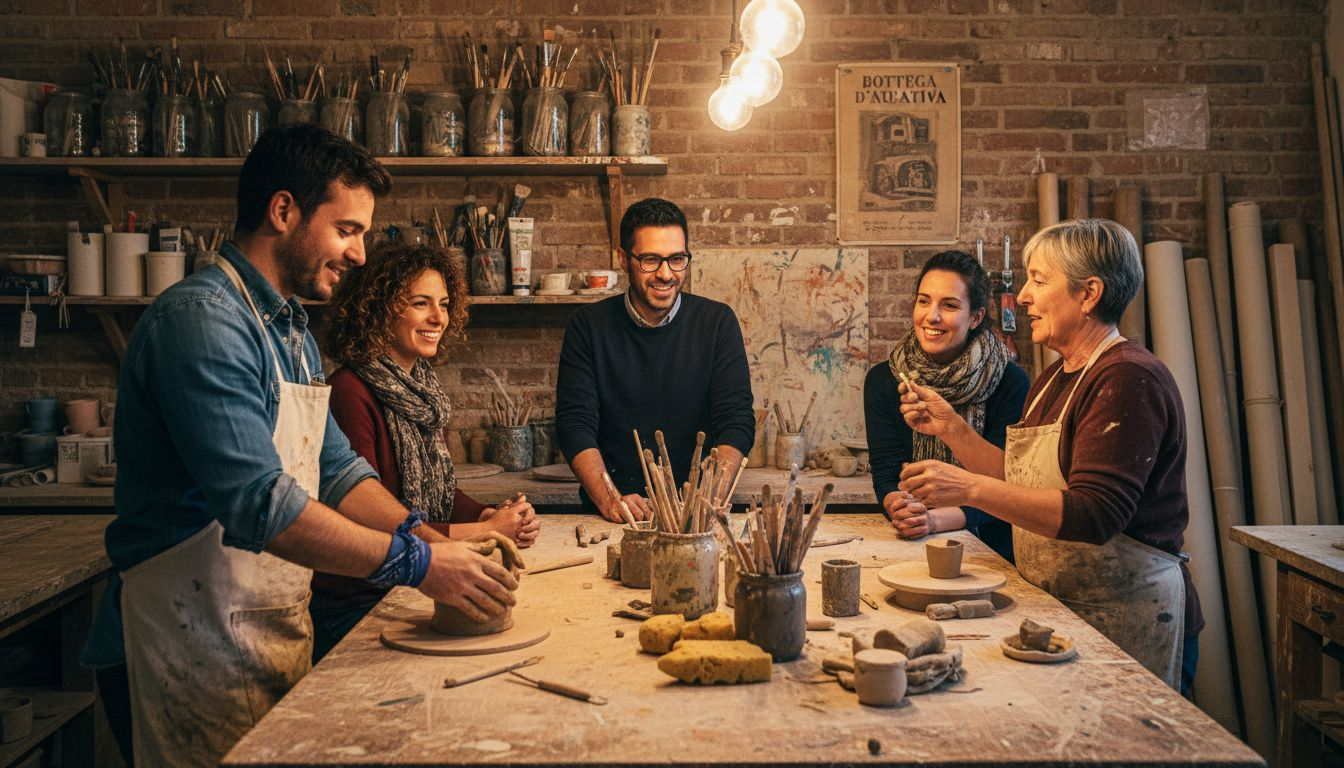
Booking creative workshops usually happens online through the organizer's website, where you'll find information on availability, costs, and participation methods. Some workshops use specialized platforms, others manage registrations directly via email.
These are the steps to complete your booking:
- Visit the workshop website: look for the "Bookings" or "Registrations" section and select your preferred date.
- Check details: confirm the time, duration, maximum number of participants, and what to bring from home.
- Read conditions: check cancellation policies and if an advance payment is required.
- Complete registration: provide your details and proceed with payment if required.
- Save confirmation: keep the confirmation email with times, address, and instructions.
Before attending, prepare yourself mentally and practically. Read the specific course instructions: if it's pottery, you might need an apron; if it's painting, dress so that getting messy isn't an issue.
Arrive 10-15 minutes early to get acquainted with the space and meet the instructor. This extra time reduces anxiety and allows you to start in a more relaxed and receptive state.
During the course, actively participate in explanations and don't hesitate to ask questions. Hands-on experience is the best way to deepen your passions and improve skills through guided practice. Listen to the advice of the instructor and other participants.
Participating with an open mind and curiosity is not only important for learning, but it transforms the workshop into a significant social experience where lasting friendships are formed.
After the course, take a moment to reflect on what you've learned. Have you discovered a true passion? Would you like to continue? Practical experience is always the best indicator.
Professional tip: If you love the workshop, ask the instructor directly how to continue: there are often advanced courses, thematic workshops, or informal practice groups that are not advertised online.
Step 5: Review Results and Share Your Experience
The workshop is over, but the true value emerges when you reflect on what you've learned and share it with others. This step consolidates your growth and inspires the creative community.
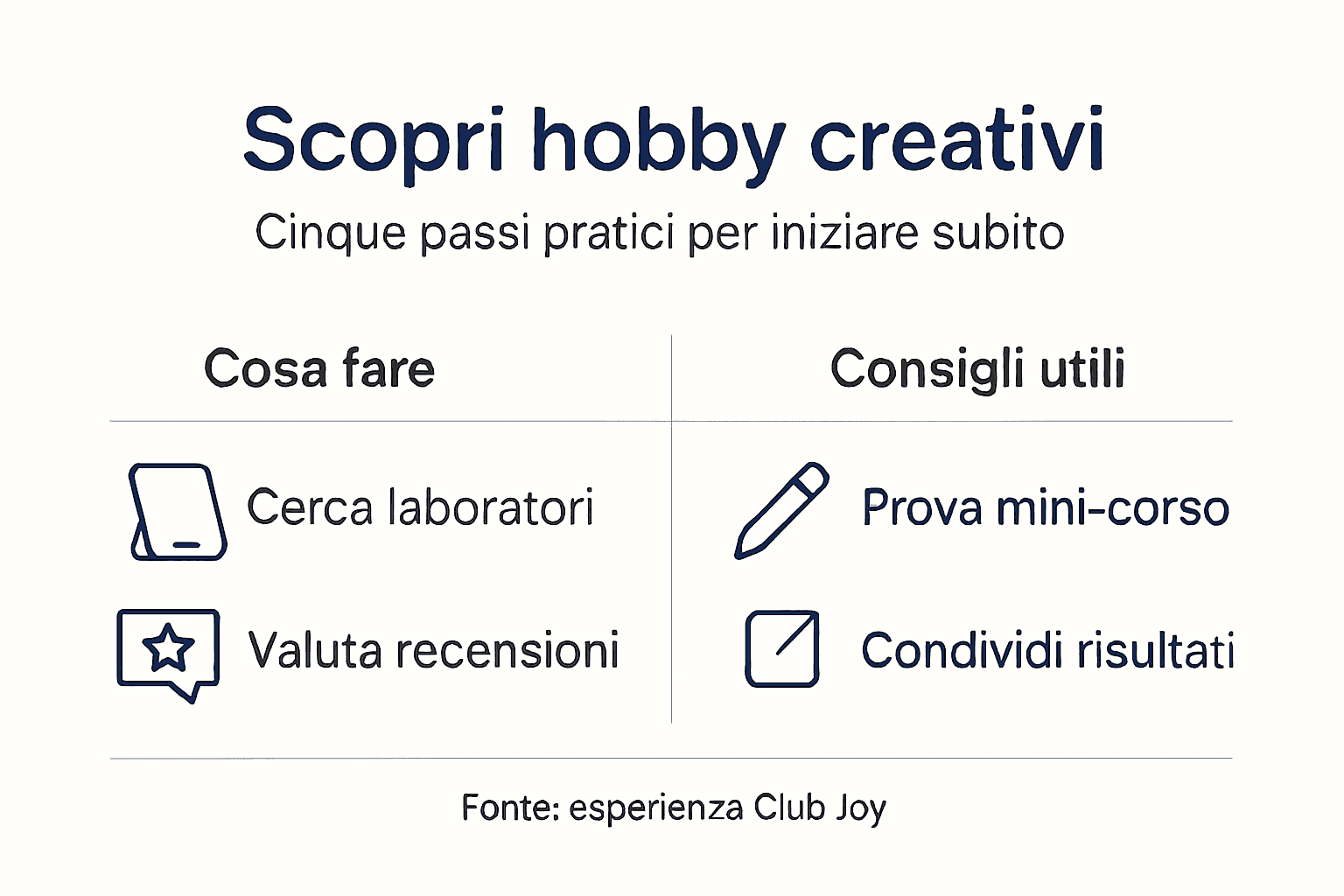
Start with an honest personal reflection. What practical skills have you developed? Have you improved your pottery modeling technique or color management? Beyond manual skills, also think about the emotional growth and confidence you've gained.
Evaluate these aspects of your experience:
- Concrete results: Were your projects successful? Are you satisfied with the final work?
- Learning: What was most useful? What would you like to explore further in the next course?
- Social experience: Did you meet interesting people? Do you want to stay in touch?
- Personal motivation: Does this passion deserve to continue? How much do you want to practice again?
Sharing creations and experiences through social media or enthusiast groups encourages discussion, receives constructive feedback, and inspires others to start their creative journey. It's not vanity, it's community.
You can share in several ways. Post a photo of your project on Instagram with a brief description of what you learned. Write a comment on a local artisan Facebook page. Talk about the experience with friends who have similar interests. Every form of sharing counts.
Also research if the workshop organizes closing events or online galleries where participants' works are displayed. These spaces allow for recognition, skill consolidation, and networking within your city's creative world.
Sharing not only helps others discover hidden passions, but also reinforces your personal commitment because it transforms a private experience into something meaningful for the community.
Finally, plan the next step. Do you want to attend an advanced course? Explore another creative discipline? Practice independently at home? Today's reflection becomes tomorrow's decision.
Professional tip: Create a digital folder with photos of your projects and notes on what you learned in each workshop: it will become a personal portfolio that documents your creative growth over time and will be invaluable for remembering your progress.
Transform Your Passion into Concrete Creativity with Club Joy
Discovering the right creative hobby and finding the ideal workshop for you can seem like a challenge. Often, it's not enough to just identify your passions or preferences; you need a place where you can put them into practice with engaging and high-quality experiences. If you find yourself looking for craft workshops that meet your time, skill, and real stimulation needs, Club Joy is the perfect solution for you.
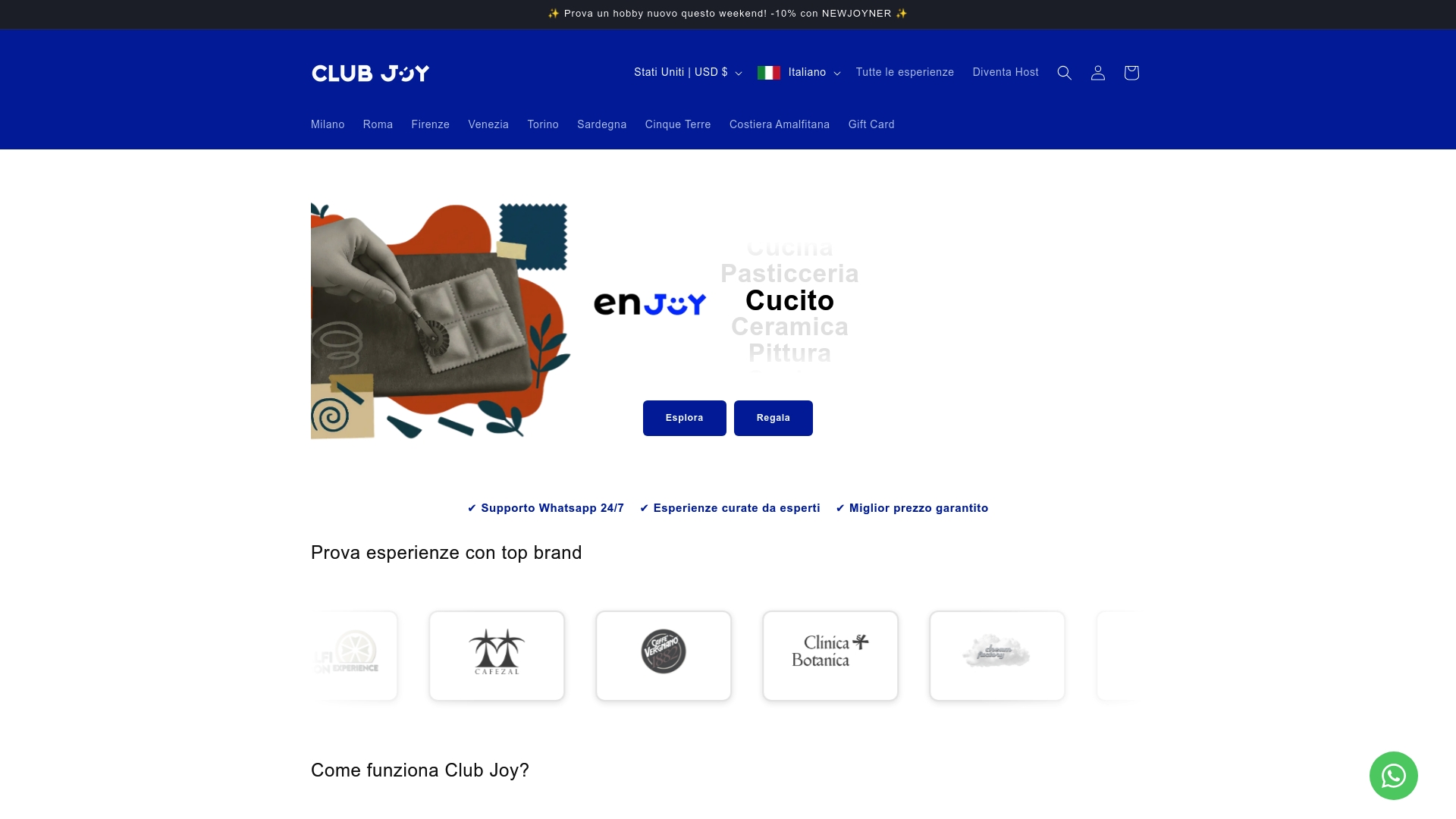
Among painting, pottery, and many other manual arts, you can choose activities led by expert artisans in cities like Milan. Discover, for example, Original Experiences in Milan: 5 Ideas Not to Miss This Weekend or let the Craft section guide you to practical workshops tailored for those who truly want to learn and create. Booking is easy and immediate, so you can finally experience that creative moment you've been waiting for. Don't wait any longer; take the first step towards discovering your passion at https://clubjoy.it
Frequently Asked Questions
How can I identify my creative passions?
To identify your creative passions, reflect on what activities excite you. Write down three things that visually or tactilely fascinate you, such as ceramics or painting, to filter true preferences from your general interests.
What factors should I consider when choosing a creative workshop?
When choosing a creative workshop, consider the time available, your current skills, and the necessary space and resources. Make sure the workshop suits your experience level and time availability.
Where can I look for craft workshops in my area?
You can search for local craft workshops through municipal websites, Facebook pages of art associations, and specialized platforms. Combine multiple channels to get a complete overview of available options.
How do I assess the quality of a workshop before enrolling?
To assess the quality of a workshop, read user reviews, ask about the instructor, and see if the workshop offers concrete projects. Compare at least three options to get a clear idea of the differences in teaching quality.
What useful tips can I follow before attending a creative workshop?
Arrive 10-15 minutes early to get oriented and mentally prepare. During the workshop, participate actively and ask questions to maximize learning and social interaction.
How can I reflect on the results after attending a workshop?
After a workshop, reflect on the skills learned and how you feel about the projects created. Consider sharing your experiences and creations with the community to inspire and receive constructive feedback.
Recommendation
- 6 Types of Craft Courses to Develop Creativity – Club Joy
- Origins of Painting Workshops: From Tradition to Creative Experience – Club Joy
- 4 Cool & Creative Free Things to Do in Milan on the Weekend of September 27-28 – Club Joy
- 4 Cool & Creative Things to Do in Milan on the Weekend of November 15-16 – Club Joy