
What a cooking workshop entails: a complete guide 2026
Many believe that a cooking workshop is simply watching a chef prepare dishes while taking notes. The reality is completely different. A culinary workshop is an immersive experience where you literally get your hands dirty, learn professional techniques, and correct mistakes you’ve probably been making for years without knowing it. This guide will show you exactly what to expect, how to prepare, and why hands-on learning truly transforms your cooking skills.
Table of Contents
- Key Points
- Cooking Workshop Levels and Focus
- Typical Structure and Practicalities of a Workshop
- Common Mistakes and Learning Through Practice
- Benefits of Hands-On Learning in Cooking Workshops
- Discover Unique Culinary Experiences with Club Joy
- Frequently Asked Questions About Cooking Workshops
Key Points
| Point | Details |
|---|---|
| Customized Workshops | Courses cater to all levels, from absolute beginners to experienced chefs looking to refine their skills |
| Hands-on Learning | Direct practice increases skill retention by 60% compared to passive lessons |
| Essential Preparation | Correct mise en place before the workshop ensures a smooth and productive experience |
| Engaging Structure | Includes guided practical session, social break, and final shared meal with other participants |
| Error Correction | Identifying and correcting common mistakes immediately improves the quality of your dishes |
Cooking Workshop Levels and Focus
One of the most important characteristics of workshops that cater to various skill levels is their ability to adapt to each participant's expertise. There is no one-size-fits-all approach, and this makes the difference between a frustrating experience and a transformative one.
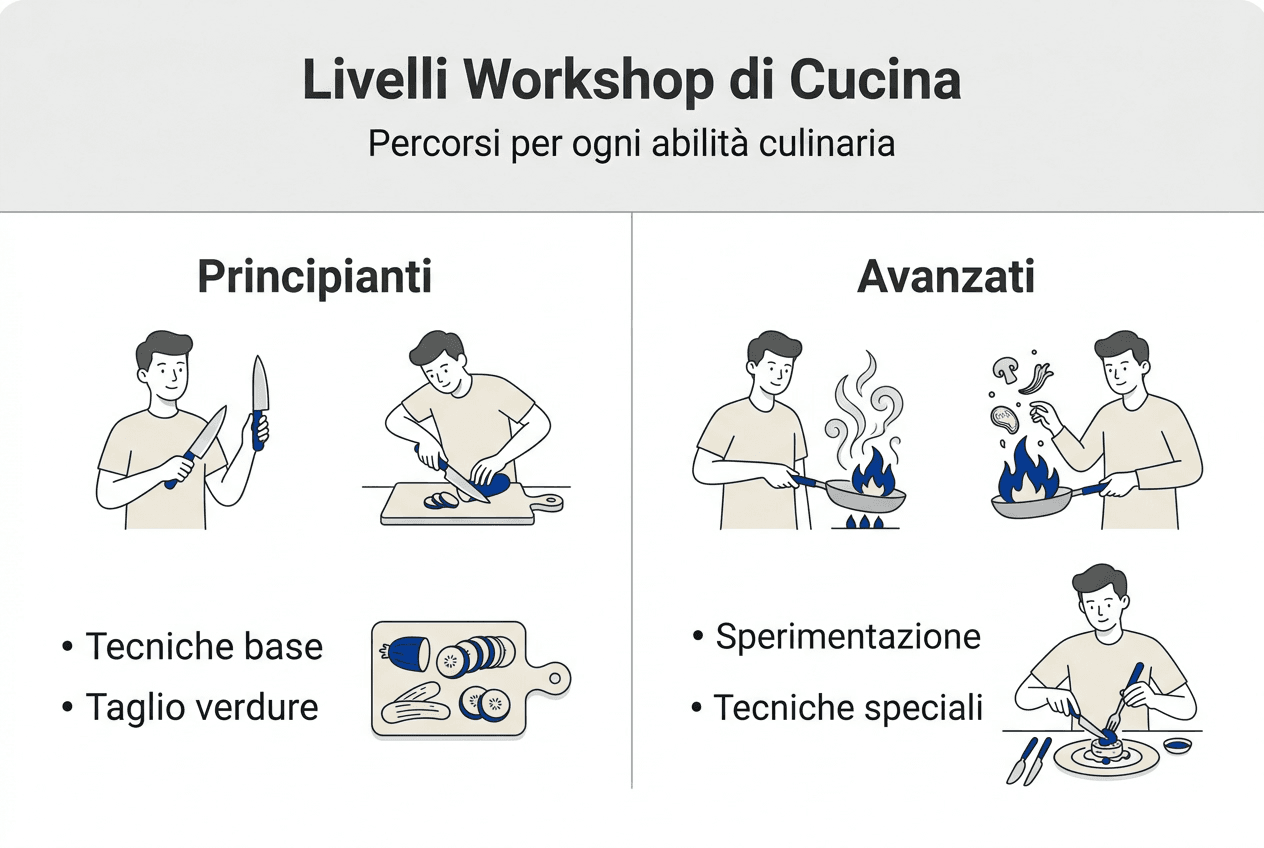
Beginner workshops focus on the fundamentals. You’ll learn correct cutting techniques for vegetables and proteins, the preparation of basic sauces like béchamel or tomato, and essential cooking methods. Instructors dedicate time to explaining the "why" behind each technique, not just the "how." This approach builds a solid foundation that you can apply in countless variations at home.
For advanced cooks, workshops become true experimental laboratories. Here, specialized techniques such as molecular gastronomy, precision pastry, or fusion cuisine that combines different traditions are explored. The emphasis shifts from basic technique to innovation and personalization. Chefs share professional secrets that would normally take years of experience to discover.
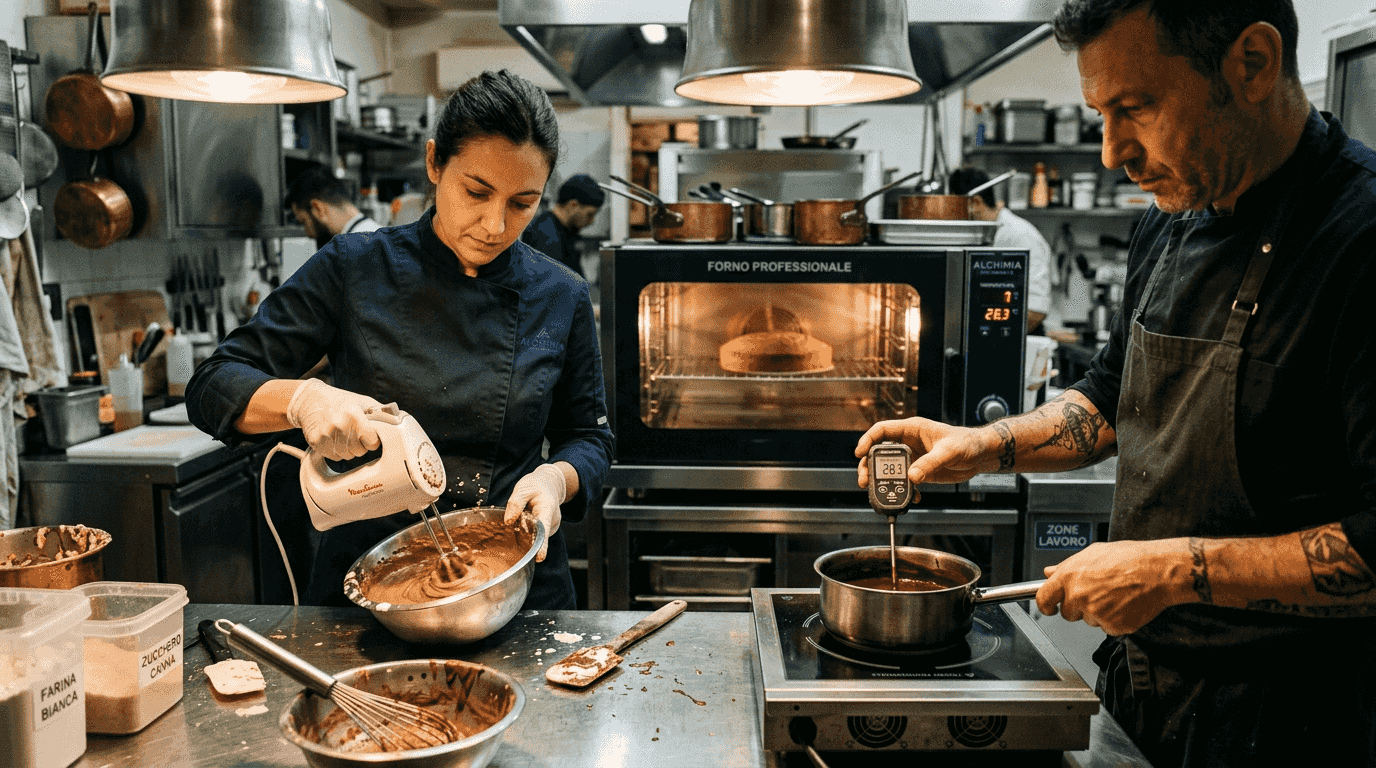
Progression between levels is often structured in modules. Many schools offer pathways where you complete a basic level before accessing advanced techniques. This system ensures that skills are built logically and sustainably. A participant who skips levels risks feeling overwhelmed and losing confidence.
Pro Tip: Before signing up, honestly assess your current level. If you cook regularly at home but have never learned formal techniques, an intermediate workshop might be perfect. Starting too high leads to frustration, starting too low leads to boredom.
Interaction with the instructor varies significantly between levels. In basic courses, chefs demonstrate each step and supervise closely. In advanced workshops, you are given greater autonomy to experiment, with the instructor intervening to refine details and offer personalized feedback.
Session duration also reflects complexity. Basic workshops typically last 2-3 hours, allowing for the completion of 2-3 simple recipes. Advanced courses can extend to 4-6 hours for techniques that require resting times, slow cooking, or elaborate preparations. Some thematic workshops like the one on pizza and gelato combine multiple techniques into a single intensive experience.
Choosing the right level directly influences how much you take away from the experience. A well-calibrated workshop challenges you without overwhelming you, expanding your abilities tangibly and measurably.
Typical Structure and Practicalities of a Workshop
Most culinary workshops follow a proven structure that maximizes learning and enjoyment. Understanding this format helps you prepare mentally and make the most of every moment.
Here’s how a session typically unfolds:
-
Introduction and ingredient presentation. The instructor explains the day's menu, showcases the ingredients, and illustrates the techniques you'll learn. This moment is crucial for asking questions and clarifying doubts before starting.
-
Initial demonstration. The chef performs each technique in front of the group, explaining critical points and signals to observe. Make mental notes of the details, because you'll soon have to replicate them.
-
Guided practice. This is where the real work begins. Each participant has their own station with ingredients and equipment. The instructor circulates, observes, corrects, and encourages while you cook.
-
Social break. Many workshops include a break with appetizers in a relaxed setting, often on panoramic terraces. This time allows you to socialize with other enthusiasts and discuss techniques informally.
-
Completion and plating. You return to your station to finalize the dishes, focusing on presentation and the final details that transform a good dish into a memorable one.
-
Final tasting. The workshop culminates with a shared meal, where you taste your creations and those of other participants, comparing results and celebrating successes.
As highlighted by the immersive experience of masterclasses, this structured ritual is not accidental. The combination of practice, social break, and final sharing creates an experience that goes beyond simply acquiring skills.
The practical component is fundamental for memorization. When you personally perform a technique, your brain encodes the information through muscle and sensory memory. You remember not only the steps, but also how the dough should feel under your fingers, the sound of correct cooking, the smell that indicates the right moment to turn.
This structure also creates a safe environment for experimentation. You know the instructor is there to correct mistakes before they become disasters. You can try techniques that would intimidate you at home, knowing you have immediate support if something goes wrong.
“Workshops incorporate a structured ritual that includes hands-on cooking, a break on a panoramic terrace with aperitifs, and a final shared meal.”
The intermediate break serves a practical purpose beyond relaxation. It allows dishes to finish cooking, doughs to rest, and participants to mentally reset before the final phase. This alternating rhythm between intense concentration and moments of respite optimizes learning and prevents cognitive fatigue.
Common Mistakes and Learning Through Practice
One of the most valuable aspects of a workshop is the opportunity to identify and correct mistakes you’ve probably been making for years without realizing it. Most home cooks develop bad habits that limit the quality of their dishes.
The most frequent mistakes that workshops help correct include:
- Imprecise measurements. Many cook by eye without understanding the critical ratios between ingredients. A workshop teaches you when precision is essential and when you can improvise.
- Wrong temperatures. Cooking at too high or too low a heat ruins textures and flavors. You learn to read the visual and auditory cues that indicate the correct temperature.
- Poorly worked doughs. Over-kneading or under-kneading completely changes the structure of the final product. Direct practice lets you feel the difference.
- Incorrect timing. Adding ingredients at the wrong time compromises the result. An instructor guides you through the correct sequence and explains why it matters.
- Neglected mise en place. Starting without preparing everything in advance leads to stress and avoidable errors during cooking.
As highlighted in the guide on 10 common kitchen mistakes, recognizing these issues is the first step to dramatic improvement.
Here’s a table with typical mistakes and practical solutions:
| Common Mistake | Practical Solution | Impact on Quality |
|---|---|---|
| Overcrowding the pan | Cook in separate batches | Prevents steaming and ensures browning |
| Adding salt too late | Salt during cooking | Improves flavor penetration |
| Oil not hot enough | Test with a drop of water | Prevents excessive absorption |
| Flipping meat too often | Flip only once | Creates a perfect crust |
| Overcooking fresh herbs | Add at the end of cooking | Preserves aroma and color |
Pro Tip: Before each workshop, mentally list the techniques you find most difficult at home. Focus on those during the practical session and ask the instructor for specific feedback.
Learning through error in a controlled environment is incredibly effective. When you make a mistake during the workshop, the instructor not only corrects it but explains why it happened and how to prevent it. This deep understanding is impossible to gain by watching videos or reading recipes.
Real-time correction transforms mistakes into learning opportunities. You immediately see the difference between the wrong technique and the correct one, creating a memorable contrast that guides your future actions. This cycle of trial, error, correction, and success dramatically accelerates the learning curve.
Many participants discover that techniques they thought they had mastered actually have significant room for improvement. A cut you thought was correct might be inefficient or dangerous. A cooking method you considered adequate might be imprecise. These insights transform occasional cooks into competent cooks.
To learn more about how to choose practical workshops that maximize your learning, consider factors such as group size, instructor-to-participant ratio, and thematic focus.
Benefits of Hands-On Learning in Cooking Workshops
Learning science confirms what chefs have always known: doing is more effective than watching. The data on how hands-on learning improves skill retention is impressive and explains why workshops work so well.
According to scientific research, hands-on cooking workshops enhance skills significantly compared to passive methods. Studies show a 60% increase in skill retention when learning by doing rather than by observing. This means that six months after a practical workshop, you remember and apply techniques you would have forgotten if you had only seen them demonstrated.
The improvement in recipe recall is equally remarkable. Participants in practical workshops show a 40% increase in accurate recall of ingredients and steps compared to those who only followed demonstrations. The difference stems from the involvement of multiple sensory systems during active learning.
Here’s a comparison of the two approaches:
| Aspect | Hands-on Learning | Passive Learning |
|---|---|---|
| Skill Retention | 60% higher after 6 months | Rapid decline after 2-3 weeks |
| Recipe Recall | 40% more accurate | Depends on written notes |
| Confidence in Cooking | Significant increase | Remains unchanged or decreases |
| Adaptability | Effective improvisation | Rigid reliance on recipes |
| Speed of Execution | Improves with guided practice | Slow and uncertain |
These numbers are not abstract. They translate into concrete skills you use every time you cook. After a practical workshop, you move around the kitchen with greater confidence, adapt recipes without panic, and solve problems in real-time.
“Hands-on cooking workshops improve culinary skills and knowledge retention compared to passive learning methods.”
The confidence gained through guided practice is perhaps the most transformative benefit. Many people avoid advanced techniques at home because they fear failure. After successfully performing those same techniques in a workshop, the psychological barrier disappears. Suddenly, making fresh pasta or deboning a chicken no longer seems intimidating.
Hands-on learning also develops culinary intuition. You begin to recognize when a sauce has the right consistency, when meat is perfectly cooked, when dough has reached ideal elasticity. These sensory skills cannot be taught theoretically; they must be experienced.
Workshops also create contextual memory. You remember not only the technique but the entire context: the environment, the people, the physical sensations. This rich context makes the memory more stable and easily accessible when you need it in the kitchen.
For those who want to further explore the benefits of creative workshops in general, the same principles of hands-on learning apply across various craft disciplines.
The investment in a practical workshop yields returns that multiply over time. Every time you cook using learned techniques, you reinforce memory and refine skill. A single workshop can positively influence hundreds of future meals, improving not only quality but also the joy of cooking.
Discover Unique Culinary Experiences with Club Joy
If this guide has made you want to put what you've read into practice, Club Joy offers a curated selection of culinary workshops throughout Italy. The platform connects cooking enthusiasts with professional chefs and artisans who share their passion through practical and engaging experiences.
You can explore original experiences available in Milan and other Italian cities, choosing from thematic workshops ranging from traditional cuisine to contemporary techniques. Each experience is designed to ensure hands-on learning in stimulating environments, with small group sizes to maximize individual attention.
If you are particularly interested in specific techniques, the course to learn pizza and gelato combines two of Italy's most beloved culinary preparations into a single immersive experience. For those who want to share their culinary skills, the platform offers the opportunity to become a host and organize workshops for other enthusiasts.
Every experience on Club Joy is selected to ensure quality, authenticity, and real educational value. These are not just simple demonstrations but true opportunities for culinary growth guided by professionals who love teaching as much as cooking.
Frequently Asked Questions About Cooking Workshops
What equipment do I need to bring to a cooking workshop?
Most workshops provide all necessary equipment, from utensils to aprons. You only need to bring enthusiasm and a willingness to learn. Some organizers suggest bringing a notebook for personal notes, but ingredients and professional tools are always included.
How long does a cooking workshop usually last?
The duration varies between 2 and 6 hours depending on the level and complexity of the preparations. Basic workshops for beginners typically last 2-3 hours, while advanced masterclasses can extend to 5-6 hours including breaks and a final tasting. Most experiences fall within the 3-4 hour range.
What characteristics make a workshop effective?
An effective workshop combines hands-on practice, small group sizes to ensure individual attention, expert instructors who can teach as well as cook, and a clear structure with defined objectives. The opportunity to ask questions, receive personalized feedback, and correct mistakes in real-time are crucial elements for learning.
Can absolute beginners participate?
Absolutely. Many workshops are specifically designed for beginners and require no prior experience. Instructors adapt explanations and pace to the group's skill level, ensuring that everyone can follow and learn regardless of their starting point. The important thing is to choose a workshop explicitly indicated for beginners.
How to choose the right workshop for your needs?
Evaluate three main factors: your current skill level, the specific techniques you want to learn, and your preferred format. Carefully read the descriptions to understand what is included, check reviews from other participants, and do not hesitate to contact the organizers to clarify any doubts. A workshop well-aligned with your goals and abilities maximizes the value of the experience.