
Creative Experiences for Businesses: 2026 Selection Guide
Selecting the right creative experience for your corporate team requires precise criteria. Many companies invest time and budget in activities that do not yield concrete results. This practical guide helps managers and HR professionals evaluate workshops, labs, and innovative activities that truly enhance team cohesion, creativity, and strategic soft skills in 2026.
Table of Contents
- How to Choose the Perfect Creative Experience: 5 Fundamental Criteria
- Ceramics Workshop: Craftsmanship for Communication and Problem Solving
- Guided Painting Workshops: Mindfulness and Stress Reduction in the Workplace
- Cooking Team Building: Culinary Creativity for Leadership and Delegation
- Digital Creative Experiences: Innovation and Engagement for Hybrid and Remote Teams
- Comparison and Summary Table: Which Creative Experience to Choose?
- Final Tips for Choosing the Most Effective Creative Experience for Your Team
- Discover Club Joy's Creative Experiences for Your Team
- Frequently Asked Questions
Key Points
| Point | Details |
|---|---|
| Selection Criteria | Defining budget, optimal duration (2-4 hours), specific objectives, and type of experience ensures measurable results. |
| Main Types | Manual workshops (ceramics), mindfulness (painting), culinary, and digital offer different benefits for communication, stress, and leadership. |
| Hybrid and Remote Teams | Digital creative experiences increase engagement by 25% with personalization and real-time interaction. |
| Sustainability and Trends | 60% of companies integrate creativity and social responsibility into team building activities. |
| Practical Comparison | Comparative tables facilitate strategic decisions by balancing costs, benefits, and accessibility. |
How to Choose the Perfect Creative Experience: 5 Fundamental Criteria
Defining the available budget is the first step. Creative experiences range from 30 euros to over 100 euros per participant. A realistic budget allows for the evaluation of sustainable options without compromising quality. Also consider any additional costs such as materials, location, or catering.
The ideal duration is between 2 and 4 hours. 55% of companies prefer this time frame as an optimal balance between effectiveness and practicality. Sessions that are too short risk being superficial, while those that are too long cause a drop in attention and fatigue.
Objectives must be clear and measurable. Do you want to improve internal communication? Reduce stress? Develop leadership? Each creative experience offers specific benefits. Aligning the activity with corporate strategic objectives maximizes return on investment.
The type of experience determines the level of engagement. Manual workshops like ceramics stimulate tangible problem-solving. Culinary activities promote delegation and coordination. Digital experiences are suitable for remote or hybrid teams. The criteria for artistic workshops help navigate the available options.
Location and accessibility influence participation. Choosing central or easily accessible locations reduces logistical barriers. For geographically dispersed teams, evaluate digital or synchronized multi-site solutions.
Pro Tip: Involve the team in the selection through a preliminary survey. Knowing preferences and expectations increases engagement and final satisfaction.
Ceramics Workshop: Craftsmanship for Communication and Problem Solving
Ceramics workshops offer a hands-on experience that results in personalized tangible products. Each participant creates a unique object, stimulating creativity and a sense of belonging. Ceramics workshops improve communication by 30% through shared practical craftsmanship.
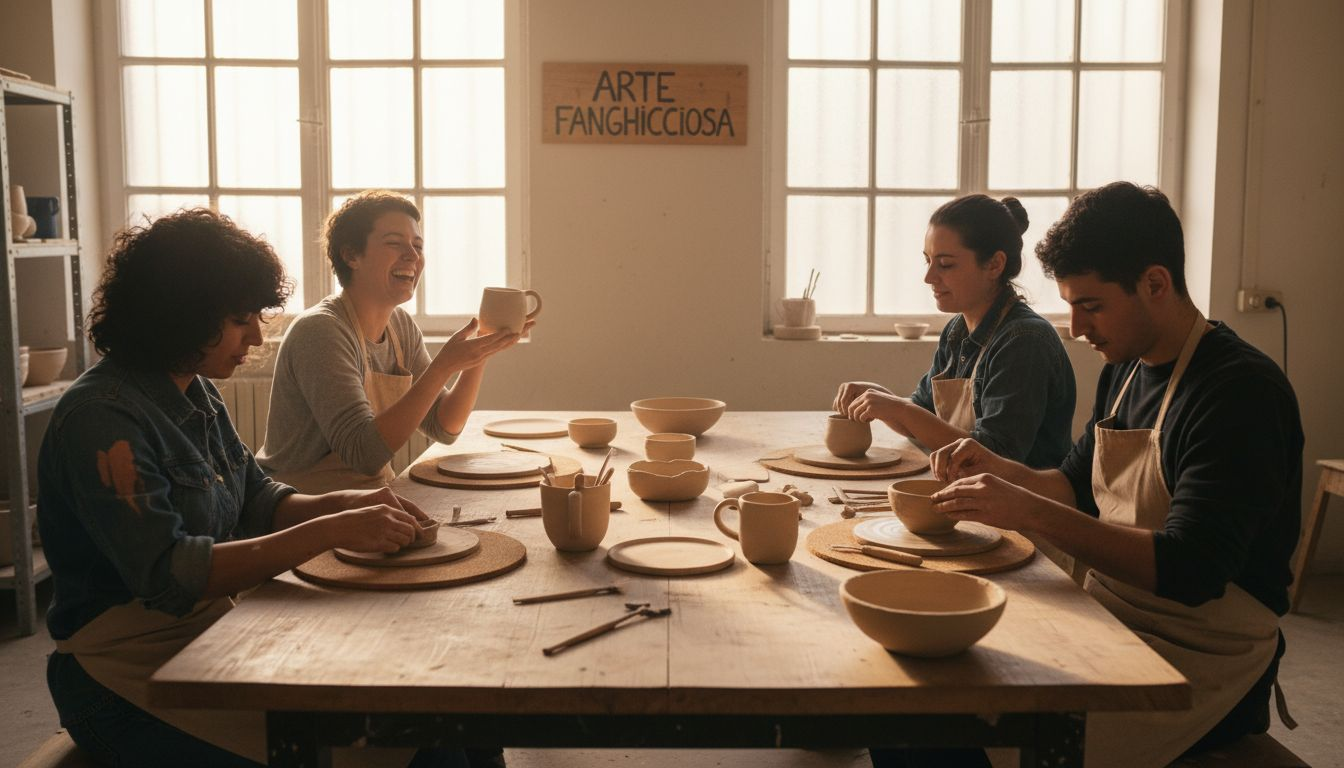
These activities foster communication and practical problem-solving. Working with clay requires concentration, patience, and collaboration to overcome technical difficulties. The team learns to coordinate, support each other, and celebrate small successes together.
Ceramics workshops are ideal for teams with an interest in creative and manual activities. They require moderate physical effort and a willingness to experiment without fear of making mistakes. Perfect for groups that appreciate authentic experiences and slower rhythms compared to daily work.
The practical experience generates visible and lasting results. Each participant takes home an object made with their own hands, a tangible memory of the shared activity. This strengthens the emotional bond with the experience and with colleagues.
Using sustainable materials stimulates social responsibility. Many workshops adopt natural clays and eco-friendly techniques. This aspect resonates with modern corporate values oriented towards sustainability. Discover other benefits of ceramics workshops and types of creative craft courses available.
Pro Tip: Organize a mini-exhibition in the office with the completed works. This enhances individual creativity and celebrates the collective experience.
Guided Painting Workshops: Mindfulness and Stress Reduction in the Workplace
Guided painting is a non-competitive activity that stimulates mindfulness and relaxation. Following the instructions of an expert allows even those without artistic experience to achieve satisfying results. The focus on the creative process frees the mind from work worries.
These workshops are excellent for teams with high work pressure and elevated stress. Guided painting reduces stress by 22% in corporate settings. Dedicating time to a creative activity without deadlines or performance goals lowers cortisol levels and improves mood.
The activity fosters a more cohesive and serene work environment. Painting together creates informal connections between colleagues who rarely interact. Spontaneous conversations during the session strengthen interpersonal bonds and improve the organizational climate.
Organizing a painting workshop is simple. Basic materials such as canvases, acrylic paints, brushes, and an expert technician to guide the group step-by-step are needed. Flexible locations allow the activity to adapt to different corporate or external spaces.
Results are measurable in terms of well-being and satisfaction. Administering pre and post-activity questionnaires allows evaluation of the impact on perceived stress, team morale, and sense of belonging. Concrete data justifies future investments in similar initiatives. Learn more about the benefits of creative leisure applied to the corporate context.
Cooking Team Building: Culinary Creativity for Leadership and Delegation
Cooking team building encourages collaboration and coordination for the success of the recipe. Each participant takes on a specific role, from ingredient preparation to final cooking. The result depends on how effectively the group organizes and communicates.
Average costs range from 40 to 90 euros per participant, offering good value for money. This includes fresh ingredients, professional equipment, an expert chef, and often a final tasting of the prepared dish. An intermediate budget accessible to most companies.
These activities are ideal for developing leadership and delegation skills. Leaders naturally emerge who coordinate, delegate tasks, and manage unforeseen events. Observing spontaneous dynamics offers valuable insights into potential organizational talents within the team.
The experience is very practical and engaging with tangible culinary results. Savoring the fruit of collective labor together celebrates shared success. The sensory and convivial component makes the activity memorable and enjoyable.
It fosters communication and role division naturally. Cooking requires synchronization, active listening, and continuous adaptation. These skills are easily transferred to the daily work context. Discover how to organize creative team tours by integrating culinary experiences.
Digital Creative Experiences: Innovation and Engagement for Hybrid and Remote Teams
Digital creative experiences are perfect for hybrid and remote teams due to technological flexibility. Interactive platforms allow simultaneous participation from different locations without losing interaction quality. They break down geographical barriers while maintaining high engagement.
They enable synchronized multi-location activities in real-time. Digital workshops on illustration, design thinking, or visual storytelling engage participants wherever they are. Collaborative digital tools facilitate brainstorming, shared creation, and instant feedback.
They represent a rapidly growing trend in 2025-2026. Digital creative experiences increase engagement by 25% with personalization and advanced interaction. 60% of companies integrate sustainability and social responsibility into creative activities, reducing travel and environmental impact.
They offer high personalization and interactivity. Content is adaptable to different skill levels, aesthetic preferences, and specific team objectives. Gamification and creative challenges stimulate healthy competition and fun.
| Experience Type | Average Duration | Cost per Participant | Main Benefit | Accessibility |
|---|---|---|---|---|
| Ceramics Workshop | 3-4 hours | 50-80€ | Communication +30% | Local |
| Guided Painting | 2-3 hours | 35-60€ | Stress Reduction 22% | Local |
| Cooking Team Building | 3-4 hours | 40-90€ | Leadership and Delegation | Local |
| Digital Experiences | 2-3 hours | 25-50€ | Engagement +25% | Global |
Explore the artistic experiences guide to delve into available digital and hybrid options in 2026.
Comparison and Summary Table: Which Creative Experience to Choose?
A comparative table summarizes the costs, duration, benefits, and accessibility of different creative activities. Visualizing data side-by-side facilitates objective evaluations and informed decisions. It allows for quick identification of which experience best meets specific needs.
Assessing the required manual skill level helps guide the choice. Ceramics workshops and painting require greater physical and practical involvement. Cooking team building balances manual dexterity and social interaction. Digital experiences minimize the physical component, prioritizing conceptual creativity.
Indicating the ideal team type for each experience optimizes matching and results. Creative teams appreciate ceramics and painting. Results-oriented groups prefer cooking. Geographically dispersed teams benefit from digital solutions.
Balancing budget, time, and expected results is crucial. More expensive experiences do not automatically guarantee greater effectiveness. Evaluate the quality-price ratio considering strategic objectives and expected team feedback.
| Criterion | Ceramics | Painting | Cooking | Digital |
|---|---|---|---|---|
| Manual skill required | High | Medium | Medium-High | Low |
| Ideal Team | Creative, patient | Stressed, creative | Results-oriented | Hybrid, remote |
| Main Objective | Problem Solving | Mindfulness | Leadership | Engagement |
| Logistical Flexibility | Low | Medium | Medium | High |
| Scalability | 8-15 people | 10-20 people | 8-12 people | Unlimited |
Consult the types of craft courses and the workshop selection guide to learn more about the specific characteristics of each option.
Final Tips for Choosing the Most Effective Creative Experience for Your Team
-
Align the activity with specific objectives. Identify whether the priority is to develop creativity, reduce stress, improve communication, or enhance leadership. Each experience offers distinct benefits that must match the team's real needs.
-
Consider budget and time availability realistically. Do not underestimate organization, travel, and follow-up times. A well-planned activity with an adequate budget generates a greater impact than a costly but rushed initiative.
-
Evaluate team preferences, composition, and interests. Anonymous surveys reveal expectations and resistances. Respecting diversity of attitudes and comfort zones encourages authentic and enthusiastic participation.
-
Integrate creative experiences into broader corporate training programs. An isolated workshop has limited impact. Including it in continuous soft skills development programs amplifies results and builds an innovation-oriented corporate culture.
-
Involve the team in the selection and collect post-activity feedback. Participatory decisions increase ownership and commitment. Structured debriefings after the experience capture insights, measure satisfaction, and guide future investments.
Pro Tip: Document the experience with photos and videos (with prior consent). Visual material strengthens collective memory, fuels internal corporate storytelling, and enhances investment in team well-being.
Discover how to organize creative team tours and consult the artistic experiences manual for advanced planning and implementation strategies.
Discover Club Joy's Creative Experiences for Your Team
Choosing the right experience requires reliable partners who understand corporate dynamics. Club Joy offers innovative and personalized creative experiences for companies throughout Italy, from Milan to Florence, from Venice to Rome.
The expressive drawing workshop combines creativity and team building in an engaging format that develops visual communication and lateral thinking. Flexible solutions adapt to specific budgets and objectives, ensuring measurable results.
Companies can become hosts through the become a host program, organizing exclusive and personalized events. Visit the website to discover all the 2026 proposals and book your next creative team building experience online.
Frequently Asked Questions
What are the main benefits of creative experiences for corporate teams?
Creative experiences increase team productivity, cohesion, and innovative capabilities. They improve interpersonal communication, reducing work stress by up to 22%. They develop strategic soft skills such as leadership, problem-solving, and collaboration in informal and engaging contexts. They easily adapt to hybrid teams thanks to flexible digital solutions and can be customized according to specific corporate needs and objectives.
How long does a typical creative experience for companies last?
The optimal duration is between 2 and 4 hours to balance effective engagement and organizational practicality. 55% of companies prefer this time frame as the ideal balance. Shorter sessions risk being superficial, while excessive ones cause a drop in attention. Adapting the duration to the available budget and team agenda maximizes participation and results.
Which experiences are most suitable for remote or hybrid teams?
Digital creative experiences offer high personalization and real-time interaction, overcoming geographical barriers. They allow synchronized multi-location participation while maintaining engagement quality. Digital workshops on illustration, design thinking, or visual storytelling are ideal for maintaining cohesion even remotely, with accessible costs and greater logistical flexibility compared to in-person activities.
How to evaluate the cost and budget for a corporate creative experience?
Consider value for money aligned with corporate strategic objectives. Evaluate average costs per participant (from €25 digital to €90 cooking) including materials, location, and experts. Balance investment with expected benefits measurable through team feedback and organizational well-being KPIs. A realistic budget ensures quality without compromise, maximizing impact and participant satisfaction.