
Craft Hobbies: 45% of Italians Engage in Them
In Italy, approximately 45% of adults have engaged in at least one craft hobby in the last 12 months. Craft hobbies are creative manual activities that combine practical skills with experiential learning. Unlike digital creative hobbies, these activities focus on hands-on creation through workshops and laboratories. Exploring these passions offers tangible benefits for psychological well-being and socialization.
Table of Contents
- Key Points
- Introduction: Definition and Meaning of Craft Hobbies
- Psychological and Social Benefits of Craft Hobbies
- Types and Examples of the Most Popular Craft Hobbies in Italy
- Common Myths and Misconceptions About Craft Hobbies
- How to Find and Choose Craft Hobby Workshops and Labs in Italy
- Conclusion: Integrating Craft Hobbies into Daily Life
- Discover Craft Labs and Workshops with Club Joy
- Frequently Asked Questions About Craft Hobbies
Key Points
| Point | Details |
|---|---|
| Definition | Creative manual activities that combine practical skills and concrete experiential learning |
| Benefits | 30% stress reduction and 65% increase in sense of community among practitioners |
| Types | Ceramics, weaving, and woodworking are the main craft hobbies practiced in Italy |
| Accessibility | Over 80% of courses accept absolute beginners with average costs under 30 euros per session |
| Learning | Practical workshops increase skill retention by 40% compared to theoretical methods |
Introduction: Definition and Meaning of Craft Hobbies
Craft hobbies combine practical manual activities with experiential learning to foster unique and creative skills. These activities differ from digital creative hobbies because they require direct involvement of the hands and senses. The fundamental difference lies in the tactile experience and the physical creation of tangible objects.
Experiential learning is at the heart of craft hobbies. Participating in workshops and labs allows individuals to acquire skills through direct practice under the guidance of expert artisans. This approach stimulates all senses and promotes a deep understanding of techniques.
The most popular craft hobbies in Italy include:
- Ceramics and clay work for creating functional and decorative objects
- Weaving and textile work for producing unique garments and accessories
- Woodworking for building furniture and home decor items
- Painting and artistic decoration on various surfaces
- Creative cooking and artisanal food preparation
The practical nature of these activities makes them particularly effective for improving concentration and memory. The simultaneous engagement of mind and hands creates neural connections that strengthen learning. This characteristic distinguishes craft hobbies from purely intellectual or digital activities.
Psychological and Social Benefits of Craft Hobbies
Practicing craft hobbies reduces stress and improves mental well-being, with an estimated 30% decrease in anxiety levels among regular practitioners. The concentration required during manual activities acts as active meditation. This state of flow allows the mind to detach from daily worries.
The social dimension is an often-underestimated advantage. Craft hobbies promote socialization and the building of local communities, improving the sense of social belonging among adults. Workshops and labs create meeting spaces where common passions can be shared and authentic relationships built.
The main psychological benefits include:
- Significant reduction in anxiety and stress symptoms through repetitive manual activity
- Increased self-esteem thanks to the creation of tangible objects and the mastery of new skills
- Improved concentration and memory through practical learning
- Stimulation of creativity and divergent thinking
"Devoting regular time to craft hobbies creates a healthy balance between work and personal life, offering a creative outlet that nourishes the mind and spirit."
The skills acquired through craft hobbies transfer to other areas of life. The patience developed while working with clay can improve interpersonal relationships. The precision required in weaving refines attention to detail in professional work.
The role of creativity in leisure time goes beyond mere entertainment. These hobbies build emotional resilience and offer practical tools for managing daily challenges. The craft community of 2026 represents a fundamental support network for social well-being.
Types and Examples of the Most Popular Craft Hobbies in Italy
Ceramics dominates the Italian craft hobby landscape thanks to its versatility and accessibility. Milan, Florence, and Venice offer a wide range of workshops dedicated to clay work. Each city presents distinctive approaches that reflect local traditions and contemporary trends.
| Hobby | Characteristics | Main Cities | Difficulty Level |
|---|---|---|---|
| Ceramics | Clay work, wheel throwing, glazing | Milan, Florence, Rome | Beginner-Advanced |
| Weaving | Loom, natural yarns, traditional patterns | Venice, Florence, Bologna | Intermediate-Advanced |
| Woodwork | Carving, assembly, finishing | Milan, Turin, Verona | Beginner-Advanced |
| Painting | Mixed media, watercolor, acrylic | Rome, Florence, Naples | Beginner-Intermediate |
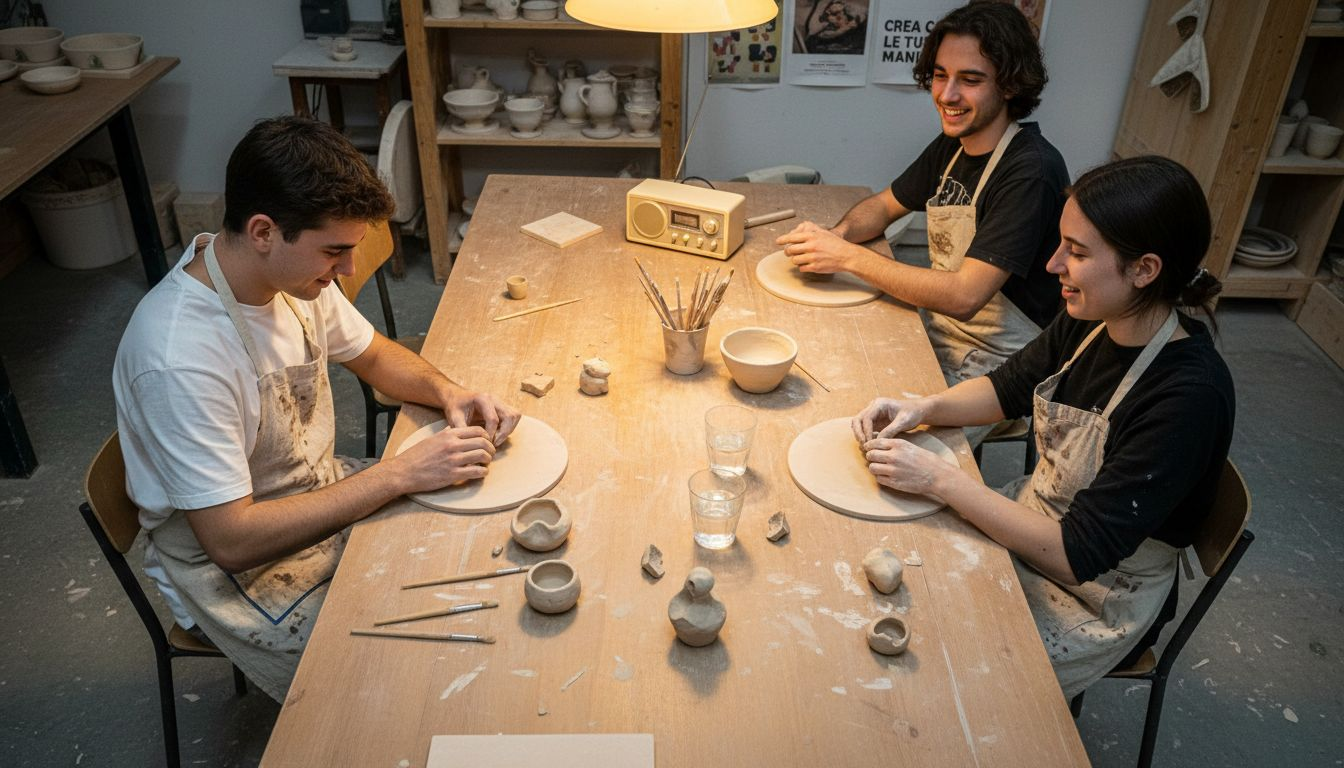
Ceramic workshops for beginners are the ideal entry point for those wishing to explore craft hobbies. These courses introduce basic techniques like coiling and slab building, allowing participants to create functional objects from the very first session. The immediate satisfaction of shaping clay attracts many new enthusiasts.
Weaving requires more patience but offers rewarding results. Workshops in Venice combine traditional techniques with modern approaches. Students learn to create decorative and functional textiles using manual looms. This practice develops fine motor coordination and a sense of rhythm.
Woodworking attracts those seeking a more structured hobby. Craft courses teach cutting, assembly, and finishing techniques. Milan and Turin offer specialized workshops in creative carpentry and restoration. These labs provide access to professional tools in safe environments.
Regional preferences reflect local traditions:
- Northern Italy: greater interest in woodworking and contemporary ceramics
- Central Italy: focus on traditional weaving and artistic painting
- Southern Italy: preference for decorative ceramics and metalwork
Recognizing one's interest becomes easy by trying different activities. Many workshops offer introductory sessions that allow experimentation with various techniques. This guided exploration helps identify the craft hobby best suited to one's inclinations.
Common Myths and Misconceptions About Craft Hobbies
The most common myth is that craft hobbies are reserved for experts or born artists. The reality shows that over 80% of courses accept absolute beginners with no prior experience. Workshops are structured to guide participants step-by-step through learning basic techniques.
Many believe that practicing craft hobbies requires significant financial investment. The average cost of a session remains under 30 euros, including materials. This accessibility allows for exploration of various activities without a burdensome financial commitment. Materials provided during workshops eliminate the need for preliminary purchases.
Key misconceptions to debunk include:
- Craft hobbies require innate talent: skills are developed through consistent practice and expert guidance
- A dedicated studio is needed: many workshops take place in equipped spaces that provide everything necessary
- They are solitary activities: labs create opportunities for socialization and sharing
- They are too time-consuming: two-hour sessions offer satisfactory results and significant learning
- They have no practical applications: acquired skills produce useful objects and personalized gifts
The distinction between craft hobbies and digital creative hobbies confuses many aspiring artisans. Craft hobbies require physical manipulation of materials and the creation of tangible objects. This characteristic makes them particularly effective for reducing stress and improving well-being.
Pro Tip: Start with workshops that include all materials in the session price. This choice eliminates the pressure to buy expensive equipment before confirming your interest. After three or four sessions, you will have gained enough experience to invest thoughtfully in personal materials.
Fear of failure prevents many people from starting. Professional workshops create supportive environments where mistakes become learning opportunities. Expert instructors guide participants through common difficulties, turning failed attempts into valuable lessons. Discovering local creative hobbies becomes an enjoyable adventure rather than an intimidating challenge.
How to Find and Choose Craft Hobby Workshops and Labs in Italy
Practical craft workshop experiences facilitate active learning, increasing skill retention by approximately 40% compared to purely theoretical methods. This superior effectiveness stems from the simultaneous involvement of mind, hands, and senses. Muscle memory reinforced by practical repetition consolidates acquired skills.
Milan, Florence, and Venice concentrate most professional craft workshops. These cities offer specialized workshops in various disciplines, from traditional to innovative. The density of opportunities makes it easier to explore multiple hobbies before committing to a specific one.
Essential criteria for choosing the right workshop:
- Required experience level: check that the course is suitable for beginners if you have no prior experience
- Materials included: prefer workshops that provide everything necessary to avoid preliminary purchases
- Group size: smaller classes ensure greater individual attention from the instructor
- Session duration: for beginners, two hours is the ideal time to learn without fatigue
- Reviews and testimonials: read other participants' experiences to assess quality and atmosphere
| Feature | With Materials Included | Without Materials Included |
|---|---|---|
| Initial Cost | Higher (25-35€) | Lower (15-20€) |
| Convenience | Maximum for beginners | Requires separate purchases |
| Material Quality | Guaranteed by organizer | Variable according to personal choice |
| Ideal For | Those who want to try without commitment | Those who already have materials or specific preferences |
The craft community of 2026 mainly develops through regular participation in workshops. Attending the same lab creates opportunities to build lasting relationships with other enthusiasts. These social connections enrich the experience beyond technical learning.
Different types of craft courses offer personalized paths to develop creativity and specific skills. Intensive one-day workshops allow for the completion of complex projects. Weekly evening courses foster gradual learning and the consolidation of techniques.
Pro Tip: Attend your first workshop with a friend or family member. Sharing the experience reduces performance anxiety and creates positive memories. Moreover, having a learning companion motivates regular practice and the exchange of constructive feedback between sessions.
To maximize learning during labs, arrive with specific questions prepared in advance. Observe the instructor's demonstrations carefully and take notes on key techniques. Photograph your progress to document the learning journey and identify areas for improvement.
Conclusion: Integrating Craft Hobbies into Daily Life
Craft hobbies offer concrete benefits for mental health and socialization, as demonstrated by the 30% reduction in stress among regular practitioners. The variety of available options ensures that everyone can find an activity suited to their interests and experience level. From ceramics to weaving, from woodworking to painting, the possibilities are practically endless.
To successfully integrate craft hobbies into your daily routine:
- Start with accessible workshops that include materials and accept absolute beginners
- Dedicate at least two hours per week to practice to develop consistent skills
- Participate in group labs to build social connections and receive feedback
- Explore different disciplines before specializing in a specific one
- Consider craft hobbies as an investment in personal well-being, not just a pastime
The key to success lies in consistency and openness to continuous learning. Each workshop session represents an opportunity for personal growth and the discovery of new passions. Craft hobbies transform free time into moments of meaningful creation and authentic connection with oneself and others.
Discover Craft Labs and Workshops with Club Joy
If you wish to explore local creative hobbies and immerse yourself in the world of craft hobbies, Club Joy is the ideal platform to begin your journey. We offer a curated selection of workshops and labs in ceramics, weaving, woodworking, and many other creative disciplines throughout Italy.
Our platform connects enthusiasts and beginners with expert artisans in major Italian cities. The craft courses to develop creativity available on Club Joy include all necessary materials and are designed to ensure an engaging and accessible learning experience. Join our community and transform your passion for manual work into a concrete experience of personal growth through the craft workshops we regularly organize.
Frequently Asked Questions About Craft Hobbies
What are craft hobbies?
Craft hobbies are creative manual activities that combine practical skills with experiential learning. They focus on the physical creation of tangible objects through traditional or contemporary techniques. Unlike digital hobbies, they require direct manipulation of materials such as clay, textiles, or wood.
What are the main benefits of craft hobbies?
Practicing craft hobbies reduces stress by 30% and significantly improves overall mental well-being. It increases the sense of community by 65%, fostering socialization and authentic connections. It develops unique manual skills transferable to other areas of daily and professional life.
How can I choose the right workshop for me?
Consider your current skill level and the budget available for your first experience. Prefer workshops with included materials to maximize convenience and avoid preliminary purchases. Read detailed reviews and check group size to ensure personalized attention from the instructor.
Do I need prior skills to start?
Most workshops welcome absolute beginners with no prior experience required. Instructors guide participants step-by-step through basic techniques, creating a supportive learning environment. No innate talent is needed, just curiosity and a desire to experiment with your hands.
Recommendation
- How to discover local creative hobbies and participate in workshops – Club Joy
- Artisan Community 2026: +15% Experiences & Social Benefits – Club Joy
- Ceramic Workshops: +30% Creativity and -40% Stress experienced – Club Joy
- The role of creativity in leisure time: benefits and practical impacts – Club Joy
- Wooden Puzzle Art: 60% Prefer Eco-Friendly Gifts 2026