
Experiential Hobbies: Benefits, Trends, and 2026 Applications
Over 20 million Italians choose experiential food tourism every year, and the number of people attending artisanal workshops is growing steadily. Yet many still think of hobbies as simple pastimes, something to do on the couch on a Sunday afternoon. The reality is very different. Experiential hobbies are transforming the way people learn, connect, and grow. In this guide, you will discover what makes them unique, which trends are dominating 2026, and how you can start experiencing them in your city.
Table of Contents
- What are experiential hobbies and why are they different from traditional pastimes
- Learning by doing: the dominant method in experiential workshops
- Experiential hobby trends in Italy: data, numbers, and new passions
- Mental well-being and inclusion: the benefits of experiential hobbies
- Obstacles and solutions: costs, time, generational transition, and innovation
- Practical applications and formats: how to participate in experiential hobbies in your city
- Try an experiential workshop with Club Joy
- Frequently Asked Questions
Key Points
| Point | Details |
|---|---|
| Effective learning by doing | The practical method accelerates creativity and manual skills thanks to experiential workshops. |
| Well-being and inclusion | Experiential hobbies improve mental state and promote social inclusion. |
| New trends and numbers | Cooking, ceramics, and food tourism are among the most popular and growing formats in Italy. |
| Innovative solutions | Digital and sustainable formats help overcome obstacles such as costs and time. |
| First practical experience | Accessible resources and formats exist to immediately start practicing creative hobbies in one's city. |
What are experiential hobbies and why are they different from traditional pastimes
A traditional pastime is something you do alone, often passively. You watch a series, read a book, solve a crossword puzzle. An experiential hobby, on the other hand, actively engages you. You learn a technique, create something with your hands, and interact with other enthusiasts.
As adult learning in Italy explains, experiential hobbies play a key role in developing manual and creative skills. It's not just about fun; it's about real, measurable, tangible growth.
The concept of experiential craftsmanship is based precisely on this: placing the participant at the center of a creative process guided by an expert. The main benefits include:
- Practical learning: you learn by doing, not just by listening
- Active creativity: every project is unique and personal
- Social connection: you share the space and experience with others
- Self-esteem: completing a handmade item provides concrete satisfaction
“The difference between a pastime and an experiential hobby lies in the involvement: one distracts you, the other transforms you.”
Learning by doing: the dominant method in experiential workshops
The term learning by doing means learning through direct action. You don't study the theory and then apply it: the theory emerges from the practice itself. In artisan workshops, this approach is the norm.
The artisan workshops at Castello di Padernello are a concrete example: the dominant methodology is precisely learning by doing, used to transmit techniques, creativity, and social networks among participants. This is not an isolated case; it is the model that works best for those who truly want to learn.
Here are the four typical steps of an effective experiential workshop:
- Inspiration: the master artisan demonstrates the process, tells the story of the material or technique
- Guided practice: each participant tries firsthand, with direct support
- Comparison: participants observe each other's work, exchange ideas and solutions
- Growth: participants take home not only the created object but also a new skill
This method also promotes inclusive workshops, as it lowers barriers between experts and beginners. Everyone starts from the same point: hands-on work.
To learn more about creative training models in practical workshops, there are dedicated resources that explain how to structure effective programs.
Pro Tip: Choose workshops with small groups, a maximum of 10 people. The smaller the group, the more the instructor can guide you, and the faster you learn.
Experiential hobby trends in Italy: data, numbers, and new passions
The numbers speak for themselves. 52% of Italians practice cooking or pastry as a hobby, while 15% engage in crochet and knitting. Ceramics is rapidly growing, especially among those aged 25 to 40. And experiential food tourism already involves 20 million people.
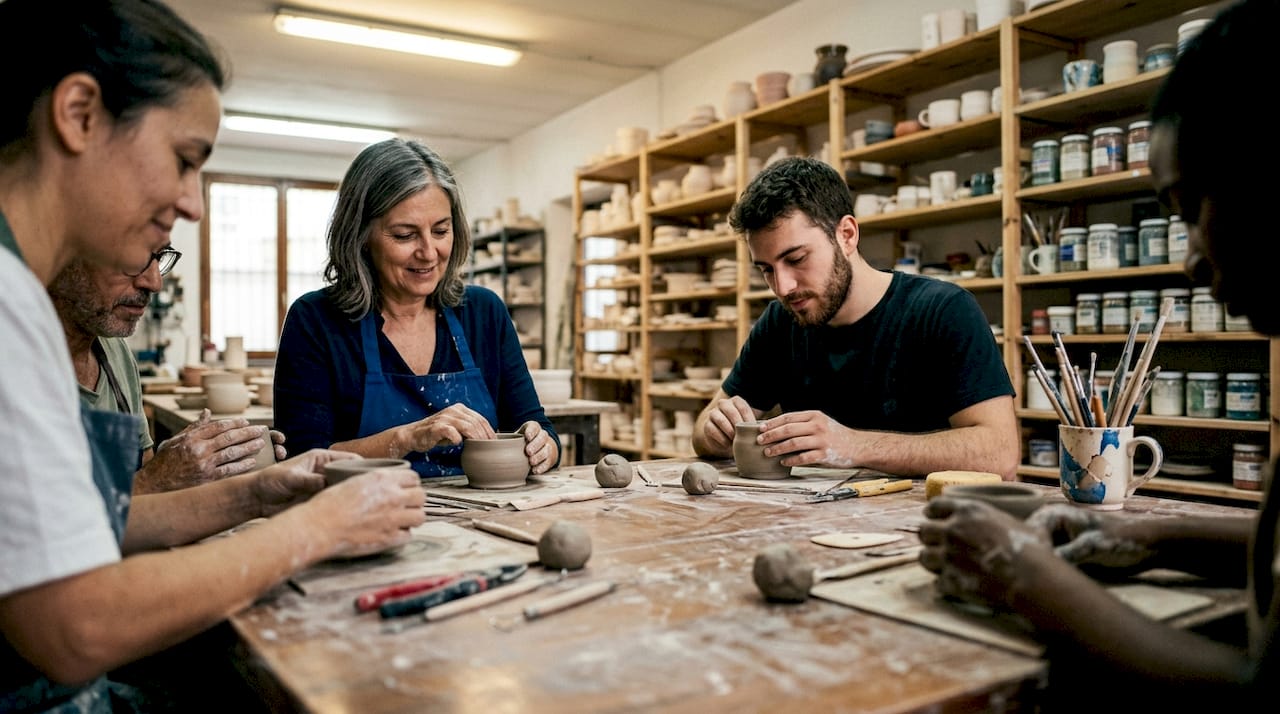
On the entrepreneurial front, Italy's 1,300,000 artisan businesses represent 21% of all national companies, with a value added of 154 billion euros. Craftsmanship is not a declining sector: it is a vibrant ecosystem.
| Experiential Hobby | % Practitioners | 2026 Trend |
|---|---|---|
| Cooking and pastry making | 52% | Stable, high demand |
| Crochet and knitting | 15% | Growing |
| Ceramics | Increasing | Strong growth |
| Experiential food tourism | 20 million | Rapid expansion |
| Painting and drawing | Widespread | Stable |
Emerging passions in 2026 include:
- Ceramics and clay modeling
- Artisan pastry and fermentation
- Weaving and natural dyeing
- Expressive illustration and drawing
- Woodworking and leather crafting
To stay updated on creative hobby trends in 2026 and discover the types of artisan courses available, online resources are increasingly rich and accessible.
Mental well-being and inclusion: the benefits of experiential hobbies
80% of people choose a hobby for well-being, not just for fun. Stress reduction, improved concentration, a sense of accomplishment: these are documented and concrete effects.
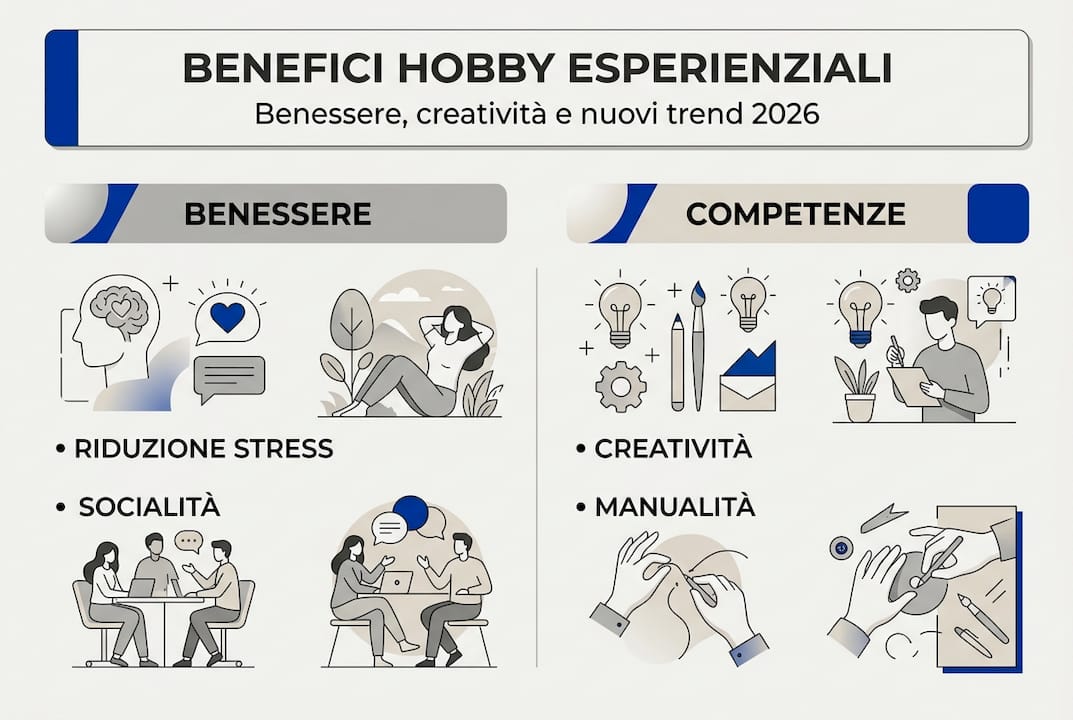
But there's more. Inclusive workshops are a recognized value: 81% of teachers appreciate the inclusive value of practical manual activities. Workshops break down social, cultural, and generational barriers.
The main benefits you can expect:
- Reduction of anxiety and chronic stress
- Improvement of memory and coordination
- Building authentic relationships with other enthusiasts
- Concrete possibility of turning a hobby into a professional activity
“Many professional artisans today started with a Saturday afternoon workshop. The line between hobby and work is thinner than you think.”
If you want to understand how creative hobbies influence well-being and team building, or are looking for tips for tailor-made creative experiences, there are practical guides that help you find your way. You can also explore the experiential offers available to find the format that best suits you.
Pro Tip: Before signing up for a workshop, ask yourself what you want to take away: a technical skill, a moment of relaxation, or new friendships. The answer will help you choose the right format.
Obstacles and solutions: costs, time, generational transition, and innovation
Not everything is simple. 25% of enthusiasts give up due to costs or lack of time, and the crisis of generational transition in artistic crafts is real. Many techniques risk disappearing because they are not passed down.
But solutions exist. Here is a direct comparison between obstacles and concrete responses:
| Obstacle | Practical Solution |
|---|---|
| High costs | Short workshops, monthly subscriptions, shared groups |
| Lack of time | 2-hour formats, evening or weekend workshops |
| Knowledge transfer | Digital platforms, video tutorials, mentorship |
| Geographical distance | Online workshops, itinerant events |
| Lack of confidence in one's abilities | Courses for absolute beginners, non-judgmental environment |
Practical tips for those who want to start without obstacles:
- Start with a single workshop before committing to a long course
- Look for workshops with flexible refund policies
- Use digital platforms to compare prices and reviews
- Ask if there's a free trial or an introductory session
For those who want to organize an experience, the guide on how to organize an effective creative workshop offers concrete insights. If you are looking for the right workshop for you, the guide to choosing artisan workshops is an excellent starting point.
Practical applications and formats: how to participate in experiential hobbies in your city
Finding an artisan workshop in your city is easier than you think. Slow tourism integrates artisan workshops and creative experiences, fostering community networks that go far beyond a simple course. This means that even in small towns, real opportunities exist.
Here are the three steps to get started:
- Research: use dedicated platforms, local social media, and event calendars to find workshops near you
- Enrollment: choose a format suitable for your skill level and available time, from a one-evening workshop to a monthly course
- Networking: actively participate, exchange contacts, join online communities of enthusiasts
The most popular formats in 2026 include:
- Short courses from 2 to 4 hours, ideal for those who want to try without commitment
- Themed workshops related to seasons or holidays
- Creative tourism experiences, often combined with cultural visits
- Team-building activities for companies, with tailor-made workshops
Useful resources for finding workshops:
- Online platforms specializing in creative experiences
- Local artisan associations and chambers of commerce
- Event calendars on municipal and pro loco websites
- Social media: Facebook groups and Instagram profiles of local artisans
To discover local creative hobbies in your area, there are digital tools that aggregate offers and reviews, making the search much faster.
Try an experiential workshop with Club Joy
If you've read this far, you already understand that experiential hobbies are not a luxury: they are an investment in yourself. The next step is simple: try it. Club Joy offers practical workshops curated by artisans and professionals in various Italian cities, designed for those who truly want to learn, not just observe.
From the expressive drawing workshop to artistic experiences in Milan, each activity is designed to take you out of your comfort zone in a pleasant and stimulating way. Whether you want to develop a new manual skill, reduce stress, or simply spend quality time with other enthusiasts, you'll find the right format for you. Explore the catalog, choose an experience, and book your first workshop today.
Frequently Asked Questions
What are the main experiential hobbies in demand in Italy in 2026?
Cooking and pastry making, ceramics, crochet, and experiential food tourism are the most popular. 52% of Italians practice cooking, and 20 million choose food-related experiences.
What are the benefits of practicing experiential hobbies beyond relaxation?
They foster self-esteem, mental well-being, new skills, and can become professional opportunities. Stress reduction is one of the most documented effects.
How to address obstacles such as costs or lack of time?
There are short formats, evening workshops, and digital platforms that make access easier. Digital and sustainable training is opening new avenues even for those with limited time.
How can one start participating in artisan and experiential workshops?
You can consult online event calendars, enroll in local courses, or try the formats offered by platforms like Club Joy, which gathers experiences in various Italian cities.
Can experiential hobbies promote social inclusion?
Yes, they promote cooperation, peer education, and support for disadvantaged people. 81% of teachers recognize the inclusive value of practical manual activities.
Recommendation
- Creative Hobby Trends 2026: News and Workshops in Italy – Club Joy
- Why Choose Creative Hobbies for Well-being and Team Building 2026 – Club Joy
- Artisan Hobbies: 45% of Italians Practice Them – Club Joy
- Experiential Offers: A Complete Guide for Creatives 2026 – Club Joy
- Value development of vintage guitars 2026: Trends and opportunities