
Artistic hobby ideas: choose your creative project
Finding the right art hobby can seem complicated with so many options available. Many enthusiasts get stuck in their choice, unsure which creative project best suits their skills, budget, and personal goals. This article offers clear and practical criteria for selecting the perfect hobby, with detailed examples guiding beginners to experts toward their ideal passion.
Table of Contents
- How to choose the right art hobby: fundamental selection criteria
- Ceramics: a practical and tactile hobby
- Acrylic painting: speed and versatility for every level
- Origami and creative recycling: accessible and sustainable hobbies
- Comparison and recommendations for choosing your art hobby
- Discover guided art experiences to develop your creativity
- Frequently asked questions about art hobby ideas
Key Points
| Point | Details |
|---|---|
| Selection Criteria | Evaluate skill level, costs, accessibility, and creative benefits before starting. |
| Ceramics | Requires intermediate skills and greater investment but offers rewarding tactile experiences. |
| Acrylic Painting | Suitable for all levels, fast results, and accessible kits from 25 to 40 euros. |
| Origami and Recycling | Economical and sustainable options, ideal for beginners on a limited budget. |
| Practical Comparison | Comparative tables help in choosing based on personal goals and context. |
How to choose the right art hobby: fundamental selection criteria
Choosing an art hobby requires attention to several factors that determine how satisfying and sustainable the experience will be over time. The first step is to assess your current skill level. Starting with a project that is too complex leads to frustration, while one that is too simple can be boring.
The available budget is another crucial element. Materials, tools, and access to workshops vary considerably among different artistic disciplines. According to recent studies, 66% of Italians prefer hobbies that combine technical learning with personal expression.
Geographical accessibility plays an important role in Italy, where the distribution of types of craft courses varies between cities and regions. Those living in urban centers more easily find specialized workshops, while in rural areas it is better to opt for hobbies that can be practiced independently at home.
The creative and personal benefits that each activity offers deserve careful consideration. Some hobbies develop precise manual skills, others promote mental relaxation or socialization. Identify which aspects you are most looking for in the creative experience.
Here are the main criteria to evaluate:
- Weekly time available to dedicate to the hobby without stress
- Physical space needed for materials and ongoing projects
- Preference for solitary or group activities
- Short-term goals such as relaxation or long-term goals such as skill development
- Compatibility with personal selection criteria and lifestyle
Pro Tip: Before investing in expensive materials, try the hobby through an introductory workshop or by using basic materials. Discover local creative hobbies in your area to try different disciplines without excessive initial commitment.
Ceramics: a practical and tactile hobby
Ceramics offers a deeply tactile and rewarding creative experience. It requires intermediate manual skills, with a progressive learning curve that allows for constant improvement. The initial investment is moderate, with workshop sessions costing an average of between 40 and 70 euros.
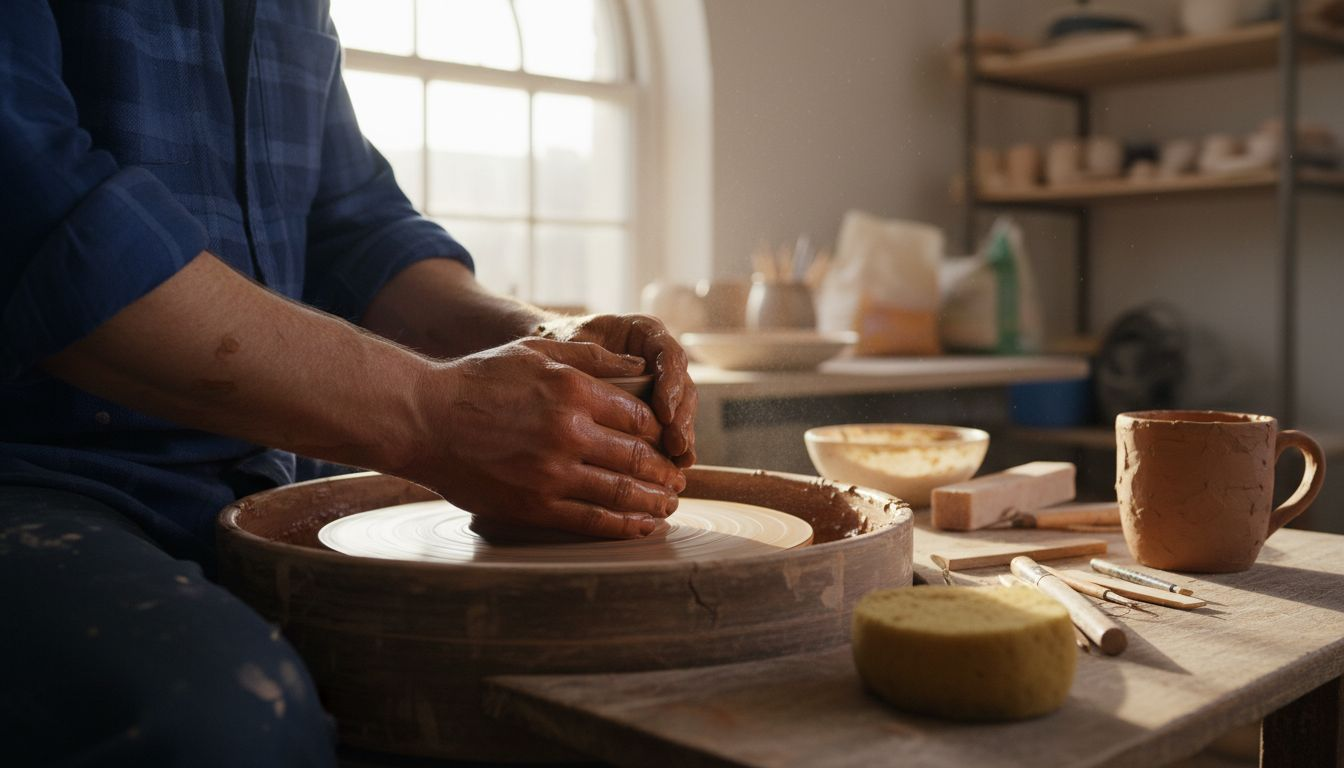
The process of shaping clay stimulates the senses in a unique way. Hands work directly with the material, developing sensitivity and precision. This physical component makes ceramics particularly appreciated by those seeking an engaging and meditative creative activity at the same time.
The popularity of this hobby is constantly growing. Enrollment in ceramics workshops grew by 18% in 2025, reflecting the increasing interest in concrete craft activities. Many participants appreciate the balance between technique and expressive freedom.
Specialized tools include wheels, kilns, and glazes, generally available in equipped workshops. Those who want to practice at home must consider greater investments, while attending courses allows access to professional facilities without demanding purchases.
Main benefits of ceramics:
- Development of fine motor skills and hand-eye coordination
- Mental relaxation through direct contact with natural materials
- Creation of personalized functional objects for home and gifts
- Socialization in creative and stimulating environments during courses
Ceramics transforms clay into functional art, offering immediate satisfaction when you see your first finished piece come out of the kiln.
Exploring ceramics as a hobby reveals advantages that go beyond simple creativity, positively influencing mental well-being and practical skills. The tradition of Italian artisan ceramics adds cultural value to the experience, connecting modern practitioners to centuries of craftsmanship.
Acrylic painting: speed and versatility for every level
Acrylic painting stands out for its accessibility and rapid results. Perfect for beginners who want to experiment immediately, but complex enough to satisfy advanced artists. The quick drying time, between 20 and 30 minutes, allows for fast layering and immediate corrections.
The initial investment is modest and accessible. Basic acrylic painting kits cost between 25 and 40 euros, including essential colors, brushes, and canvases to get started. This low threshold removes economic barriers that deter many aspiring artists.
The versatility of acrylic materials amazes those who experience them. You can paint on canvas, wood, paper, fabric, and many other surfaces. The consistency is easily adjusted by adding water or medium, allowing techniques ranging from watercolor to thick impasto with a palette knife.
Painting workshops offer structured guidance for those who prefer to learn with expert support. The alternative of self-learning through online tutorials works well thanks to the intuitive nature of the medium.
Advantages of acrylic painting:
- Quick drying time that speeds up the creative process and reduces waiting times
- Easy cleaning with water, no need for dangerous chemical solvents
- Compatibility with multiple surfaces and different painting techniques
- Bright and permanent colors that maintain vibrancy over time
- Possibility to work indoors without special ventilation required
Pro Tip: Start with a limited palette of primary colors plus black and white. Learning to mix colors develops color understanding and reduces waste. Gradually add specific shades as you identify your chromatic preferences.
Exploring the benefits of creativity in free time through painting highlights how artistic expression improves mood and self-esteem. The immediate satisfaction of seeing a completed work in a few hours motivates continuity and experimentation.
Origami and creative recycling: accessible and sustainable hobbies
Origami and creative recycling represent the most economical and accessible options in the landscape of artistic hobbies. Origami only requires paper and patience, with initial costs between 5 and 15 euros for specific paper. Creative recycling goes further, using already available materials such as scrap paper, discarded fabrics, and containers.
These hobbies remove entry barriers. No equipped studios, expensive tools, or prior skills are needed. The learning curve progresses gradually, from simple models to complex creations, allowing visible progress that motivates continuation.
Creative recycling reduces material costs by 40 to 60% compared to hobbies that constantly require new materials. This economic sustainability is accompanied by environmental benefits, reducing waste and promoting ecological awareness.
Both disciplines stimulate important cognitive abilities. Origami develops spatial thinking, precision, and patience through sequential folding. Creative recycling encourages problem-solving, imagination, and the ability to see potential in seemingly useless objects.
Steps to get started successfully:
- Obtain basic paper for origami or collect clean and safe recyclable materials
- Follow free online tutorials starting with simple and clear projects
- Practice regularly, dedicating 15-30 minutes daily to develop manual skills
- Join online communities to share creations and receive constructive feedback
- Gradually experiment with different materials and techniques as you gain confidence
| Feature | Origami | Creative Recycling |
|---|---|---|
| Initial Cost | 5-15 euros | Almost zero |
| Skill Level | Beginner-Advanced | Beginner-Intermediate |
| Space Required | Minimum, small table | Variable, work area |
| Environmental Impact | Low, recyclable paper | Very positive |
| Visible Results | Immediate, same session | Variable per project |
Exploring creative recycling economic ideas opens up infinite possibilities for personalizing your home and gifts without burdening your budget. Hobbies improve concentration and memory through manual activities that require focused attention and executive precision.
Comparison and recommendations for choosing your art hobby
A systematic comparison between different art hobbies facilitates informed decisions based on personal preferences and constraints. The following table summarizes key characteristics of six popular disciplines, allowing for quick and comparative evaluations.
| Hobby | Monthly Cost | Weekly Time | Initial Difficulty | Main Benefits |
|---|---|---|---|---|
| Ceramics | 120-200 euros | 3-5 hours | Medium | Tactile, relaxing, functional objects |
| Acrylic Painting | 30-60 euros | 2-4 hours | Low | Versatile, fast results, expressive |
| Mosaic | 80-150 euros | 4-6 hours | Medium-High | Precision, meditative, decorative |
| Calligraphy | 20-40 euros | 1-3 hours | Medium | Concentration, elegance, practice |
| Creative Recycling | 10-25 euros | 2-5 hours | Low | Sustainable, economical, problem-solving |
| Origami | 5-15 euros | 1-2 hours | Low-Medium | Accessible, portable, cognitive |
Recommendations for specific profiles help personalize the choice. Those starting without experience should prioritize acrylic painting or origami, which offer immediate satisfaction without excessive technical frustrations. A limited budget naturally directs towards creative recycling and origami.
Manual and physical work enthusiasts find ideal outlets in ceramics and mosaic. These hobbies engage both body and mind, creating a deep connection between thought and material realization. The required patience develops perseverance applicable also outside the artistic field.
Those seeking calm and meditative precision will appreciate calligraphy and origami. Both require controlled movements, attention to detail, and conscious repetition that induces beneficial flow states for stress reduction.
Practical tips for getting started:
- Visit introductory workshops before investing in expensive personal materials
- Establish a regular, even short, routine rather than sporadic long sessions
- Connect with local or online communities for motivation and continuous support
- Document progress with photos to recognize improvements over time
- Combine complementary hobbies for diversified creative stimuli
Maintaining commitment requires balancing realistic expectations with exploratory curiosity. Not every session will produce masterpieces, but every practice develops incremental skills. The growing popularity of craft hobbies demonstrates how more and more people recognize value in tangible creative activities.
To discover creative hobbies suitable for your geographical and social context, exploring local offers and dedicated platforms speeds up the process. Creative hobby trends are constantly evolving, offering new opportunities for those who wish to experiment with emerging disciplines.
Discover guided art experiences to develop your creativity
After identifying the hobby that reflects your preferences, the next step is to actually experience it. Club Joy offers art workshops led by expert artisans throughout Italy, with a particular focus on urban areas such as Milan and Florence.
Guided art experiences combine practical learning with moments of creative socialization. Each session provides materials, tools, and clear instructions for completing concrete projects, eliminating the uncertainty of initial self-learning.
In addition to ceramics and painting, the platform offers unique experiences such as the fresh pasta course in a Sardinian village, combining culinary creativity with cultural immersion. For those who wish to share their artistic skills, the become a host option transforms personal passion into teaching opportunities.
Frequently asked questions about art hobby ideas
How can I start an art hobby without experience?
Choose disciplines with low initial technical requirements such as acrylic painting, origami, or creative recycling. These hobbies allow for immediate progress without excessive frustration. Take advantage of introductory painting workshops that offer step-by-step guidance and personalized feedback to build confidence in your abilities.
Which art hobbies are cheaper to practice at home?
Origami only requires specific paper, with an initial investment of 5-15 euros in total. Economical creative recycling uses readily available materials such as newspaper, old fabrics, and containers, almost completely eliminating costs. Both can be comfortably practiced at home without specialized equipment.
How to find art workshops near me in Italy?
Use web platforms dedicated to local creative hobbies that map offers by city and region. Social groups and thematic forums share information on emerging courses and local artisans. Many workshops also offer online options for those living in areas with fewer physical options available.
What benefits do art hobbies bring to the mind and well-being?
Art hobbies improve concentration, memory, and reduce stress through focused engagement in manual activities. They promote states of mindfulness similar to meditation, producing deep mental relaxation. The benefits of creativity in free time also include increased self-esteem and a sense of personal achievement.
Is it possible to adapt an art hobby to your own pace and schedule?
Many hobbies allow for flexible practice adaptable to varying personal availability. Painting, origami, and creative recycling do not require obligatory long sessions, working well even with 15-30 minutes daily. For those who want to participate in creative workshops, online options offer maximum flexibility concerning work and family commitments.
Recommendation
- How to discover local creative hobbies and participate in workshops – Club Joy
- The role of creativity in leisure: benefits and practical impacts – Club Joy
- Craft Hobbies: 45% of Italians Practice Them – Club Joy
- Creative Sewing: 10 simple projects for beginners – Club Joy
- The Future of PPE: Innovations and Trends -
- Creating a personalized gift with a dog motif made easy – Pfotenpoesie