
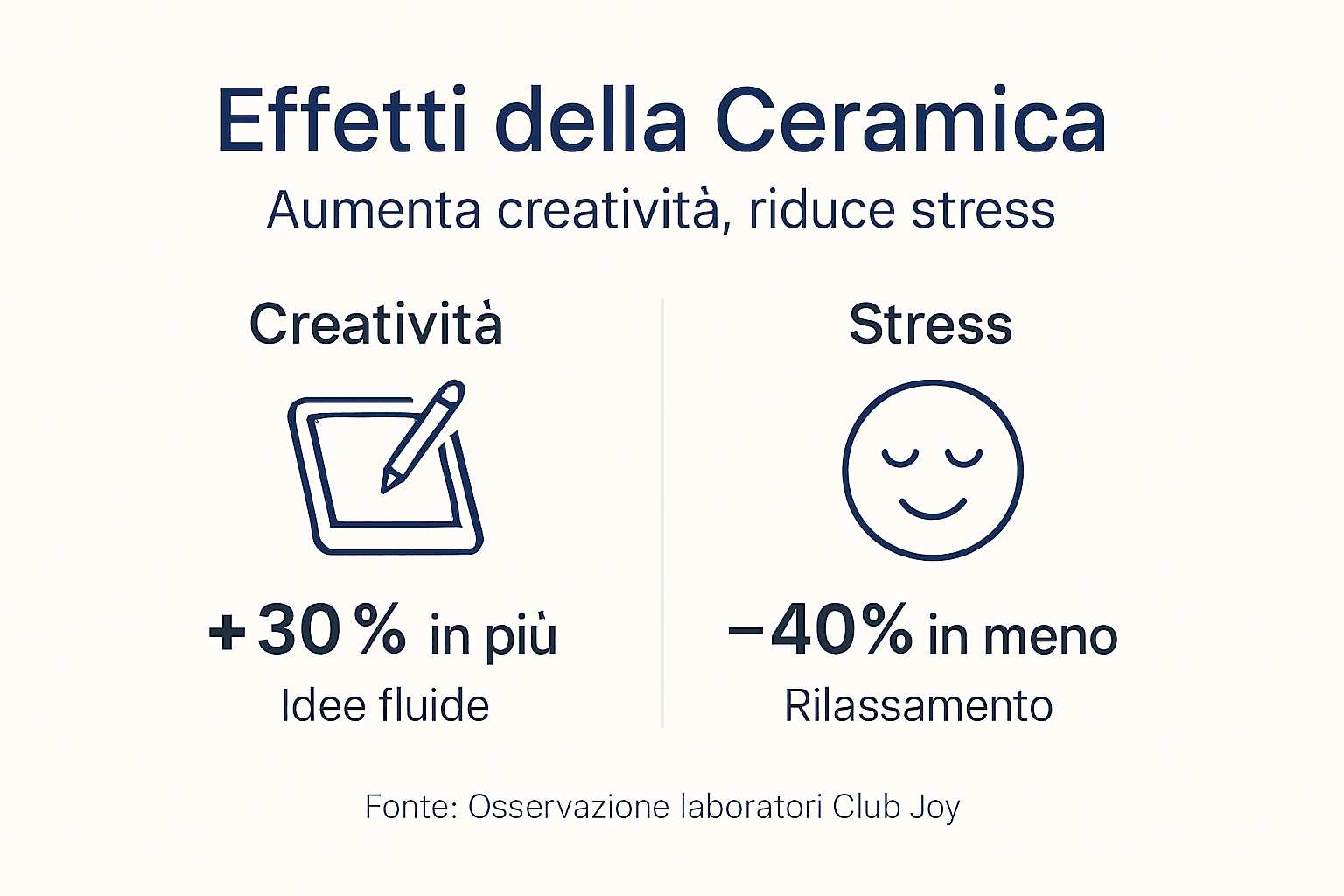
Ceramics workshops: +30% creativity and -40% stress experienced
Engaging in a pottery workshop can reduce your stress by up to 40% and boost creativity by 30%. These surprising figures demonstrate how working with clay is not just a pastime, but a powerful practice for mental well-being. Pottery workshops in Italy offer accessible experiences even for those who have never touched clay, combining practical learning with immediate therapeutic benefits. In this article, you will discover how to choose the right workshop, what to expect from your first experience, and how to maximize the creative and emotional advantages of this ancient art.
Table of Contents
- Mental and Therapeutic Benefits of Pottery
- Practical Aspects and Accessibility of Beginner Workshops
- Choosing the Right Pottery Workshop in Italy
- Common Mistakes and Myths About Pottery Practice
- How to Start: First Workshop and What to Expect
- Frequently Asked Questions
Key Points
| Point | Details |
|---|---|
| Proven Mental Benefits | Pottery reduces stress by 40% and increases creativity by 30% through manual activity and mindfulness |
| Affordable Accessibility | Basic sessions last 2-3 hours with average costs of 40-60 euros, materials included |
| No Experience Required | Beginner workshops offer continuous support and simplified techniques |
| Immediate Practical Learning | You create tangible objects from the first session, developing tactile and creative skills |
Introduction to Pottery for Beginners
Pottery is the art of shaping clay to create functional or decorative objects that are then fired at high temperatures. This simple definition hides a world of creative possibilities accessible to anyone, regardless of prior artistic experience.
A typical beginner workshop begins with a brief introduction to materials and basic techniques. The instructor demonstrates how to prepare the clay, explains fundamental techniques such as hand-building or using the potter's wheel, and guides participants in creating their first object. The atmosphere is relaxed and collaborative, perfect for those who want to explore without pressure.
Experiential learning is at the heart of every session. Touching the clay, feeling its consistency, experimenting with the pressure needed to shape it: these tactile elements make pottery a unique experience that engages both body and mind. According to a study on the effectiveness of pottery workshops, the combination of manual activity, artistic expression, and technical problem-solving stimulates different brain areas, measurably enhancing creativity.
Pottery perfectly combines creativity and technique. While you express your artistic vision through shapes and decorations, you also learn technical principles such as clay consistency, drying times, and firing techniques. This balance makes each session stimulating yet manageable.
Elements that make pottery ideal for beginners include:
- Immediate feedback: you immediately see the result of your actions on the clay
- Transformable errors: fresh clay can be easily reshaped
- Natural progression: each technique builds on previous ones
- Tangible results: you take home concrete creations from the first lesson
- Welcoming community: other beginners share the learning journey
Mental and Therapeutic Benefits of Pottery
Pottery offers documented psychological benefits that go beyond simple creative enjoyment. Participating in pottery workshops reduces perceived stress by 40% and increases creativity by 30%, according to field research that measures these effects through standardized tests before and after courses.
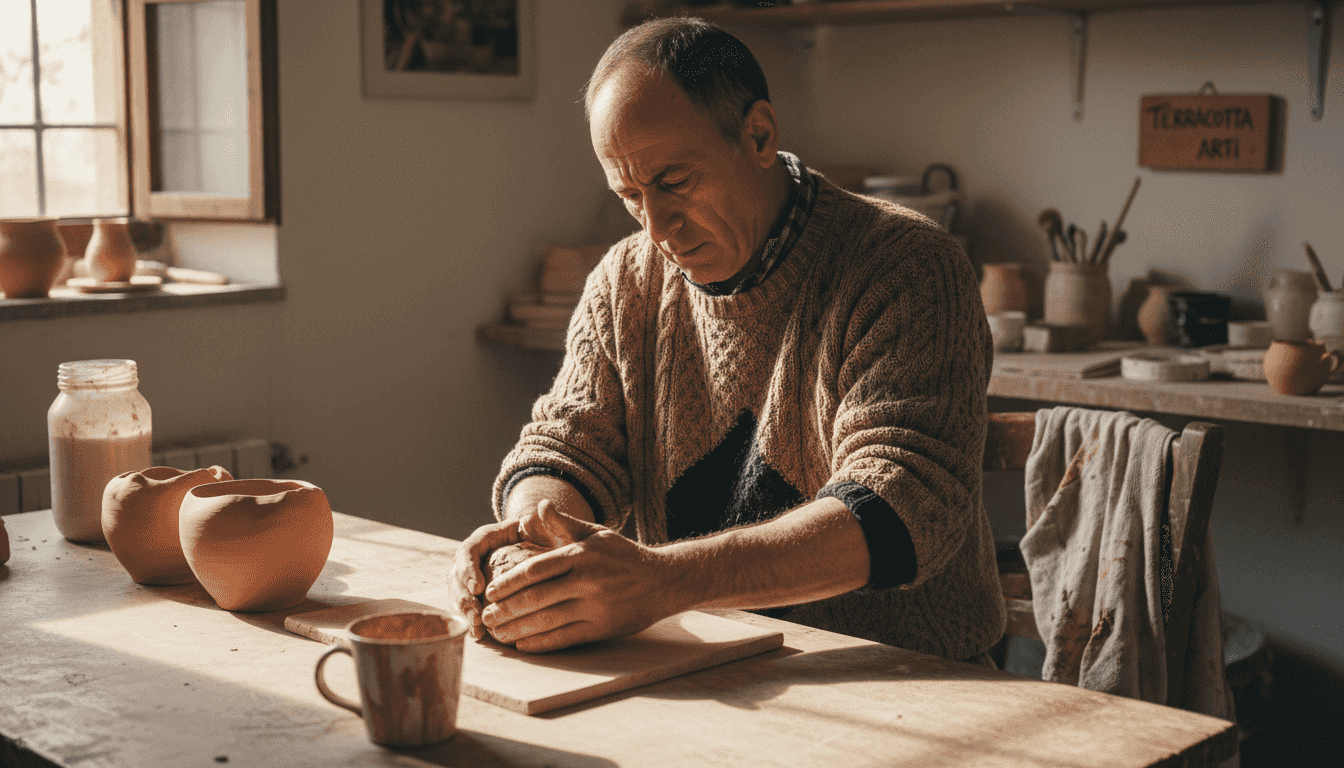
Stress reduction occurs through multiple mechanisms. Manipulating clay requires total concentration on the present moment, diverting you from daily worries. The repetitive movement of the hands has a calming effect similar to meditation. Furthermore, direct contact with natural materials triggers relaxation responses in the nervous system.
Pottery naturally develops mindfulness. When shaping clay, you must pay constant attention to pressure, speed, and form. This focused concentration trains the mind to stay in the present, a skill that improves emotional management and resilience. Many participants describe a state of "flow" where time seems to stop.
Creative benefits are equally significant. Working with your hands stimulates neural connections that support divergent thinking and innovative problem-solving. Each pottery project requires aesthetic and technical decisions, training your ability to generate original ideas.
Studies on therapeutic effects explain that pottery combines sensory stimulation, emotional expression, and practical problem-solving. This triad activates different brain areas simultaneously, producing benefits that persist beyond the workshop session.
Proven mental benefits include:
- Measurable decrease in cortisol (stress hormone)
- Improved sustained concentration
- Increased self-esteem through concrete creations
- Reduction of anxious symptoms through calming repetitive activities
- Development of patience and acceptance of imperfection
Pro Tip: To maximize relaxation during sessions, focus on the tactile sensations of the clay rather than the final outcome. Breathe deeply as you work and allow the clay to guide your hands. This process-oriented mindset transforms every mistake into an exploratory opportunity.
Stress Reduction: 40% less after 6 sessions
Practical Aspects and Accessibility of Beginner Workshops
Pottery workshops for beginners are designed to be accessible in terms of time and economic investment. Most basic sessions last between 2 and 3 hours, an ideal interval for learning fundamental techniques without overwhelming newcomers. This short duration makes participation easier even for those with work or family commitments.
The average cost for an introductory session varies between 40 and 60 euros, with all materials included. This price covers clay, basic tools, firing of the created object, and instructor supervision. Some workshops offer multiple packages with reduced rates, making the investment even more convenient for those who wish to continue.
Necessary tools are provided by the workshop, eliminating the need for preliminary purchases. Typically you will use:
- Clay prepared in an adequate quantity for the project
- Modeling tools for shaping and finishing
- Sponges for smoothing surfaces
- Wires for cutting clay
- Potter's wheel (for courses that include it)
- Glazes and colors for decoration
Access to pottery workshops is facilitated by their presence in many Italian cities. Milan, Rome, Florence, and other locations offer multiple options, allowing you to choose based on location and availability. Most accept online bookings, simplifying organization.
Learning in basic workshops is structured for gradual progression. You start with simple manual techniques before moving on to more complex tools. Instructors adapt the pace to the group's abilities, ensuring no one falls behind. This flexibility makes the experience enjoyable even for those who consider themselves "uncreative."
| Feature | Detail |
|---|---|
| Basic session duration | 2-3 hours |
| Average cost | 40-60 euros (materials included) |
| Typical group size | 6-12 participants |
| Objects created per session | 1-2 pieces |
| Firing time | 7-10 days |
| Artwork collection | Generally at the workshop |
Pro Tip: To choose the right workshop, evaluate the distance from home, available times, and the instructor's style visible from reviews. A nearby workshop facilitates continuity, essential for developing skills. Prefer small group sessions to receive more personalized attention, especially if you are an absolute beginner.
Choosing the Right Pottery Workshop in Italy
Choosing the right workshop significantly influences your learning experience. The first criterion is the balance between theory and practice. Effective workshops dedicate little time to explanation and maximize manual activity, allowing you to learn by doing. Ensure that at least 70% of the time is dedicated to direct modeling.
The quality of instructors determines the quality of the experience. Look for professionals with specific teaching experience for beginners, not just technical competence. Effective instructors communicate clearly, demonstrate patience, and adapt their teaching to different learning paces. Reviews from other participants are reliable indicators.
The workshop environment contributes to your comfort and creativity. Bright, clean, and organized spaces facilitate learning. Check that the workshop has adequate and well-maintained equipment. A welcoming and informal atmosphere reduces performance anxiety typical of beginners.
Italian cultural contexts enrich the experience. Workshops with local artists often integrate regional ceramic traditions, offering unique perspectives. This connection with local artisanal heritage adds cultural depth to technical learning.
Group size and composition influence interaction. Groups of 6-10 people allow individual attention while maintaining stimulating social dynamics. Some workshops organize thematic sessions or sessions for homogeneous levels, facilitating connections between participants with similar interests.
| Aspect | Traditional Workshop | Modern Creative Workshop |
|---|---|---|
| Main Focus | Classical techniques and precision | Experimentation and personal expression |
| Atmosphere | Structured and formal | Informal and playful |
| Tools | Mainly potter's wheel | Mix of hand-building techniques and tools |
| Ideal for | Those seeking technical mastery | Those exploring creativity without pressure |
| Typical Results | Perfect functional objects | Unique and artistic pieces |
Essential criteria for conscious selection:
- Verify instructor's certifications or professional affiliations
- Read at least 5-10 recent reviews from different sources
- Ask if you can observe a session before enrolling
- Evaluate the refund policy for cancellations
- Check the inclusion of materials and firing in the price
- Consider the possibility of continuing with advanced courses
Common Mistakes and Myths About Pottery Practice
Several myths discourage potential participants from exploring pottery. Debunking these erroneous beliefs helps you approach the experience with an open and realistic mindset.
-
Myth: Pottery is only for those with innate artistic talent. In reality, beginner workshops teach specific techniques that anyone can learn with practice. "Talent" is less important than willingness to experiment and learn from mistakes. Many successful potters started without any prior artistic training.
-
Myth: It takes years of practice to create something usable. Modern workshops guide you in creating functional objects from the very first session. Bowls, cups, or small vases are common introductory projects that you produce and take home. Quality improves with practice, but utility is immediate.
-
Myth: Pottery is an expensive hobby that requires personal equipment. Workshops provide everything you need, eliminating initial investments. You can practice for months without buying anything. Only if you decide to continue seriously will you consider personal equipment, and even then with affordable options available.
-
Myth: It's too complicated for those without manual coordination. Basic techniques are accessible to everyone. Instructors show simplified and repeatable movements. Practice quickly improves coordination, and the malleable nature of clay forgives inaccuracies.
-
Common mistake: Expecting immediate perfection. Clay requires patience and acceptance of imperfection. The most interesting pieces often arise from "mistakes" transformed into unique characteristics. Embrace the exploratory process rather than fixating on preconceived results.
-
Common mistake: Not asking questions for fear of appearing incompetent. Instructors appreciate questions because they show active engagement. Every question also helps other participants with similar doubts. Beginner workshops are safe spaces for learning.
-
Common mistake: Negatively comparing yourself to other participants. Everyone progresses at their own pace. Focus on your personal journey rather than external comparisons. Pottery is an individual practice, not a competition.
How to Start: First Workshop and What to Expect
Mentally and logistically preparing yourself maximizes the enjoyment of your first pottery experience. Mentally, arrive with open curiosity and realistic expectations. Don't try to create masterpieces: the goal is to explore materials and techniques, having fun in the process.
Logistically, wear comfortable clothes that can get dirty. Many workshops provide aprons, but clay can still splash. Avoid elaborate jewelry that could get caught. Tie back long hair to prevent distractions. Arrive 5-10 minutes early to settle in without rushing.
In the first sessions, you will learn fundamental techniques such as:
- Clay preparation (removing air bubbles)
- Basic hand-building (pinching, coiling)
- Using tools to refine surfaces
- Attachment techniques for joining separate pieces
- Simple decoration before firing
Each technique is demonstrated by the instructor before you try it. Support is constant, with gentle corrections that quickly improve your execution. Most beginners create a completed object in the first session.
The ideal attitude combines concentration and lightness. Pay attention to instructions and tactile sensations, but don't take yourself too seriously. Clay responds to your energy: tension produces rigidity, relaxation facilitates fluidity. Breathe, smile, and allow creativity to emerge naturally.
Practical tips for active participation:
- Experiment with different pressures and speeds to understand how clay reacts
- Ask specific questions about techniques you find difficult
- Observe other participants to absorb different approaches
- Accept imperfections as part of the creative process
- Photograph your creations to document progress over time
Pro Tip: Take advantage of the social aspect of the workshop to connect with other participants. Sharing discoveries and challenges enriches the experience and can lead to lasting friendships. Many workshops include breaks with drinks where informal conversations deepen the sense of community. This social dimension amplifies the therapeutic benefits of pottery itself.
Discover Our Pottery and Creative Hobby Workshops on Club Joy
Now that you know the mental, practical, and creative benefits of pottery, it's time to turn this knowledge into direct experience. Club Joy makes it easy to discover and book pottery workshops throughout Italy, connecting you with expert artisans and welcoming spaces.
The platform offers pottery workshops selected for teaching quality and accessibility for beginners. Each experience is designed to stimulate creativity and well-being, exactly as described in this article. You can explore craft courses to develop creativity in various disciplines beyond pottery, expanding your manual skills.
Club Joy's basic pottery classes include all materials, personalized instruction, and the chance to take home your creations. Whether you're looking for a relaxing activity for yourself or an experience to share with friends, you'll find options to suit every preference and budget. Start your creative journey today.
Frequently Asked Questions
Why is attending a pottery workshop beneficial?
Pottery stimulates creativity through practical problem-solving and artistic expression, increasing it by 30% according to documented studies. It reduces stress by 40% through repetitive manual activity that induces mindfulness. It fosters socialization in collaborative environments where you share discoveries with other enthusiasts. You develop concrete skills that lead to functional objects usable daily.
What are the average costs of a beginner pottery workshop?
A basic session typically costs between 40 and 60 euros, including all necessary materials such as clay, tools, and firing. This price is accessible because the short duration of 2-3 hours keeps costs down. Multiple packages offer significant reductions, making continuity even more sustainable. No preliminary purchases are needed, eliminating initial financial barriers.
Do I need experience to attend a pottery workshop?
Absolutely not. Beginner workshops are designed specifically for those who have never touched clay. Instructors provide constant support, demonstrate every technique, and adapt the pace to your abilities. Most participants start without any prior artistic experience and still create satisfying objects from the first session.
What should I bring to my first pottery workshop?
Generally, all materials and tools are provided by the workshop, so you don't need to bring anything specific. Wear comfortable clothes that can get dirty, although many workshops provide protective aprons. Tie back long hair and remove jewelry that could get caught in the clay. Just bring enthusiasm and an open mind to fully enjoy the experience.
Recommendation
- Origins of Painting Workshops: From Tradition to Creative Experience – Club Joy
- Shape Your Ceramics and Enjoy Aperitivo – Club Joy
- 6 Types of Craft Courses to Develop Creativity – Club Joy
- Creative Hobbies That Improve Concentration and Memory – Club Joy
- Result 1 - Approach Test - VERO UOMO
- "Stress-Free Tattoo" Set (40%) – TKTX Numbing Cream and Tattoo Spray | tktxofficial.pl