
Creative Training Models for Practical Workshops
Many believe that creativity is an innate talent that cannot be taught, but creative training models prove otherwise. These structured approaches transform inspiration into concrete skills through hands-on labs and guided workshops. In Italy, hobbyists, families, and businesses are discovering how methodologies like design thinking make creative learning accessible. This article explores the main models, their practical applications, and how to choose the right experience to develop new artistic and manual skills.
Table of Contents
- Key Points
- What is Design Thinking and Why is it a Key Model?
- Practical Variations and Applications of Design Thinking in Italy
- Transforming Creativity into Action: Labs and Models for Families, Hobbyists, and Businesses
- Discover Creative Experiences and Workshops in Italy with Club Joy
- Frequently Asked Questions about Creative Training Models
Key Points
| Point | Details |
|---|---|
| Design thinking training model | Design thinking is a structured creative training model that transforms ideas into practical skills through hands-on labs and guided workshops. |
| Five operational phases | It involves five operational phases: Empathize, Define, Ideate, Prototype, and Test, which guide from problem to solution. |
| User-centered approach | The approach prioritizes the user's perspective and encourages iterations that refine the solution, reducing risks. |
| Five-minute rule | During the group ideation phase, apply the five-minute rule by asking each participant to propose ten ideas in five minutes without evaluation. |
Key points
| Aspect | Detail |
|---|---|
| Main model | Design thinking guides most creative workshops |
| Operational phases | Empathize, Define, Ideate, Prototype, Test |
| Key approach | User-centered with an iterative process and continuous feedback |
| Target audience | Families, individual hobbyists, corporate teams for team building activities |
| Practical applications | Ceramics, painting, cooking, nature, manual arts in cities like Milan, Florence, Venice |
| Available resources | Workshops guided by professional artisans across Italy |
What is design thinking and why is it a key model?
Design thinking is a structured creative training model with five phases that transform abstract ideas into concrete solutions. This approach stems from the need to systematize the creative process, making it accessible to anyone who wants to develop practical skills. Its effectiveness comes from combining empathy, experimentation, and continuous iteration.
The five phases represent a logical path that guides participants through the entire creative process:
- Empathize: understand the needs and desires of the target audience through observation and active listening
- Define: synthesize collected information to identify the central problem to be solved
- Ideate: generate as many creative solutions as possible without preliminary judgment
- Prototype: transform the best ideas into tangible, testable versions
- Test: gather real feedback to improve and refine the final solution
The user-centered approach distinguishes this model from other creative methods. Instead of starting from assumptions or personal preferences, design thinking requires immersing oneself in the perspective of those who will use the final result. This principle applies perfectly to creative workshops for businesses, where teams must design solutions that meet concrete needs.
The iterative process is another fundamental characteristic. Unlike linear methods, design thinking encourages repeated cycles of prototyping and testing. Each iteration refines the solution, eliminating ineffective elements and strengthening successful ones. This approach reduces the risk of investing time in non-functional ideas.
Pro Tip: During the group ideation phase, apply the five-minute rule. Ask each participant to generate at least ten ideas in five minutes without stopping to evaluate them. This technique unlocks creativity and prevents premature self-censorship.
Creative workshops in Italy integrate this model into practical experiences ranging from ceramics to cooking. A ceramics workshop, for example, might begin with observing natural shapes (empathize), defining what object to create, generating multiple sketches (ideate), modeling the clay (prototype), and evaluating the result after firing (test).
“Design thinking puts the user at the center of the creative process, transforming innovation from casual intuition into a replicable methodology.”
This methodology easily adapts to different contexts. A design thinking course for innovation can train business professionals, while the same model works for families who want to design an artistic project together. This flexibility makes design thinking universally applicable.
Practical variations and applications of design thinking in Italy
An empirical study of 221 projects revealed that design thinking does not follow a single path but adapts through six distinct sets of practices. This research from Politecnico di Milano demonstrates how professionals modify the approach based on specific objectives and the level of project uncertainty. The discovery changes the perception of design thinking from a rigid formula to a flexible framework.
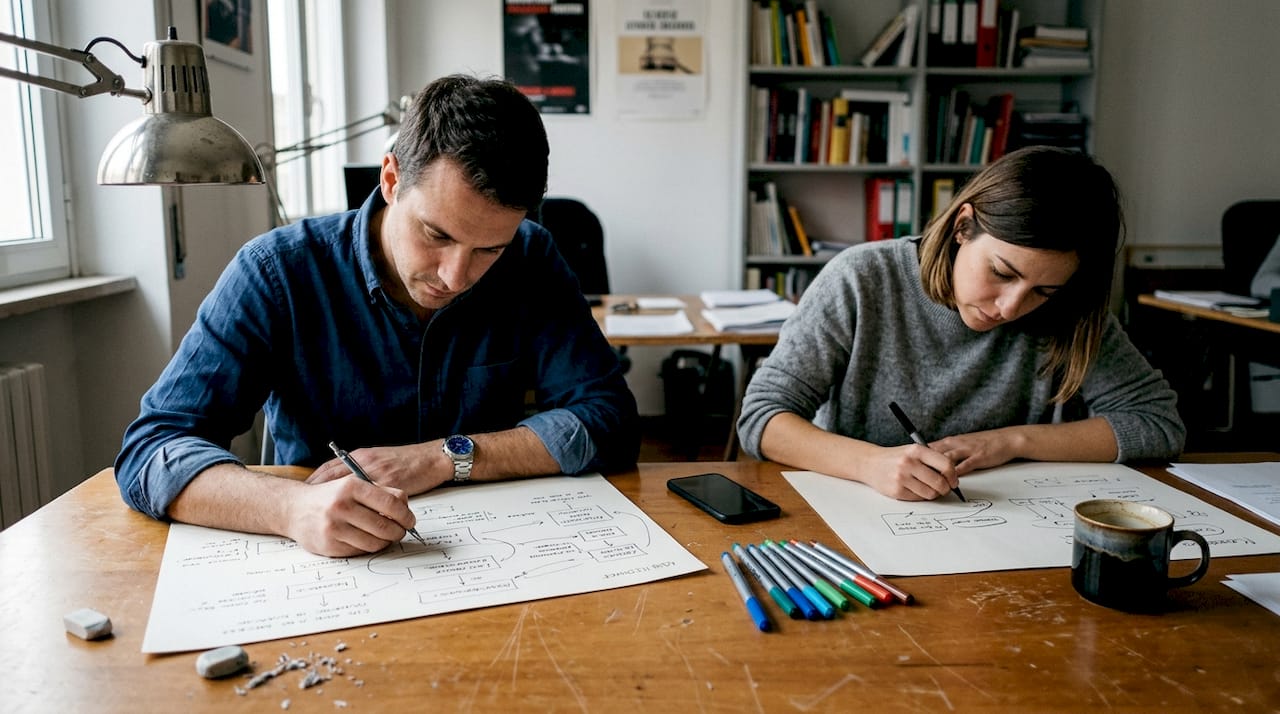
The analyzed projects show significant variations in the methods adopted. Some teams emphasize in-depth discovery of user needs through ethnographic interviews and prolonged observations. Others prioritize intensive visual ideation sessions with rapid sketching and conceptual maps. These differences reflect diverse operational contexts and specific time constraints.
The following table summarizes the six sets of practices identified in the study:
| Set of practices | Key characteristics | Ideal context |
|---|---|---|
| Discovering user needs | In-depth ethnographic research, qualitative interviews | Projects with high uncertainty about real needs |
| Ideating through visualizations | Rapid sketches, mind maps, storyboards | Initial phase with a need to explore many options |
| Prototyping for learning | Simple physical models, rapid tests | When assumptions need to be validated quickly |
| Testing with users | Structured feedback sessions, usage observation | Before investing in full development |
| Iterating solutions | Multiple cycles of incremental improvement | Projects with sufficient time for refinements |
| Synthesizing insights | Pattern analysis, information clustering | When complex qualitative data needs to be made sense of |
In Italian creative workshops, these variations translate into personalized approaches. A painting workshop for local hobbyists might focus on visual ideation and rapid prototyping, while a corporate course emphasizes needs discovery and insight synthesis. The choice depends on the participants' objectives and the duration of the experience.
Visual ideation techniques are particularly effective in creative contexts. Instead of abstract discussion, participants draw, build three-dimensional models, or create collages representing their ideas. This tangible approach accelerates mutual understanding and generates more innovative solutions than verbal discussions alone.
Tip for choosing: Assess the group's experience level before selecting the model. Beginners benefit most from structured approaches with clear phases, while experienced creatives appreciate the flexibility of adapting the process to their specific needs.
Artistic projects for hobbyists naturally integrate these practices. A ceramics workshop can begin with tactile discovery of materials (discovering), proceed with sketches of possible forms (ideating), create clay prototypes (prototyping), test them for functionality and aesthetics (testing), and refine them through successive iterations (iterating).
The variability of methods improves the applicability of design thinking to different contexts. A corporate team working on product innovation needs in-depth user research and rigorous testing. A family participating in a creative workshop benefits more from playful ideation and immediate prototyping. Recognizing these differences allows for the design of more effective training experiences.
Project uncertainty guides the choice of practices. Projects with clear objectives but uncertain solutions require more iterations and tests. Situations with poorly understood user needs require extensive ethnographic research. This awareness helps facilitators and participants invest time in the activities most relevant to their specific context.
Transforming creativity into action: labs and models for families, hobbyists, and businesses
Creative training models translate into concrete experiences through structured workshops that adapt theoretical principles to specific audiences. Design thinking as a structured practice is not limited to spontaneous creativity but includes idea advocacy and systematic prototyping. This distinction transforms casual participants into conscious practitioners who understand the process behind creation.
For families, workshops emphasize collaboration and playful experimentation. Parents and children work together on projects such as puppet making, where each phase of design thinking becomes a shared activity. Empathizing transforms into discussions about favorite characters, ideation into collective drawings, and prototyping into manual construction.
Individual hobbyists seek technical deepening and the development of specific skills. A creative sewing course for beginners applies design thinking by guiding participants from understanding fabrics to completing projects. Each session balances theory and practice, building progressive skills.
Companies use these models for team building and collaborative skill development. Creative tours for teams combine artistic experiences with organizational objectives, creating contexts where colleagues collaborate outside of usual work dynamics. The shared creative process strengthens relationships and improves communication.
Here are the key steps to creating an effective creative workshop based on structured training models:
- Define clear objectives that balance technical learning and emotional experience for the target audience
- Structure the session by alternating brief theoretical input moments with long phases of guided practice
- Prepare sufficient materials and tools to allow experimentation without limitations
- Facilitate the ideation phase by creating a non-judgmental environment where all proposals are valid
- Integrate rapid feedback cycles, allowing participants to test, evaluate, and iteratively improve
- Document the process through photos or videos to allow for subsequent reflection on learning
- Conclude with group sharing where each participant presents their work and receives recognition
Pro Tip: Integrate testing and feedback moments every 30 minutes during long workshops. Ask participants to show their work in progress to a peer and receive constructive suggestions. This practice keeps energy high and constantly improves results.
Design thinking as a tool for idea advocacy adds a critical dimension to creativity. Participants not only generate proposals but also learn to articulate the reasons behind design choices. This skill is valuable both for hobbyists who wish to evolve their practice and for professionals who need to justify creative decisions in business contexts.
Rapid prototyping is at the heart of practical learning. Instead of excessive planning, participants create imperfect initial versions that they can touch, evaluate, and modify. This tangible approach accelerates understanding and produces more satisfying results than theoretical design alone.
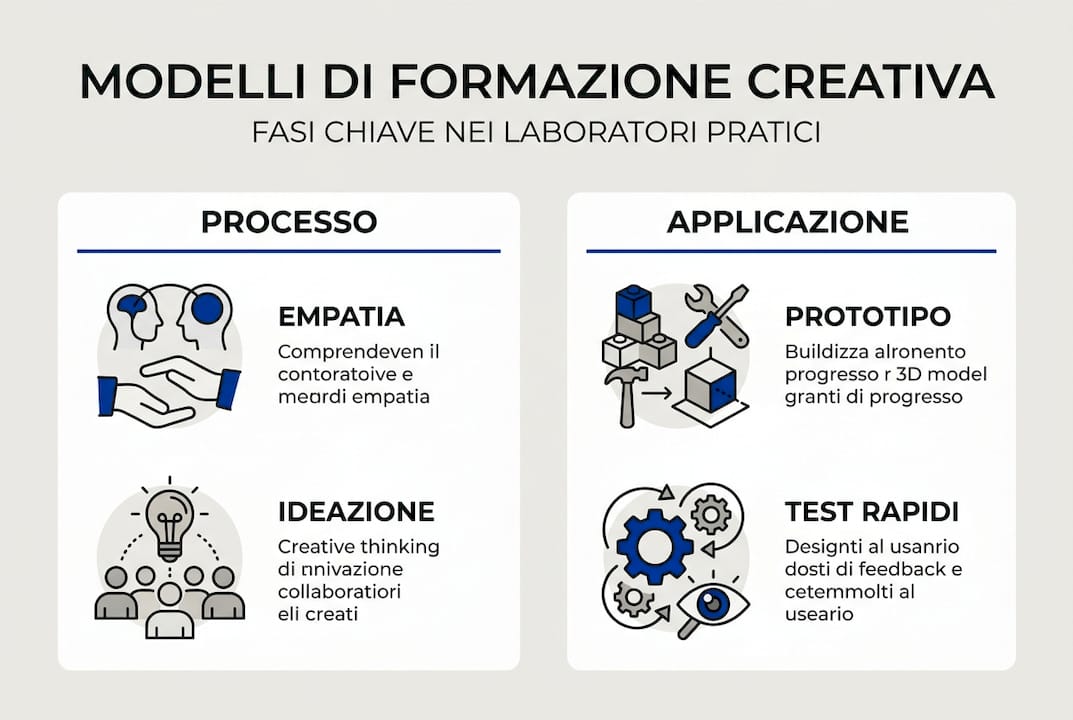
Adapting tools to the specific audience determines the success of the experience. A corporate workshop might use professional materials and technical language, while a family workshop prioritizes accessibility and fun. Methodological flexibility allows for maintaining fundamental principles while adapting form and content.
Creativity organized through structured models yields benefits beyond artistic output. Corporate teams develop listening and collaboration skills. Families strengthen bonds through shared projects. Hobbyists gain confidence in their creative abilities. These results transform creative training from a pastime into a tool for personal and professional growth.
Discover creative experiences and workshops in Italy with Club Joy
After exploring the theoretical models and practical applications of creative training, it's natural to wonder where to experience these in a concrete way. Club Joy offers a comprehensive platform to discover and book workshops guided by artisans and professionals across Italy. Artist-led experiences near Milan represent just one of the many opportunities available.
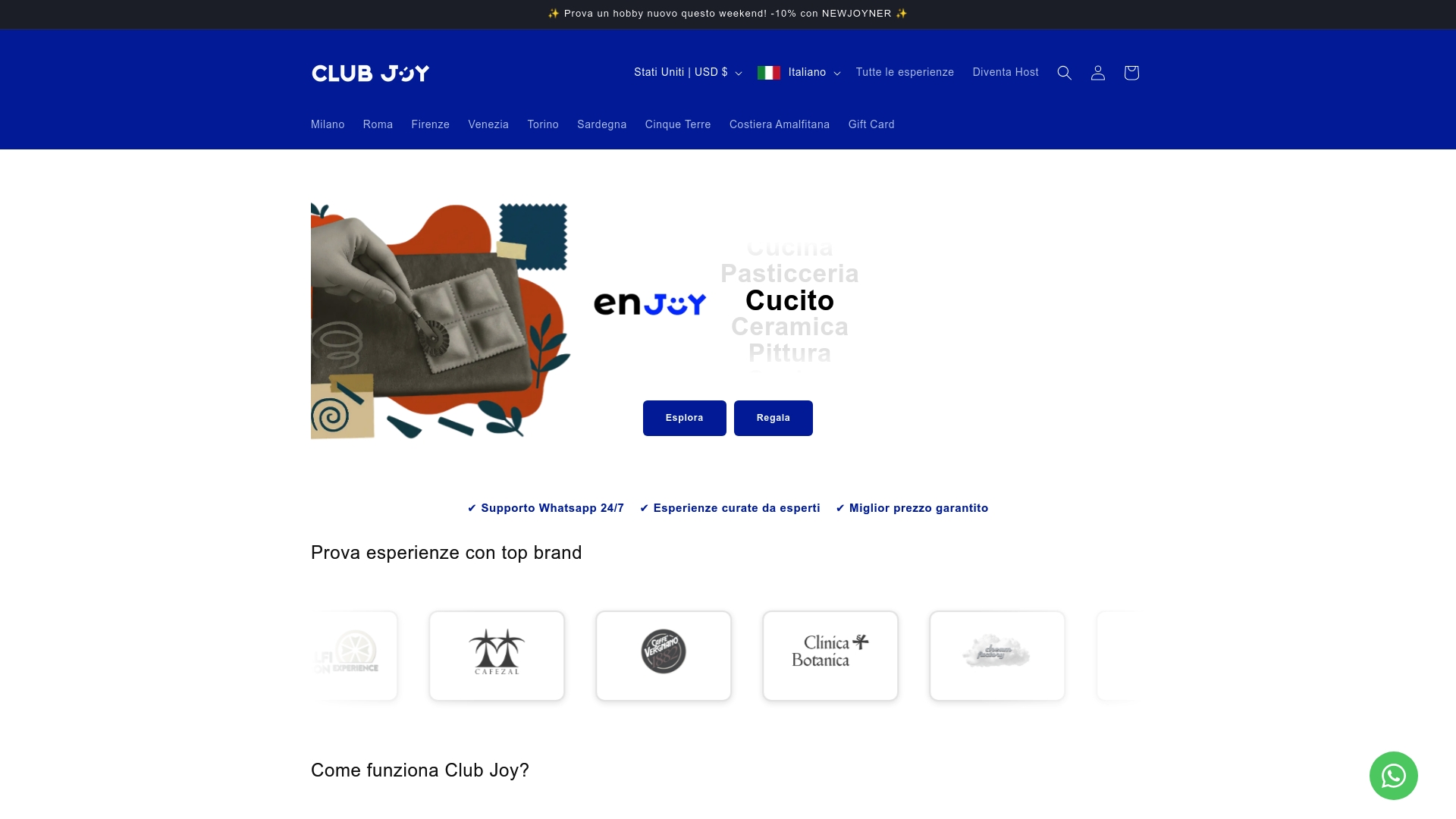
The platform connects hobbyists, families, and businesses with practical workshops in ceramics, painting, cooking, nature, and other creative disciplines. Each experience applies structured training principles, ensuring meaningful learning beyond simple entertainment. Expert facilitators guide participants through complete creative processes, from ideation to final realization.
For corporate teams, Club Joy offers creative experiences specifically designed for team building and collaborative skill development. These activities transform design thinking models into moments of shared growth that strengthen group dynamics. Simplified booking and a variety of offerings make creative training accessible to anyone wishing to transform curiosity into concrete skills.
Frequently asked questions about creative training models
What is the most common creative training model?
Design thinking is the most widely used model for creative workshops and labs in Italy. Its five-phase structure (Empathize, Define, Ideate, Prototype, Test) offers a flexible framework applicable to various contexts, from ceramics to corporate team building. Research shows that professionals adapt this basic model into six main variations according to specific objectives.
How can I choose the most suitable workshop for my needs?
Evaluate three key factors: your experience level, learning objectives, and available time. Beginners benefit from structured workshops with clear stages and constant support. Those seeking technical depth should prioritize specialized courses in specific disciplines. Workshop types in Italy range from short experiences lasting a few hours to training programs structured over multiple sessions.
What are the benefits of design thinking for corporate groups?
Design thinking develops essential collaborative skills for effective teams. The structured process creates a safe environment where all members contribute equally, overcoming organizational hierarchies. The ideation and prototyping phases improve communication and active listening. The tangible results produced during the workshops strengthen a shared sense of accomplishment and mutual trust among colleagues.
How are workshops for families and hobbyists conducted?
Family workshops emphasize intergenerational collaboration through projects accessible to various ages. Sessions alternate short technical explanations with long practical phases where parents and children work together. Individual hobbyists follow more in-depth paths that build progressive skills, starting from basic techniques to reach complex projects. Both formats integrate design thinking principles adapted to the specific audience.
Where to find updated creative workshops in Italy for 2026?
Specialized platforms like Club Joy aggregate updated offerings of creative workshops in major Italian cities and smaller towns. These resources allow filtering experiences by discipline, city, duration, and target audience. Many artisans and creative studios publish calendars on their websites and social media channels. Local chambers of commerce and municipal cultural centers offer information on local creative training initiatives.