
Steps to organize creative tours for corporate teams
Finding the right activity for a team of managers from creative companies can truly transform the company atmosphere. A tailor-made experience, in a practical workshop or artisan tour, helps improve communication and enhance fundamental skills like problem-solving and leadership. With a clear definition of objectives and the selection of suitable experiences, each manager can stimulate real creativity and lasting connections among colleagues.
Table of Contents
- Step 1: Define the tour's objectives and target audience
- Step 2: Select the most suitable creative experiences
- Step 3: Coordinate logistics and bookings
- Step 4: Verify the quality of activities and engagement
- Step 5: Evaluate results and gather useful feedback
Quick Summary
| Key Point | Explanation |
|---|---|
| 1. Clearly define objectives | Establishing clear objectives guides choices and fosters the success of the creative event. |
| 2. Choose team-appropriate experiences | Activities must reflect the group's objectives and preferences to maximize engagement. |
| 3. Plan logistics in detail | Good logistical organization prevents unforeseen events and ensures a smooth experience. |
| 4. Gather useful feedback post-event | Feedback allows for evaluating the event's impact and identifying areas for improvement for future activities. |
| 5. Evaluate results with clear indicators | Measuring results based on initial objectives provides a concrete picture of the creative tour's effectiveness. |
Step 1: Define the tour's objectives and target audience
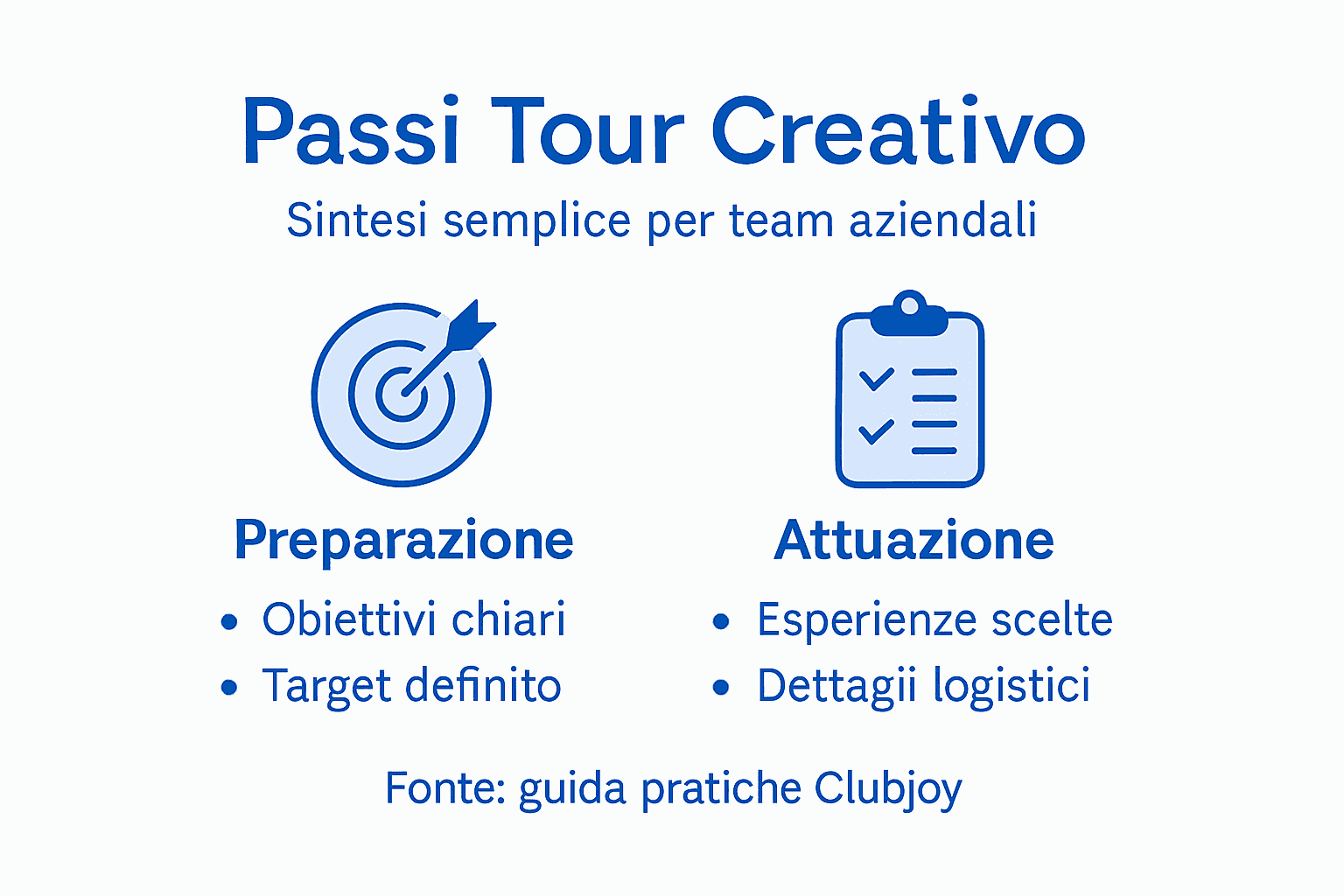
Before looking for a location or workshop, stop and clarify your ideas. What do you want to achieve from this creative tour? The answers to this question will guide every subsequent decision.
Starting with an accurate needs analysis, understand your team's true needs. A clear definition of objectives helps you avoid generic projects and direct activities towards specific behaviors you wish to develop.
Here are some common objectives chosen by business managers:
- Improve internal communication between departments and hierarchical levels
- Enhance leadership skills in informal environments
- Stimulate creativity and collaborative problem-solving
- Create personal connections between colleagues who normally do not interact
- Foster team trust and cohesion
- Discover hidden talents through practical activities
After you have identified the objectives, define the specific target audience. Who will participate? How many people? What is the group's level of creative experience?
Here is an overview of the main business objectives and their impact on the team:
| Creative tour objective | Main impact on the team | Long-term benefit |
|---|---|---|
| Improve communication | Greater collaboration between departments | Reduced internal conflicts |
| Stimulate problem-solving | Innovative solutions to problems | Adaptability to company changes |
| Enhance leadership | Development of proactive roles | Promotion of future leaders |
| Foster trust and cohesion | Stronger personal relationships | Increased collective motivation |
| Discover hidden talents | Valorization of skills | Professional growth of personnel |
If your team consists of 15 managers from a creative agency, you will look for different workshops than for 30 administrative employees. Tastes, energies, and needs change.
Also consider the available time and budget. A full-day tour requires different facilities than a two-hour workshop. A premium experience in a historic artisan workshop costs more than an introductory workshop.
The clearer your objectives, the easier it will be to choose the right experience and measure success after the event.
Write all this down. You don't need a formal document, but a simple outline that answers: why are we doing this? Who is coming? What do we concretely want to achieve?
Professional tip: Involve 2-3 team members in defining the objectives, not just the manager. You will hear different perspectives and increase engagement when you announce the event.
Step 2: Select the most suitable creative experiences
Now that you know your team's objectives, it's time to find the right experiences. Not all creative activities work for all teams, so the choice must be strategic.
Think about what you want to develop in your group. Creative activities stimulate mutual trust and soft skills like problem-solving and leadership, going far beyond simple games. If the goal is to improve cohesion between departments, choose workshops that require constant collaboration. If you want to stimulate pure creativity, look for workshops that allow freedom of expression.
Also consider your team's profile. A group of young graphic designers will not have the same enthusiasm as middle-aged administrative employees for a street art workshop. Listen to tastes, energy levels, and preferences before deciding.
Here are the types of experiences that work well for corporate teams:
- Creative workshops in artisan shops such as ceramics, painting, or sculpture
- Creative cooking workshops where the team prepares dishes together
- Outdoor activities such as land art or nature photography
- Interactive challenges that require collaboration and problem-solving
- Charitable initiatives such as painting murals or creating objects for local communities
Also check the practical details. How many people can participate simultaneously? Does the workshop offer materials included or do you need to bring them? What is the difficulty level? An activity that is too easy is boring, too difficult generates frustration.
Ask providers to share stories of other corporate teams that have participated. Their experiences will give you valuable clues.
The right choice is not the most expensive or the trendiest, but the one that truly reflects your team's objectives and personality.
Make a shortlist of 3-4 options and evaluate them against the criteria you defined in the first step. Each choice must clearly address the established objectives.
Professional tip: Contact the workshops at least 3-4 weeks before the desired date and ask if they offer customized experiences for corporate teams. Many artisans are willing to adapt the program to your specific needs.
Step 3: Coordinate logistics and bookings
You have chosen the right experiences. Now comes the part that makes the difference between a perfect tour and a chaotic one: logistics. Meticulous planning ensures everything runs smoothly.
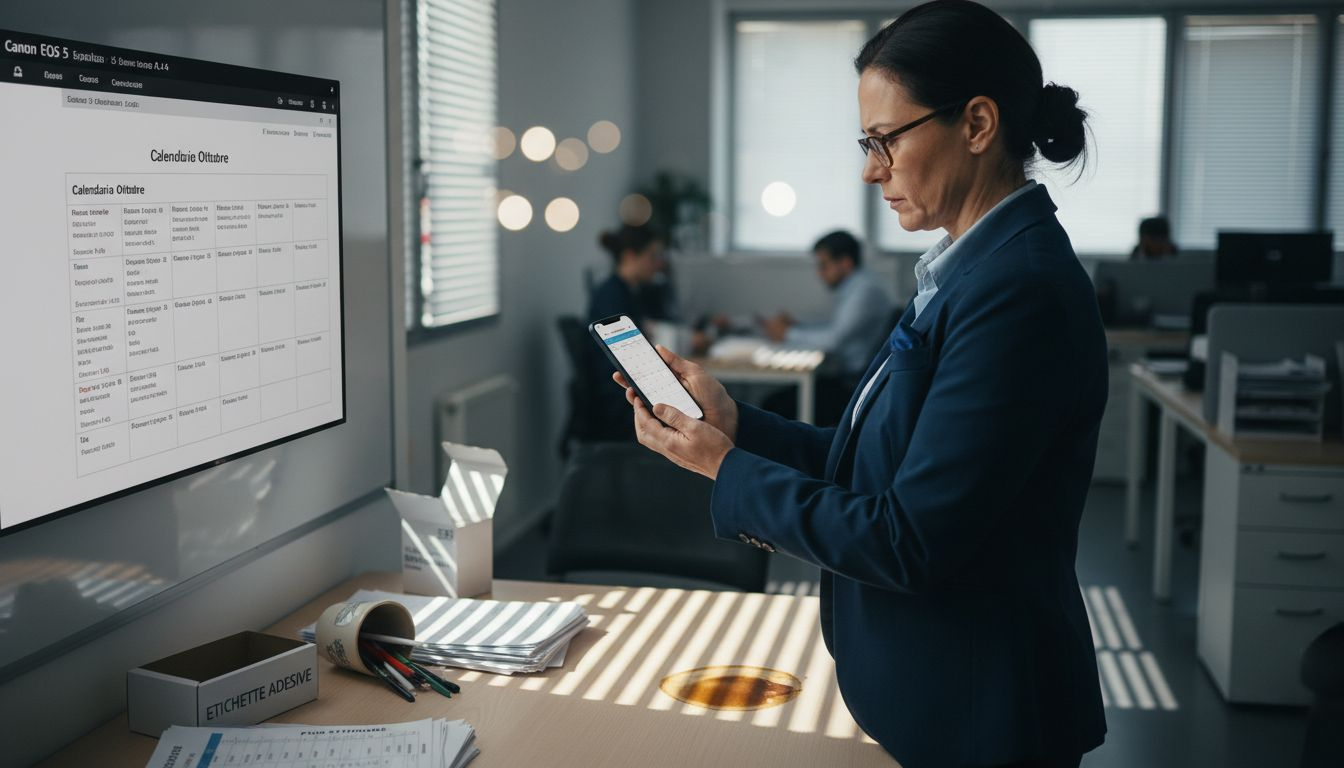
Start with official bookings. Contact the chosen workshops and block the dates with a deposit. Ask for written confirmation of the date, time, number of participants, included materials, and anything else you need to know in advance. Don't rely solely on WhatsApp messages.
Let's think about transportation. How will your team get to the location? If it's not easily accessible by public transport, consider renting a minivan. This also creates cohesion during the journey. Communicate departure and arrival times to everyone well in advance.
Detailed planning includes transportation and emergency response for any unforeseen events, crucial for creating an uninterrupted experience. So prepare a Plan B. What happens if it rains and the outdoor activity is not possible? What if someone gets sick at the last minute?
Create a logistical checklist that covers:
- Exact number of confirmed participants at least one week prior
- Precise departure, travel, and arrival times
- Dietary needs or disabilities that the workshops need to know about
- Recommended clothing for each activity
- Emergency contacts for the artisan workshops
- Available parking at the workshops
- Final costs and how they will be handled
If the tour includes multiple stops in one day, create a detailed itinerary with realistic timings. Add 15 minutes of buffer between each movement for contingencies.
Confirm everything in writing with your team two weeks beforehand. Whether you use email, a shared document, or a dedicated group chat, ensure everyone knows exactly what to expect.
Impeccable logistical organization is invisible when it works well, but your team will notice it immediately if it fails.
Verify details with the workshops one week before the date. Final numbers, food allergies, special needs. Don't take anything for granted.
Professional tip: Designate one team member as the "logistical point person" during the event. They will have the numbers for all workshops, know the itinerary, and manage unforeseen events. This will relieve you of pressure and make the team feel organized.
Step 4: Verify the quality of activities and engagement
The event is over. Now comes the critical moment: understanding if it really worked. It's not enough for it to have been fun. You need to check if it achieved the objectives you defined at the beginning.
Start right after the experience. While memories are fresh, gather feedback from your team. Quality activities stimulate collaboration and a sense of belonging, improving communication and reducing stress through the development of skills like leadership and problem-solving.
Use a simple method to gather impressions. You can do a quick anonymous survey via Google Forms, or an informal meeting where everyone can share their opinion. No complicated questions are needed.
Here are the key questions to ask:
- How much did you enjoy the experience on a scale of 1 to 10?
- What struck you most about the creative activity?
- Did you learn anything new about your colleagues?
- Do you feel more connected to the team than before?
- Would you recommend this experience to other corporate teams?
- What could we have done better?
Go beyond numerical answers. Free comments reveal much more. Did someone say they felt excluded? That the activity was too difficult? Or that it was the best moment of the year?
Also evaluate engagement during the event. Did everyone participate actively or were some on the sidelines? Was there positive energy or tension? What about the actual collaboration between departments that usually don't interact?
Now compare the feedback with the objectives you set in the first step. If you wanted to improve communication between departments and the data confirms it, you've succeeded. If not, identify what went wrong.
The true success of a creative tour is not measured solely by beautiful photos or smiles in the moment, but by the concrete change it generates in the team.
Document everything. A brief report with the collected data will help you organize future tours even better.
Professional tip: Also ask for feedback from the artisan workshops. They saw your team in action and can give you valuable insights into dynamics, participation, and how the group interacted during the activity.
Step 5: Evaluate results and gather useful feedback
The event is over, but the work doesn't end there. To understand if the creative tour truly generated value, you need to measure the results systematically. This isn't just about gathering opinions, but about connecting the data to the objectives you set at the beginning.
Team building results are measured by linking objectives to clear indicators, with feedback from participants and HR helping to understand improvements in communication, collaboration, and trust. True value emerges in the concrete changes you see in daily behavior.
Start with a structured survey. It doesn't need to be complicated. Use questions that directly link the experience to your initial objectives. If you wanted to improve communication between departments, explicitly ask if colleagues from other departments have become more accessible.
Gather data from multiple sources to get a complete picture:
- Anonymous team responses via online survey
- Observations from your human resources during the event
- Informal feedback from the artisan workshops that conducted the activity
- Spontaneous comments in the following days
- Behaviors observed weekly after the event
Don't just look at the numbers. If 95% say it was fun but no one collaborated with colleagues from other departments, that number is irrelevant to your objective. Dig into the qualitative details.
Track the company climate before and after. Has motivation increased? Is retention improving? Is productivity changing? These are data that your HR department can help you monitor.
Here is a summary of feedback collection methods and their added value:
| Feedback collection method | Immediacy of analysis | Insights for improvement |
|---|---|---|
| Anonymous online survey | Quick and direct responses | Identifies areas of weakness |
| Informal post-event meeting | Open and constructive dialogue | Deepens group dynamics |
| HR observations during the activity | Objective view on the field | Highlights emerging behaviors |
| Spontaneous post-event comments | Real perception over time | Tracks lasting effects |
Document a simple and clear final report. Include what worked, what didn't, and what you will do differently next time. This becomes your guide for organizing even more effective future tours.
A well-evaluated creative tour is not an end in itself. It is the foundation for understanding how to develop your team in an increasingly conscious way.
Share the positive results with the team. Let them know their feedback mattered and that you are listening. This increases engagement for future events.
Professional tip: Collect feedback at three intervals: immediately after the event, one week later, and one month later. Short-term data shows emotion, long-term data reveals the true behavioral impact.
Organize your tailor-made creative tour with Clubjoy
Organizing a creative tour for your corporate team can seem complex when balancing objectives like improving communication, stimulating creativity, and increasing cohesion, all while not neglecting logistics and the quality of experiences. Clubjoy helps you turn these challenges into opportunities by offering a wide selection of artisan workshops and creative workshops across cities like Milan, Florence, and Venice. You can choose personalized activities that accurately reflect your team's objectives and coordinate every detail with simplicity.
Leave nothing to chance and leverage our platform to discover and book team-building experiences that combine practical learning and fun. Visit Clubjoy now to explore the available creative experiences and start building a tailor-made journey for your team. Your next opportunity for team growth and engagement is just a click away, act now to secure availability!
Discover everything you need for a successful creative tour and bring your team to live memorable moments with Clubjoy.
Frequently Asked Questions
How can I define my team's objectives for a creative tour?
To define your team's objectives, start with a needs analysis. Clearly state what you want to achieve, also involving other team members to gain different perspectives.
What creative experiences can I select for my team?
Creative experiences should align with your team's objectives. Consider art workshops, cooking workshops, or outdoor activities that stimulate collaboration and creativity.
How can I coordinate the logistical details for the creative tour?
Start by making official reservations with suppliers and confirming all details. Create a logistical checklist that includes the number of participants, schedules, and special needs to ensure smooth organization.
What questions should I ask to gather feedback after the experience?
Use simple questions like "How much did you enjoy the experience?" or "Did you learn anything new about your colleagues?". Collect feedback immediately after the activity for fresh and useful impressions.
How can I evaluate the success of the creative tour?
Measure success by comparing the feedback gathered with the initial objectives. Document the results and consider how team behaviors have changed after the event for a comprehensive evaluation.
What is the most important thing to remember when organizing a creative tour?
Make sure you have a clear understanding of your goals and your team's profile. This will help you choose the right experiences and ensure that everyone feels involved and motivated during the event.
Recommendation
- 4 cool & creative things to do in Milan on the weekend of November 15-16 – Club Joy
- 3 cool & creative things to do on the weekend of September 20-21 in Milan – Club Joy
- 4 cool & creative things to do in Milan on the weekend of January 31 – Club Joy
- 4 cool and creative things to do in Milan if you feel burnt out – Club Joy