
Why Gift a Craft Experience: A Complete Guide
Have you ever noticed how material gifts often end up forgotten in a drawer after a few weeks? Yet, many continue to choose physical objects without considering more meaningful alternatives. Artisan experiences represent a radical shift in how we conceive of gifts, offering something that goes beyond material possession: a moment of authentic creativity, a tangible memory created with one's own hands, and an opportunity to discover hidden passions. This article will guide you through the unique benefits of gifting creative workshops, explaining why this choice can transform a simple gift into an unforgettable experience for both the recipient and the giver.
Table of Contents
- Key Points
- What Makes an Artisan Experience a Special Gift
- How an Artisan Experience Supports the Local Economy and Traditions
- Benefits of Artisan Experiences for Families and Children
- How to Choose the Ideal Artisan Workshop to Gift
- Discover Our Unique Artisan Experiences
- Frequently Asked Questions
Key Points
| Point | Details |
|---|---|
| Unique Personalization | Gifting artisan workshops allows the recipient to infuse their creative touch and create a truly unique object. |
| Support for Local Economy | Choosing local artisan workshops supports local professionals and preserves handed-down traditions. |
| Stimulating Social Creativity | Collaborative sessions foster creativity, social interaction, and shared moments, ideal for families and children. |
| Lasting Memories | The experience becomes a tangible and superior memory to material gifts, offering an emotional connection and practical learning. |
What makes an artisan experience a special gift
Artisan experiences distinctly differ from traditional gifts due to a fundamental characteristic: they transform the gift recipient from a mere consumer into an active creator. When you gift a pottery or jewelry-making workshop, you are not offering a pre-made item, but the opportunity to bring something unique to life through one's own effort and aesthetic sensibility.
Personalization reaches levels impossible for mass-produced goods. During an artisan workshop, each participant imprints their personal mark on the final piece, from color choices to shapes, from textures to dimensions. This process creates a deep emotional connection between the object and its creator, transforming a simple artifact into a symbol of an intensely lived moment.
Quality represents another crucial distinguishing element. The materials used in professional artisan workshops are carefully selected by the artisans themselves, ensuring high standards that translate into superior durability and beauty. Every creation is unique, customizable, with high-quality materials and superior durability compared to industrially produced items, where standardization often sacrifices both aesthetics and resistance over time.
Each piece carries a layered story: that of the artisan who transmitted their skills, that of the chosen materials and their origin, that of the techniques handed down through generations. This implicit narrative adds layers of meaning that a store-bought product can never possess.
Pro Tip: When choosing an artisan workshop to gift, always prioritize workshops led by local artisans with documented experience. Verify that they use traditional materials and authentic techniques rather than simplified versions for tourists. The authenticity of the experience is directly reflected in the quality of the final result and the depth of learning.
The elements that distinguish an artisan experience include:
- Creation of a physical object that will last over time as a tangible testament to the experience lived
- Learning specific techniques transmitted directly by master artisans with years of practice
- Social interaction with other participants who share the same creative curiosity
- Discovery of hidden talents or passions that could turn into lasting hobbies
- A moment of digital disconnection and total immersion in a manual and reflective activity
“Craftsmanship is not just about producing objects, but about transmitting culture, identity, and knowledge. When we gift an artisan experience, we offer the opportunity to connect with this profound dimension of human creativity.”
How an artisan experience supports the local economy and traditions
Choosing to gift an artisan workshop means performing an act with implications that go far beyond the personal pleasure of the recipient. Every booking represents a concrete vote in favor of an alternative economic model, where value is distributed directly to those who create and teach, without intermediaries extracting disproportionate profits from the production chain.
Small artisan workshops often operate on the margins of economic sustainability, squeezed by competition from industrial production that can afford prices impossible for those who work manually. Gifting an artisan workshop supports the local economy, preserves traditional crafts and trades, and promotes ethical practices without exploitation, creating a virtuous cycle where the demand for authentic experiences encourages the survival of valuable skills.
The preservation of traditional crafts represents an urgent issue of cultural conservation. Techniques refined over centuries risk extinction when the last generation of artisans abandons the activity without having passed on their knowledge. Workshops open to the public create opportunities to introduce these crafts to potential new apprentices, as well as generate revenue that allows artisans to continue their work.
The commercial ethics of artisan workshops sharply contrast with the practices of global industry. You will not find child labor exploitation, dangerous working conditions, or devastating environmental impacts in the supply chain of a local pottery or weaving workshop. Transparency is complete: you see who works, how they work, what materials they use, and you can ask direct questions about the origin of every element.
The Italian artisan community directly benefits from this choice through:
- Circulation of economic resources within the territory, strengthening the local productive fabric
- Valorization of specific skills that would otherwise remain invisible to the mainstream market
- Creation of collaborative networks among artisans who share spaces, tools, and knowledge
- Stimulus for quality cultural tourism, attracted by the authenticity of the experiences offered
- Education of new generations on the value of manual work and artisan quality
“Artisan workshops represent fundamental intergenerational bridges. When a child learns to model clay from the hands of a master ceramist, they are not just acquiring a technique: they are receiving a cultural heritage that would otherwise be lost.”
The circular economy finds a natural application in artisan workshops. Waste materials are reused, chosen materials are often local and renewable, and the objects created have a durability that contrasts with the planned obsolescence of industrial products. This intrinsic sustainability adds ethical value to the gift choice.
Benefits of artisan experiences for families and children
Artisan experiences offer particularly significant advantages when involving families and children, transforming into powerful educational tools that operate on multiple levels of development simultaneously. Pedagogical research has extensively documented how learning through manual activities produces superior cognitive results compared to purely theoretical instruction.
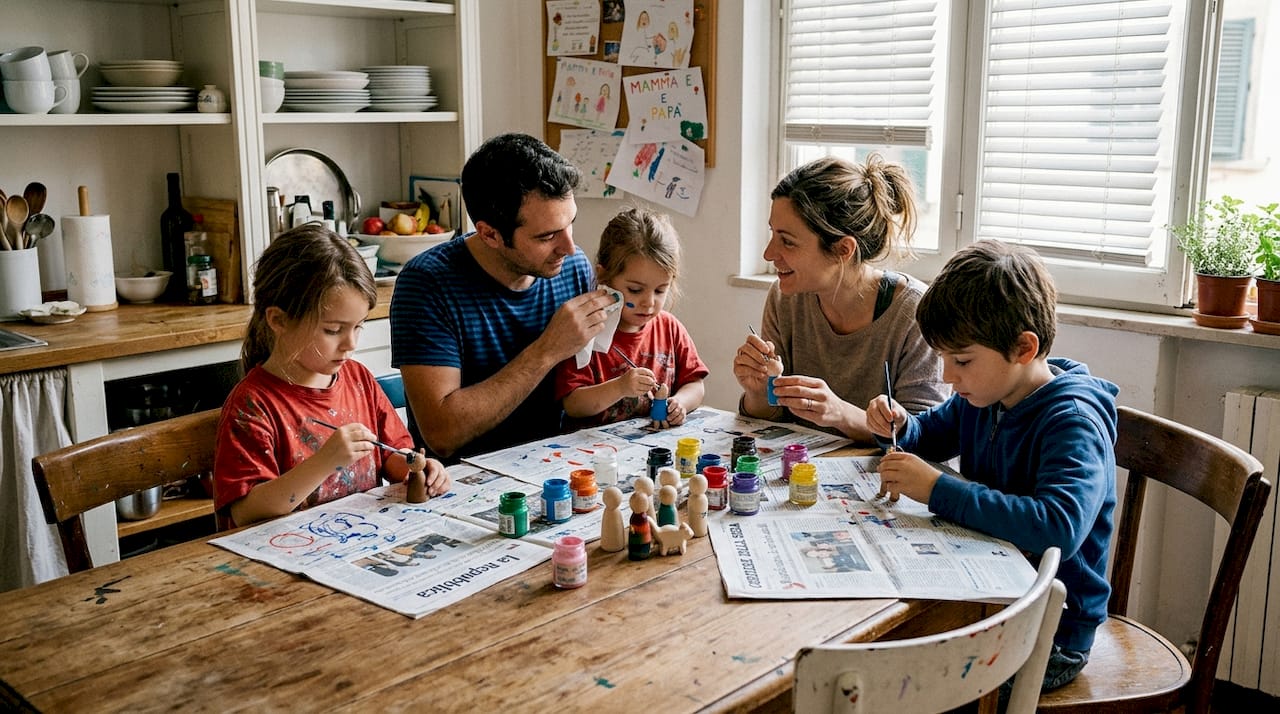
Creative workshops stimulate creativity, cognitive development, fine motor skills, socialization, and self-esteem for families and children, creating an environment where learning occurs naturally and pleasantly, without the pressure typical of formal school settings. Manipulating different materials requires precise hand-eye coordination, strengthening neural connections fundamental for future skills like writing and technical drawing.
Self-esteem receives a powerful boost when a child completes an object with their own hands. The sense of accomplishment derived from seeing an idea transform into physical reality through their own effort builds confidence in their abilities that extends far beyond the workshop context. This effect is amplified when the work is recognized and appreciated by family and friends.
Social skills develop organically during group workshops. Children learn to share tools and spaces, to ask for help when needed, to offer support to peers in difficulty, and to communicate their ideas constructively. These interactions occur in a collaborative rather than competitive context, fostering positive relational dynamics.
The emotional well-being of the entire family benefits from disconnecting from daily routines and technology. An afternoon spent together molding clay or painting fabrics creates shared memories and strengthens bonds through a common experience that all members can appreciate regardless of age.
Pro Tip: When choosing an artisan experience for children, prioritize workshops with small groups of a maximum of 8-10 participants. Reduced numbers ensure personalized attention from the instructor and allow children to work at their own pace without feeling overwhelmed or neglected.
Specific benefits for child development include:
- Improvement of concentration through activities that require sustained attention for extended periods
- Development of sequential thinking by understanding that complex processes are built through ordered steps
- Frustration management by learning that errors and failed attempts are a natural part of the creative process
- Emotional expression through aesthetic choices that reflect moods and personal preferences
- Understanding cause and effect by observing how specific actions produce predictable results in materials
Families who regularly participate in artisan workshops report improvements in intergenerational communication and the ability to collaborate on common projects even outside the workshop context.
How to choose the ideal artisan workshop to gift
Choosing the perfect workshop requires careful consideration of multiple factors that determine whether the experience will be rewarding or disappointing for the recipient. The first element to evaluate concerns the recipient's authentic interests, not those you think they should have or would like them to have.
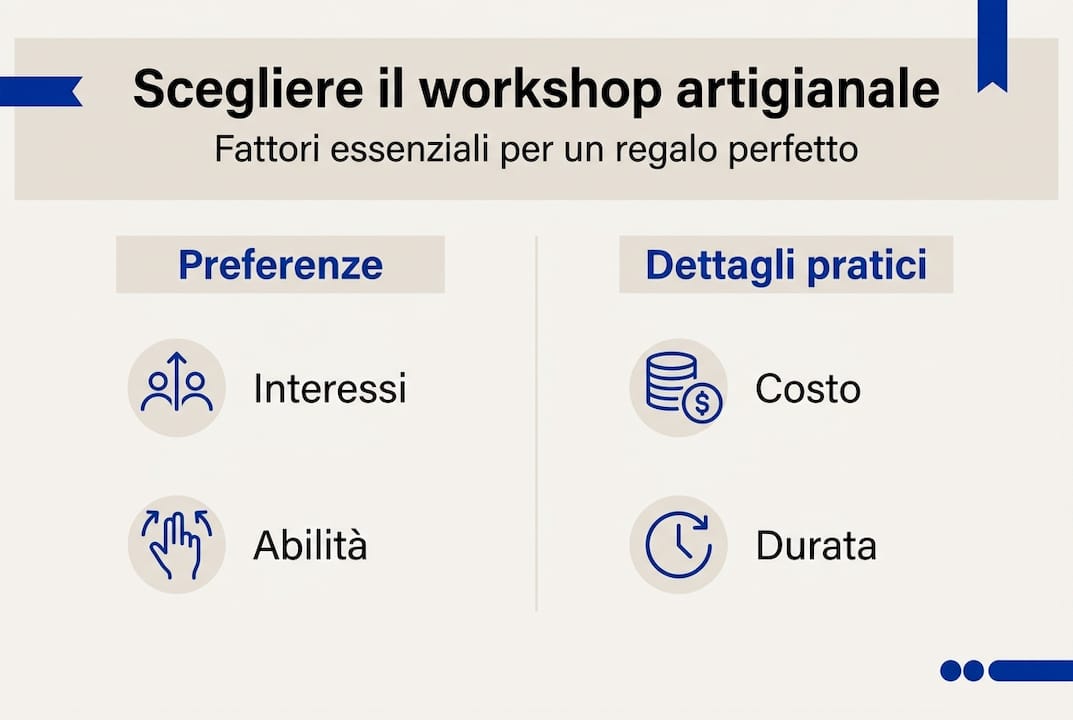
A person with a developed aesthetic sensibility might deeply appreciate a jewelry-making or custom perfume workshop, while someone with a more practical approach might prefer the tangible solidity of woodworking or ceramics. Observe what objects they collect, what manual activities they have already attempted in the past, what exhibitions or shops they spontaneously visit.
The duration of the workshop is a critical factor often underestimated. Experiences that are too short can be frustrating because they do not allow for the completion of satisfying projects, while excessively long workshops risk tiring participants without prior experience. Most people find a duration between 2 and 4 hours optimal for a first experience.
Cost varies significantly based on the complexity of the technique, materials provided, and the artisan's reputation. Workshops in Italy offer options ranging from 50 euros for introductory workshops up to 200 euros or more for advanced experiences with precious materials. Evaluate this investment in relation to the emotional value and durability of the created object.
Location influences the overall experience. Workshops in historic centers offer a charming atmosphere but may present parking difficulties, while workshops in peripheral areas ensure accessibility but less environmental charm. Also consider the distance from the recipient's home: an hour's travel may be acceptable for an exceptional experience, but becomes a deterrent for ordinary workshops.
| Workshop Type | Average Duration | Price Range | Group Size | Final Result |
|---|---|---|---|---|
| Basic Pottery | 3-4 hours | 60-90 euros | 6-10 people | Personalized bowl or vase |
| Jewelry Making | 2-3 hours | 80-120 euros | 4-8 people | Unique ring or necklace |
| Custom Perfume | 2 hours | 90-150 euros | 4-6 people | Custom 50ml fragrance |
| Traditional Weaving | 4-5 hours | 70-110 euros | 5-8 people | Scarf or placemat |
Avoid gifting experiences that could be perceived as veiled criticism or forced improvement attempts. A cooking workshop for someone who often complains about their culinary skills might be interpreted as confirmation of their insecurities rather than a joyful opportunity. The key is to choose experiences that celebrate existing interests or open doors to already expressed curiosities.
Some recipients might feel anxious about creating something in front of others, fearing judgment about the quality of the result. For these individuals, look for workshops that emphasize the process rather than the product, or consider private experiences rather than group ones. Sensitivity to these psychological dynamics distinguishes a thoughtful gift from a stressful one.
Elements to check before purchasing:
- Cancellation policy and possibility to reschedule the date in case of unforeseen circumstances
- Inclusion of all necessary materials or presence of undeclared additional costs
- Documented instructor competence through portfolio or verified reviews
- Accessibility for people with reduced mobility if relevant to the recipient
- Possibility of taking the finished work home immediately or required drying times
The variety of types available in Italy allows for finding the perfect experience for any profile, from traditional techniques like leatherworking to contemporary innovations like creative 3D printing.
Discover our unique artisan experiences
If you are looking for the perfect gift that combines creativity, authenticity, and lasting memory, Club Joy offers experiences specifically designed to transform artistic curiosity into tangible creations. Our live drawing evenings allow anyone, regardless of experience level, to discover the pleasure of capturing the human form on paper through the guidance of professional artists.
Each workshop is structured to ensure a perfect balance between technical instruction and expressive freedom, creating an environment where learning happens naturally through guided practice. The professional materials provided ensure that the quality of the tools never limits the participants' creativity.
Pro Tip: If you have a passion for an art or craft, consider becoming a host on our platform. Sharing your skills with other enthusiasts creates meaningful connections and contributes to the growth of the Italian creative community.
Club Joy experiences transform simple gifts into memories that grow in emotional value over time, just as the skills acquired during workshops continue to develop with subsequent practice.
Frequently Asked Questions
What are the main benefits of giving a craft experience as a gift?
Key advantages include creating lasting memories instead of objects destined for oblivion, developing new practical skills, directly supporting the local economy and artisans, and stimulating creativity and self-esteem through personal achievement. Craft experiences also offer opportunities for authentic socialization and a beneficial disconnection from digital technology.
How can I choose the right workshop for a specific person?
Carefully observe the recipient's authentic interests through their everyday aesthetic choices, hobbies they already pursue, and spontaneously expressed curiosities. Consider practical factors such as an optimal duration of 2 to 4 hours for beginners, a reasonable distance from home, and a preferably small group size for personalized attention. Avoid experiences that might be perceived as critical or as obligations for self-improvement.
Are craft workshops also suitable for children and families?
Absolutely yes, in fact, they represent exceptional educational tools for child development. Workshops stimulate fine motor skills, creativity, concentration, social skills, and self-esteem through the creation of tangible objects. Families benefit from shared quality time away from screens and routines, creating common memories that strengthen intergenerational bonds in a natural and enjoyable way.
How long do the most popular craft workshops in Italy last on average?
The duration varies significantly based on the complexity of the technique taught. Basic ceramics workshops typically require 3-4 hours, jewelry making 2-3 hours, personalized perfume workshops about 2 hours, while traditional weaving can extend to 4-5 hours. For absolute beginners, experiences between 2 and 3 hours represent the ideal compromise between meaningful learning and maintaining concentration.
What to do if the recipient prefers material gifts?
You can combine the experience with a tangible element by presenting the workshop voucher along with a related tool, such as quality brushes for a painting workshop. Alternatively, explain that the experience will produce a unique physical object personally created, emphasizing this concrete aspect. Some people also appreciate receiving professional photographic documentation of the experience as a material complement to the lived memory.