
The Role of Creativity in Leisure Time: Benefits and Practical Impacts
It takes very little to feel the desire to experience something new and personal outside of your daily routine. Dedicating time to creative hobbies means opening up a space where divergent intellectual processing becomes an opportunity for growth and well-being, even away from any pressure. Whether you prefer brushes, clay, or written words, here you will discover how free time can transform into positive energy and the development of new skills, enhancing your authentic creative potential.
Table of Contents
- What is creativity in free time
- Main types of creative and manual hobbies
- Psychological processes and benefits of creative activities
- Social and economic impact of manual hobbies
- Common risks and mistakes to avoid in creative activities
Key Highlights
| Point | Details |
|---|---|
| Creativity is accessible to everyone | It's not just for artists; it's a process that can be developed through leisure activities. |
| Space for personal growth | Free time is an opportunity to explore oneself and discover new skills without pressure. |
| Psychological benefits of creative activities | Creative activity improves self-esteem, reduces stress, and promotes mental well-being. |
| Importance of planning | Setting clear goals and investing in quality materials are crucial to avoid frustration in the creative process. |
What is creativity in free time
Creativity in free time is not a gift reserved for artists. It is a divergent intellectual process that we all possess and can develop through the activities we love.
According to academic research, creativity represents the ability to produce something new and meaningful. In the context of free time, this means transforming the hours you dedicate to yourself into moments of experimentation and personal growth.
Definition and characteristics
Creativity as a divergent process allows you to generate original ideas and reinterpret existing concepts in personal ways. It's not about creating from scratch, but about innovating based on what you already know.
Creativity in free time serves to:
- Express yourself through new forms
- Connect emotional and cognitive dimensions
- Seek personal meaning in hobbies
- Experiment with different expressive modalities
When you dedicate free time to a creative activity, you activate parts of your mind that daily work often neglects. Painting, ceramics, creative cooking: these are all forms of creativity that thrive in the intimate space of your personal time.
Creativity as personal development
Free time is not the void between one commitment and another. It is a space for exploration and meaning where you can discover who you truly are. Creativity at this stage of life becomes a means of self-knowledge.
When you are free from performance pressure, your mind relaxes. It is precisely in this condition that the most authentic ideas emerge. Many artisans discover their true passion not during working hours, but in the tranquility of an afternoon dedicated to a manual hobby.
This is different from professional creativity. In your free time, you don't have to convince anyone of the value of what you create. You create for yourself, to discover, to feel alive.
How it manifests
Creativity in free time takes various forms. It's not just painting or sculpting:
- Craft activities (ceramics, woodworking, weaving)
- Experimental cooking and creating new recipes
- Manual hobbies that require innovation
- Reinterpretation of traditional techniques
- Personal projects that combine passion and technique
Each activity offers you a space to experiment without judgment. Your hand learns, your mind discovers unexpected connections.
Creativity in free time is the bridge between who you are today and who you could become tomorrow.
When you choose to dedicate hours to something you truly enjoy, you're not just filling time. You're building a more conscious version of yourself, discovering abilities you didn't know you possessed.
Professional tip: Don't wait to be perfect to start. Creativity in free time stems from continuous practice and curiosity, not from initial skills. Choose an activity you want to explore and start with the first step, allowing your creativity to emerge naturally.
Main types of creative and manual hobbies
Everyone finds their own path in creativity. Manual hobbies offer endless possibilities to express yourself and develop new skills. Discover which ones best suit your interests and lifestyle.
Visual and artistic hobbies
Visual hobbies are among the most accessible. No prior skills are needed, just the desire to experiment. Drawing, painting, and coloring stimulate the mind and promote a state of deep relaxation.
Visual activities include:
- Pencil, charcoal, or ink drawing
- Watercolor or oil painting
- Adult coloring and mandalas
- Digital illustration
- Lettering and creative calligraphy
These hobbies require little space and few initial materials. You can start with paper and pencil, then invest in more specific tools as you progress.
Craft and manual activities
Craft activities engage both hands and mind simultaneously. From ceramics to woodworking, from sewing to jewelry making, manual hobbies offer tangible satisfaction.
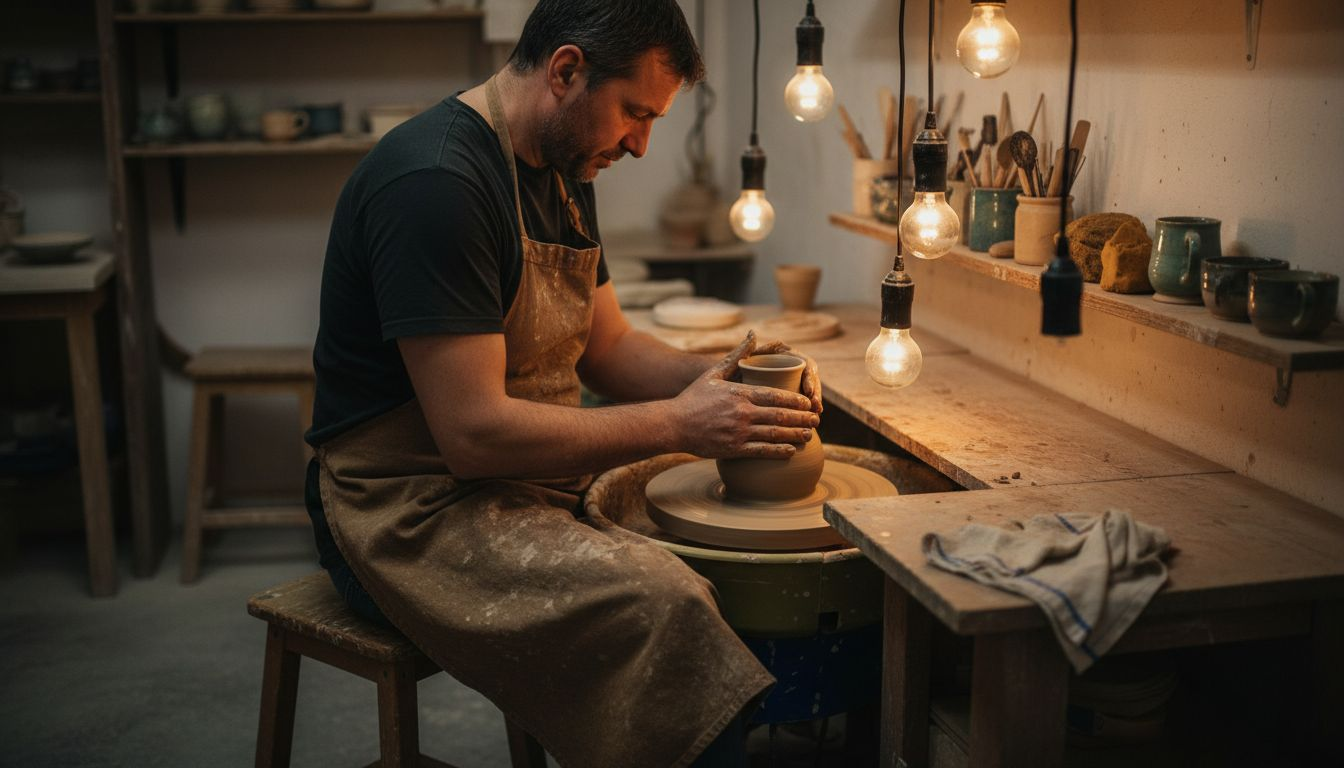
When you create something with your hands, you experience a direct connection between idea and reality. Every project teaches something new. Craft courses guide you through specific techniques, accelerating your learning and increasing confidence in your abilities.
Common craft hobbies:
- Ceramics and clay modeling
- Weaving and yarn crafts
- Woodworking and carpentry
- Jewelry and costume jewelry making
- Restoration and creative upcycling
- Macrame and braided techniques
Creative writing and journaling
Creative journaling combines words, drawings, and personal reflection. It is not a traditional diary, but a multimedia experience that helps explore your thoughts and feelings.
Creative writing in free time allows you to build stories, create characters, and develop entirely new worlds. It is a form of creativity that costs almost nothing and requires only time and concentration.
Manual hobbies transform free time into moments of true personal growth and self-discovery.
Creative cooking
Cooking is an art that combines technique, creativity, and sensory experience. Experimenting with recipes, combining unexpected ingredients, and creating personal dishes is pure creativity in your free time.
Many people find creative cooking to be both meditative and rewarding. The result is tangible, delicious, and shareable.
Professional tip: Start by exploring a hobby that genuinely attracts your attention, rather than what you think you "should" do. Creativity flourishes when you follow genuine curiosity, not when you try to conform to an expectation.
Here's a table comparing the main creative hobbies analyzed in the article based on time required, main materials, and specific benefits.
| Creative Hobby | Time Required | Main Materials | Primary Benefit |
|---|---|---|---|
| Painting and Drawing | 15-60 minutes per session | Paper, brushes, colors | Relaxation and inspiration |
| Ceramics and Modeling | 1-2 hours per project | Clay, specific tools | Manual dexterity and concentration |
| Creative Cooking | 30-90 minutes per recipe | Ingredients, kitchen utensils | Immediate satisfaction and sociability |
| Writing and Journaling | 10-30 minutes per day | Notebook, pens, PC/tablet | Mental clarity and self-awareness |
Psychological processes and benefits of creative activities
When you engage in a creative activity, something profound happens in your brain and body. It’s not just a pastime, but a process that transforms your mental and emotional state.
How the creative process works
Creativity activates specific neural circuits. When you draw, cook, mold clay, or write, your brain enters a state of deep flow, where time seems to disappear and awareness is completely focused on the task.
In this state:
- The mind stops judging and criticizing
- Connection between different brain areas increases
- Activity in the prefrontal cortex related to self-criticism decreases
- A feeling of complete absorption develops
This is when true creativity flourishes, when you don't think about the result but only about the process.
Benefits for mental health
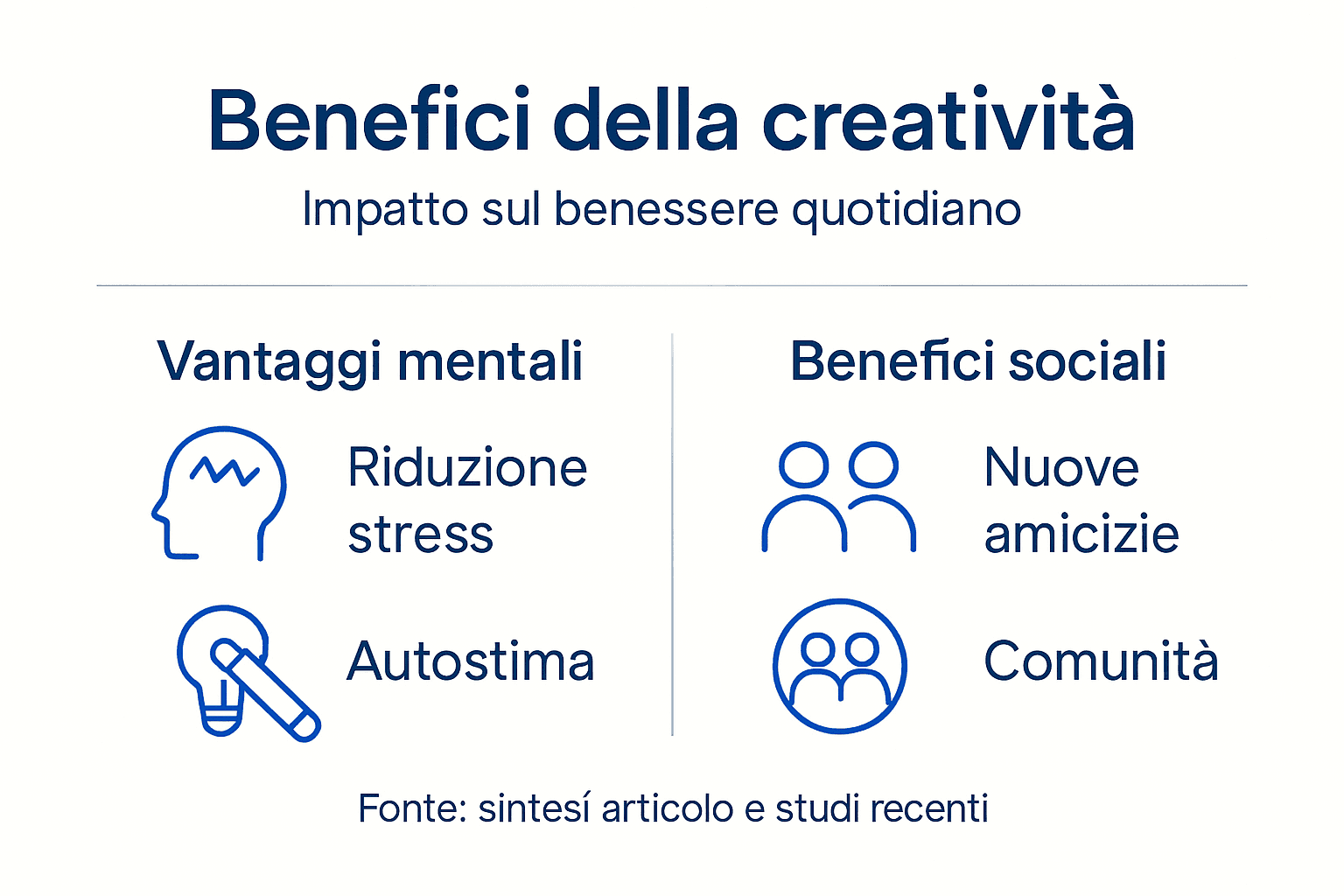
The positive effects of creative activities extend far beyond the moment you are creating. Creative activity generates significant benefits for mental health, greatly improving self-esteem and emotional balance.
These benefits include:
- Reduction of anxiety and stress
- Improvement of mood and self-confidence
- Increased personal resilience
- Greater self-awareness and emotional understanding
- Sense of control and personal capability
When you create something, you receive a profound message: you are capable. This strengthens self-esteem in a lasting way.
Self-expression and emotional processing
Creative activities offer a safe space to express what words cannot convey. Many complex emotions find an outlet through artistic creation.
This process of expression is therapeutic. You don't need to be a professional artist. What matters is the process, not the perfect outcome.
Creativity becomes a tool to combat anxiety and depression, promoting an integrated well-being that involves body, mind, and emotions.
Impact on concentration and memory
Creative activities require focused attention. When you repeatedly practice a manual hobby, your brain develops new neural connections and strengthens cognitive abilities.
This means that creativity not only relaxes you but also keeps you mentally sharp and alert.
Creativity is not an escape from reality, but a profound way to connect with it and with yourself.
Bio-psychosocial well-being
The benefits are not limited to the mind. Creativity also affects the body: it reduces blood pressure, lowers cortisol levels (the stress hormone), and improves sleep.
Socially, when you share your creative projects with others, you create authentic connections and a sense of community.
Professional tip: Don't focus on how "good" your work is. The greatest psychological impact comes from regularly engaging in the activity, regardless of the final outcome. Even 30 minutes a week of consistent creative practice generates significant changes in your mental well-being.
Social and economic impact of manual hobbies
Creative hobbies are not just a personal matter. They represent a significant economic sector and generate positive impacts on the community and society. When you choose to dedicate yourself to a manual activity, you contribute to a broader movement.
Creative economy and employment
The cultural and creative industries represent a growing strategic sector. Manual hobbies and creative activities generate jobs, from small craft businesses to workshops and specialized courses.
This means:
- Creation of direct and indirect employment
- Development of local businesses and micro-activities
- Opportunities for artisans to turn passion into a profession
- Sustainable economic growth at the local level
When you take a ceramics class or buy from a local artisan, you are funding people who have chosen to make a living from their creativity.
Urban regeneration and community cohesion
Creative spaces transform cities. Workshops, shared studios, and artist ateliers revitalize entire neighborhoods, attracting visitors and creating a sense of community.
Participation in creative hobbies is not isolated. When you attend a course, you meet people who share your interests. Friendships, collaborations, and authentic social networks are formed.
Creative activities contribute to community cohesion, making people feel part of something larger.
Cultural value and territorial identity
Every artisanal tradition represents a cultural richness. Deruta ceramics, Murano glass, Burano lace: these hobbies are not just hobbies, but living heritage that identifies entire territories.
When you learn and practice these forms of craftsmanship, you preserve and enhance local culture. You contribute to keeping alive traditions that might otherwise be lost.
Impact on tourism and local economy
Tourists seek authenticity. They come to cities to discover artisans at work, participate in workshops, and buy local handmade products.
This generates a multiplier effect:
- Tourists visit cities for creative experiences
- They discover restaurants, accommodations, and other local activities
- They spend money that stays in the community
- Local economies grow sustainably
Creativity is not a luxury, but an engine for economic and social development that benefits entire communities.
Social inclusion and educational development
Creative activities are powerful tools for inclusion. They offer spaces where different generations, backgrounds, and skills meet. Young people, the elderly, people with disabilities: everyone finds a place in creative spaces.
Educational development emerges naturally. When you learn a manual skill, you develop transferable competencies: patience, problem-solving, persistence.
Professional tip: If you are passionate about a manual hobby, consider sharing this passion with others through workshops or courses. You are not just sharing a skill; you are investing in the cohesion of your community and creating local economic opportunities.
Common risks and mistakes to avoid in creative activities
Not all obstacles in creative activities are due to a lack of talent. Often, they are avoidable mistakes that hinder progress. Learning to recognize them allows you to advance faster and with greater awareness.
Mistakes in the creative process
When creating, it's easy to fall into common traps. The lack of clear objectives is one of the main ones: without direction, your work becomes confused and unsatisfactory.
Other mistakes in the process include:
- Haste that compromises final quality
- Ignoring technical details like light and color
- Lack of continuous practice
- Fear of experimenting and taking risks
- Constantly comparing oneself to other creatives
The creative process requires patience and planning. You cannot skip fundamental steps by seeking shortcuts.
Underestimating costs and resources
A common mistake is believing that creative activities are inexpensive. In reality, materials, tools, and space have real costs that must be carefully considered.
Many beginners buy poor quality materials thinking they are saving money, then get frustrated by disappointing results. Investing in quality from the start is a long-term saving.
If you turn your hobby into an economic activity, you need to know exactly how much each piece costs to produce, otherwise you risk financial failure.
Ignoring practical and bureaucratic aspects
When a hobby becomes serious, bureaucratic issues appear. Many creatives ignore them, creating legal and fiscal problems that could be avoided.
If you want to sell your products, you need to understand:
- Tax obligations and declarations
- Insurance and civil liability
- Copyright and intellectual property
- Material safety regulations
It's not exciting, but it's essential to operate legally.
Communication and isolation
Many creatives think their work speaks for itself. In reality, no one knows you exist if you don't communicate it. Lack of visibility can cause even excellent projects to fail.
Equally important is not to isolate yourself completely. Always working alone, without sharing, receiving feedback or asking for help, slows down your personal and creative development.
Mistakes in creativity are not failures, but lessons that accelerate your learning if you recognize them promptly.
Losing sight of the fun
Sometimes the pressure to continuously improve turns a hobby into an obligation. When the fun disappears, creativity also dies. Intrinsic motivation is what sustains you in the long term.
Remember why you started. If the creative activity becomes stressful, it's time to slow down and recalibrate expectations.
Professional advice: Before starting any serious creative activity, dedicate a week to researching real costs, understanding the potential market, and clearly identifying what you want to achieve. This initial planning eliminates 70% of the mistakes you will encounter later.
Let's now summarize the main risks and the strategies to overcome them in creative activities.
| Common risk | Main consequences | Effective solution |
|---|---|---|
| Poor quality materials | Demotivation, poor results | Invest in quality basic tools |
| Lack of planning | Interrupted projects, frustration | Define simple and progressive goals |
| Creative isolation | Loss of motivation | Participate in groups or workshops |
| Neglecting bureaucracy if selling | Legal or fiscal problems | Inform yourself about regulations and registrations |
Discover How to Develop Your Creativity in Your Free Time with Unique Experiences
If creativity in your free time is the path to deeper mental well-being and a space for authentic expression, then transforming this discovery into a concrete journey can change your life. Often the biggest block is uncertainty about where to start or how to overcome the difficulties of daily creative practice. Club Joy offers you the ideal solution with a selection of workshops designed to cultivate your passion without judgment and with expert guides.
Don't wait for creativity to remain just a wish: visit the EST creative getaways4 – Club Joy section now to immerse yourself in painting, ceramics, or creative cooking experiences. Also discover the Genius Downtown’s creative escapes – Club Joy proposals that combine learning and social interaction in stimulating environments. To find paths suited to your needs, explore the Club Joy homepage and book your next experience. Start your creative journey now and add value to your free time with manual activities that improve concentration, self-esteem, and serenity.
Frequently Asked Questions
What are the benefits of creativity in your free time?
Creativity in your free time offers numerous benefits, including stress reduction, improved mood, increased self-confidence, and greater self-awareness. Furthermore, it promotes the development of personal and artistic skills.
How can I start a creative hobby?
To start a creative hobby, choose an activity that interests you and in which you want to try your hand, such as painting, ceramics, or writing. Don't worry about perfection; start with a few materials and dedicate regular time to this new experience.
How does creativity affect mental health?
Creativity has a positive impact on mental health, helping to reduce anxiety and stress, improve emotional balance, and increase personal resilience. It helps to process complex emotions and develop a sense of control over one's life.
What creative activities are most suitable for beginners?
Creative activities for beginners include drawing, painting, journaling, and creative cooking. These activities require simple materials and allow you to freely express your creativity without the pressure of the final result.