
Discover local artists and creative tourism in Italy 2026
Travel in Italy is radically changing. More and more visitors are seeking experiences that go beyond merely observing monuments and museums, instead wishing to actively participate in local culture through experiential tourism. Local artists and artisans become authentic guides who transform tourists into creative protagonists. This guide explores how creative tourism connects travelers and communities through practical workshops, collaborative artistic projects, and artisan workshops that uniquely and engagingly highlight Italy's cultural heritage.
Table of Contents
- Successful Italian Projects Combining Art, Craft, and Tourism
- How to Design Creative Tourism Itineraries Based on Local Craftsmanship
- Impact of Creative Tourism on Communities and Local Development
- Discover Creative Experiences with Club Joy
- Frequently Asked Questions about Local Artists and Creative Tourism
Key Points
| Point | Details |
|---|---|
| Active participation | Creative tourism transforms visitors from passive spectators into active participants in local cultural traditions |
| Experiential projects | Initiatives like Arti/Già/Nato demonstrate how artistic workshops create authentic connections between artisans and tourists |
| Authenticity is essential | Genuine experiences require direct collaboration with local artists and access to real cultural heritage |
| Urban regeneration | Collaborative art projects like Stramurales revitalize communities and attract conscious visitors |
| Local impact | Creative tourism generates sustainable economic benefits and preserves endangered craft traditions |
What is Creative Tourism and Why Does It Involve Local Artists?
Creative tourism represents a profound evolution in the way we travel. Unlike traditional tourism, where visitors passively observe predefined attractions, experiential tourism actively engages travelers in authentic cultural practices. Local artists play a central role as facilitators of these experiences, sharing not only their technical skills but also the stories, traditions, and cultural meanings that animate their work.
This form of tourism is distinguished by several fundamental characteristics. Exclusivity comes from access to places and processes normally reserved for insiders. Authenticity emerges from direct contact with master artisans who practice techniques passed down for generations. Uniqueness ensures that each experience is unrepeatable, shaped by the interaction between participants and artists. You can discover local creative hobbies through various methods.
Activities span a wide range:
- Ceramic workshops where you model clay using Renaissance techniques
- Painting workshops with contemporary artists in their studios
- Storytelling sessions with storytellers who preserve regional legends
- Textile craft, leatherwork, or traditional goldsmithing experiences
- Collaborative urban art projects that transform public spaces
Pro Tip: When choosing a creative experience, verify that the local artist is directly involved in teaching, not just an intermediary. The presence of the master artisan guarantees the authenticity and depth of learning you are seeking.
Local artists are not just instructors. They become cultural bridges that translate centuries of knowledge into accessible experiences. They share personal anecdotes, explain the evolution of techniques, and reveal how their work is intertwined with the community's identity. This narrative dimension transforms a simple workshop into a journey through Italian cultural memory.
Successful Italian Projects Combining Art, Craft, and Tourism
Italy hosts numerous initiatives that concretely demonstrate how local artists and creative tourism can collaborate effectively. These projects offer replicable models and inspiration for communities wishing to enhance their cultural heritage.
The Arti/Già/Nato project in Arezzo represents an excellent example of artisan revival. This initiative connects artisans, tourists, and citizens through a rich program:
- Practical workshops where participants learn traditional techniques directly from masters
- Food and wine tastings that celebrate local products and territorial culinary knowledge
- Thematic events that explore the history of Arezzo craftsmanship and its contemporary evolution
- Exhibitions that showcase the creations of local artisans and attract collectors
- Guided tours of historic workshops in the city center
The revolutionary aspect of Arti/Già/Nato lies in the active involvement of the local community. It is not a top-down festival, but a participatory process where artisans, merchants, and residents collaborate in the design. This approach ensures sustainability and territorial roots. You can explore similar opportunities through the artisan workshops available in various regions.
Another emblematic case is Stramurales in Sardinia, which demonstrates how urban art can regenerate entire territories. This project transforms small towns through monumental murals created by international artists in collaboration with local communities. The result goes beyond mere urban decoration.
“Stramurales not only paints walls, but redesigns urban identities. Each mural is born from dialogues with residents, incorporating collective memories and community aspirations. Art becomes a mirror and engine of social transformation.”
The tourist impact has been extraordinary. Towns previously ignored by traditional circuits now attract thousands of visitors annually. But the deepest value emerges in the reappropriation of public spaces by citizens and the creation of community pride. Residents become spontaneous guides, telling the stories behind each artwork and strengthening the local social fabric.
How to Design Creative Tourism Itineraries Based on Local Craftsmanship
Designing creative tourism itineraries requires a different approach from traditional tourism planning. The goal is not to maximize visited attractions, but to deepen the quality of cultural connections and participatory experiences.
Fundamental elements for authentic itineraries include territorial rootedness, where each activity reflects local cultural specificities rather than generic experiences. Privileged access to places, processes, and people not normally available to standard tourists creates distinctive value. The appropriate pace allows for assimilation and reflection, avoiding the superficiality of hit-and-run tourism. You can organize creative tours following structured principles.
Integrating artisan heritage requires direct collaboration with local masters. It's not enough to visit a workshop; active participation in the creative process is needed. An effective itinerary might include:
- Morning in a ceramic workshop where you model objects using medieval techniques
- Lunch with local producers who explain organic farming philosophies
- Afternoon with a master luthier revealing secrets of woodworking
- Evening in a contemporary art gallery with direct dialogue with emerging artists
The conditions for genuine experiences involve appropriate timing, where the duration allows for significant learning without rushing. Authentic access guarantees interaction with true cultural protagonists, not commercial intermediaries. Master artisans must be directly involved, sharing not only techniques but also passion and vision.
| Aspect | Traditional Tourism | Creative Tourism |
|---|---|---|
| Visitor role | Passive observer | Active participant |
| Local interaction | Mediated by professional guides | Direct with artists and artisans |
| Activity duration | 30-60 minutes per site | 2-4 hours for immersive experience |
| Main objective | Maximize visited attractions | Deepen cultural connections |
| Expected outcome | Photographs and visual memories | Acquired skills and human relationships |
Pro Tip: When planning a creative itinerary, always allow for unstructured free time. The most memorable moments often emerge from spontaneous conversations with artisans or casual explorations of artisan neighborhoods, not from rigidly scheduled activities.
Benefits for tourists include experiential learning that transforms abstract knowledge into practical skills. Authentic connections with local communities create deeper memories than simple photographs. Cultural enrichment comes from understanding the historical and social contexts that shape artistic traditions. For local communities, these itineraries generate income distributed directly to artisans, preserve endangered techniques, and strengthen cultural pride. Discover how to develop effective experiential offers for your area.
The design of creative tourism itineraries requires collaboration between cultural operators, local administrations, and artisans to create thematic paths that promote sustainable territorial development.
Impact of Creative Tourism on Communities and Local Development
Creative tourism supported by local artists generates profound transformations in host communities, creating benefits that go beyond mere economic growth. Understanding these impacts helps design more effective and sustainable initiatives.
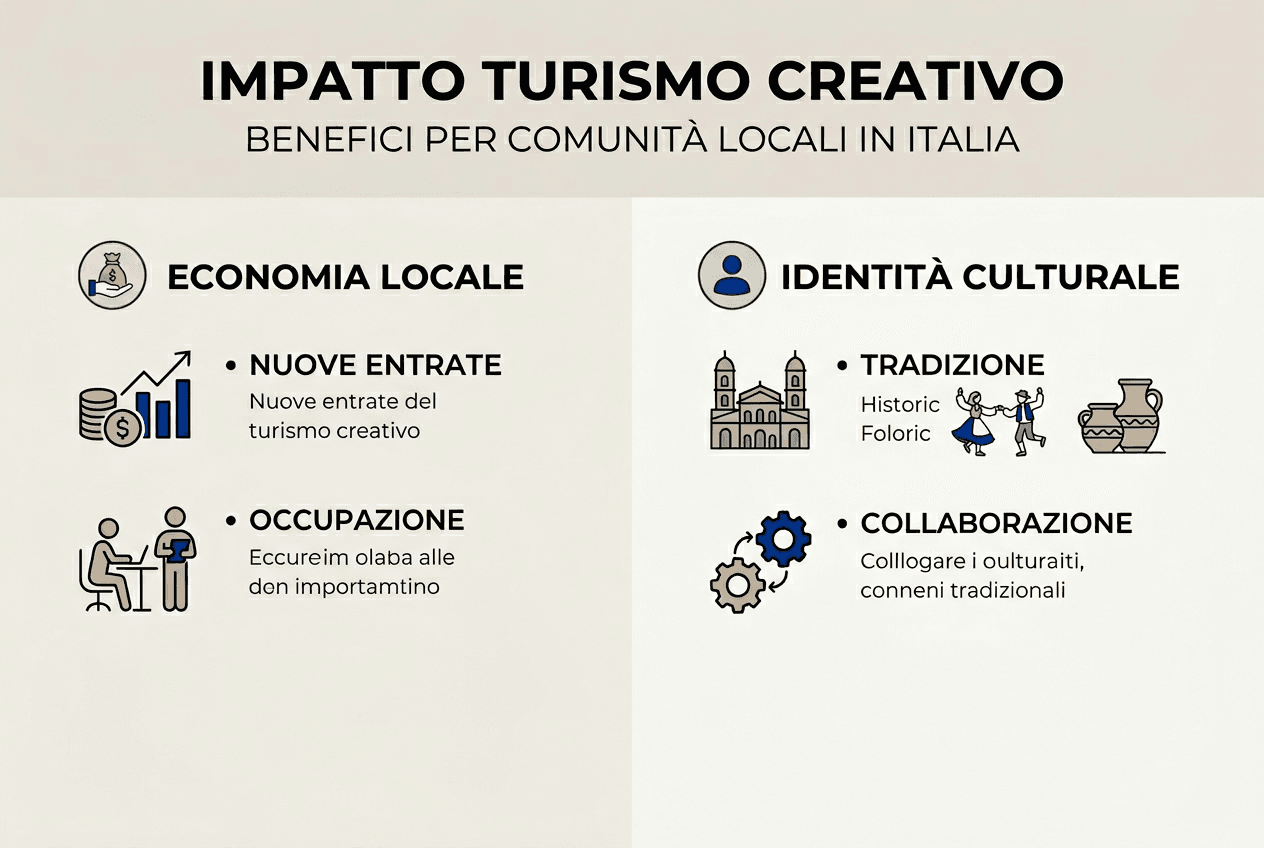
Economic benefits are manifested through diversification of income sources for artisans and artists. Many traditional masters struggle to support themselves by selling only finished products. Offering workshops and experiences creates more stable complementary revenue streams. This model allows artisans to dedicate time to transmitting skills without compromising production quality. Money remains predominantly in the local community, unlike mass tourism where profits flow to large international chains.
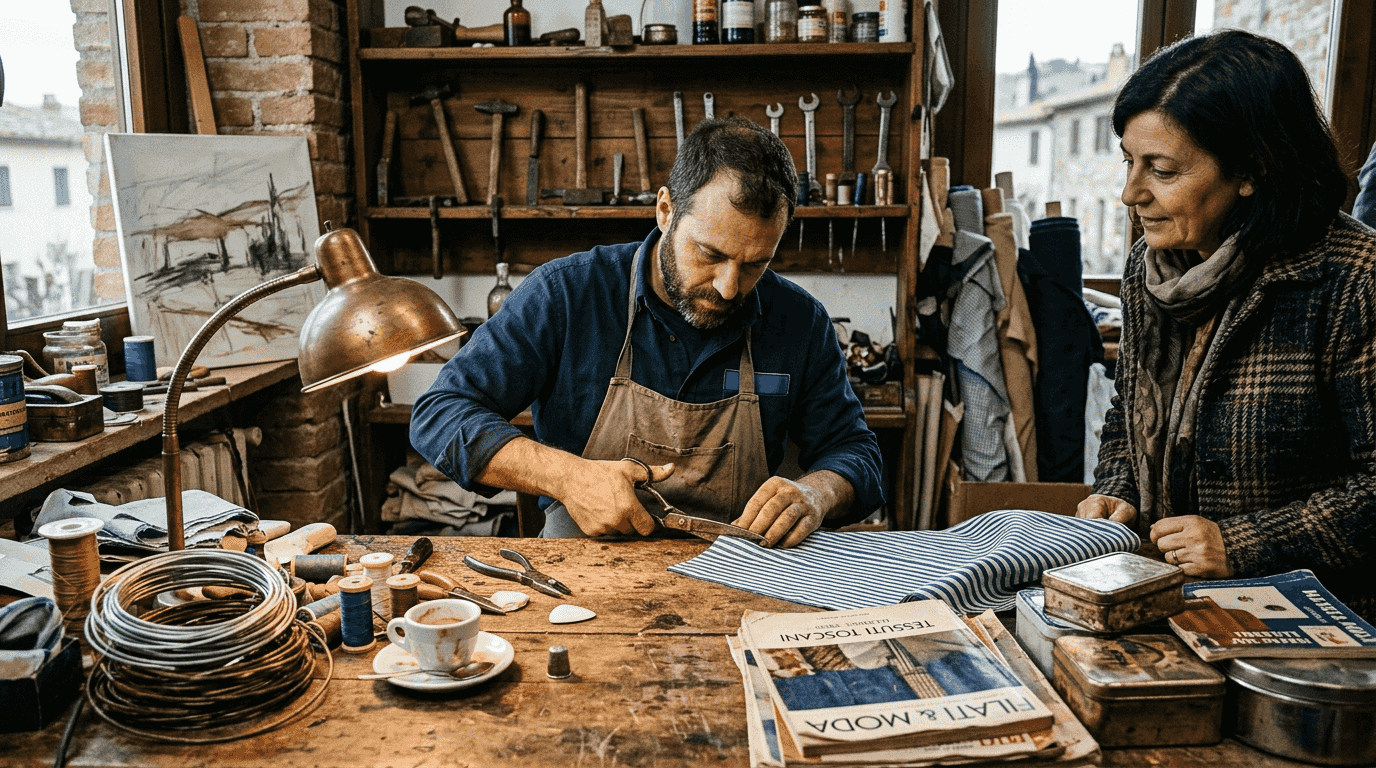
Social benefits include strengthening collective cultural identity. When artisans share knowledge with visitors, they reaffirm the value of their traditions. This process counteracts cultural erosion caused by globalization. Local youth rediscover interest in traditional crafts by seeing them valued by international tourists. Intergenerational bridges are created where elderly masters transmit skills to new generations.
Urban regeneration mediated by local art transforms degraded spaces into cultural attractions. The Stramurales project has shown how monumental murals revitalize depopulated historic centers, generating economic activity and renewed community pride. Abandoned buildings become canvases for collective narratives that attract conscious visitors.
| Impact Dimension | Qualitative Indicator | Estimated Quantitative Data |
|---|---|---|
| Economic | Increased artisan income | 25-40% through workshops |
| Social | Skill transfer | 60% of artisans train apprentices |
| Cultural | Technique preservation | 80% of traditional techniques maintained |
| Urban | Space regeneration | 15-30% increase in property value |
| Tourism | Seasonality reduction | 35% of visitors outside peak season |
However, significant challenges exist. Gentrification represents a concrete risk when tourism success increases housing costs, displacing original residents. Authentic artisan neighborhoods can transform into tourist backdrops devoid of real community life. Cultural authenticity risks dilution when experiences are simplified to meet stereotypical tourist expectations.
Collaboration among citizens, institutions, and artists becomes crucial to navigate these tensions. The San Lorenzo Workshop in Florence exemplifies participatory strategies for sustainable regeneration, where residents co-design cultural interventions that respect neighborhood identity.
Tools to mitigate negative impacts include:
- Numerical limits on participants to preserve experiential quality and reduce pressure on communities
- Involvement of residents in the decision-making process for cultural tourism projects
- Equitable redistribution of economic benefits through artisan cooperatives or local consortia
- Continuous monitoring of social indicators in addition to purely economic metrics
- Training local artists on cultural sustainability and responsible tourism management
Artisan communities demonstrate how collaborative networks among artisans, tourists, and citizens create resilient cultural ecosystems that balance economic development and identity preservation.
Discover Creative Experiences with Club Joy
If this journey into creative tourism has inspired you, it's time to turn curiosity into concrete action. Club Joy connects travelers with authentic artisan experiences across Italy, facilitating meaningful encounters with local artists who share passion and skills.
The expressive drawing workshop offers a perfect opportunity to experience the transformative power of participatory art. Guided by professional artists, participants explore expressive techniques that unleash creativity and strengthen group connections. This experience embodies the principles of creative tourism: active learning, expert local guidance, and the creation of lasting memories through doing.
If you are an artist or artisan with skills to share, consider becoming a host on the platform. Transform your passion into opportunities for cultural connection, sharing traditions with curious travelers seeking authenticity. Club Joy supports local artists in designing memorable experiences that enhance cultural heritage and generate sustainable income.
Frequently Asked Questions about Local Artists and Creative Tourism
How to find local workshops during your trip?
Look for specialized platforms like Club Joy that curate verified creative experiences with authentic local artists. Visit regional tourist offices, which often collaborate with artisan consortia to promote local workshops. Explore artisan neighborhoods where traditional workshops display signs with schedules for public workshops.
What are the advantages of creative tourism compared to traditional tourism?
Creative tourism offers experiential learning that transforms visitors into active participants, creating lasting skills beyond visual memories. It generates authentic connections with local communities through direct interaction with artists and artisans. It supports local economies by distributing income directly to traditional masters rather than large commercial chains. It preserves intangible cultural heritage by valuing endangered artisan techniques.
How to recognize an authentic and well-designed creative experience?
Verify that local artists are directly involved in teaching, not just commercial intermediaries or generic guides. Check the duration of the experience, at least two hours to allow for meaningful learning and not just a superficial demonstration. Read reviews that mention acquired skills and personal connections, not just generic entertainment. Make sure the experience includes cultural and historical context, not just isolated technical execution.
How does creative tourism support local economies?
It generates complementary income streams for artisans who struggle to sustain themselves by only selling finished products. It creates employment distributed in local communities rather than concentrated in large tourist structures. It encourages young people to take up traditional crafts by showing their economic and cultural value. It extends tourist seasons by offering indoor experiences that can be practiced all year round, reducing dependence on summer peaks.
What can I expect from engaging with local artists and artisans?
Expect to get your hands literally dirty, actively participating in creative processes under expert guidance. You will receive detailed explanations of techniques, materials, and cultural meanings that animate craft traditions. You will hear personal stories that reveal how art and craftsmanship intertwine with community identity. You will create tangible objects to take home as authentic souvenirs of your experiential learning.
How much time should I dedicate to creative experiences during a trip to Italy?
Reserve at least half a day for each significant creative experience, allowing for deep immersion without rushing. Consider alternating intensive days of traditional tourism with days dedicated to one or two in-depth workshops. Plan time buffers for spontaneous conversations with artists who often offer valuable insights beyond the formal program. The quality of learning always outweighs the quantity of superficially accumulated activities.
Recommendation
- Experiential offers: a complete guide for creatives 2026 – Club Joy
- Types of workshops in Italy: a practical guide for creatives 2026 – Club Joy
- 3 cool & creative things to do on the weekend of September 20-21 in Milan – Club Joy
- How to discover local creative hobbies and participate in workshops – Club Joy