
Meaning of Experiential Craftsmanship: Complete Guide 2026
Have you ever heard of experiential craftsmanship and wondered what it truly means? Many confuse this term with simple craft courses, but it's something far more engaging and transformative. Experiential craftsmanship represents an innovative way of learning through doing, where creativity merges with direct practical experience. This guide will take you on a journey to discover its profound meaning, the concrete benefits it offers, and how you can integrate it into your daily life or events. Get ready to discover a world where hands create, minds are freed, and relationships are strengthened through the art of doing together.
Table of Contents
- Definition and Meaning of Experiential Craftsmanship
- Benefits of Including Experiential Craftsmanship in Entertainment Events
- Examples and Cases of Experiential Craftsmanship in the Italian Context
- Use of Experiential Craftsmanship in Experiential Tourism and Entertainment
- Discover Club Joy's Expressive Drawing Workshop in the Studio
- Frequently Asked Questions about Experiential Craftsmanship
Key Points to Remember
| Point | Details |
|---|---|
| Active Learning | Experiential craftsmanship is based on direct participation and practical involvement of participants |
| Social Benefits | Fosters community building and improves relational skills through shared activities |
| Versatile Applications | Integrates perfectly into tourist contexts, corporate events, and cultural entertainment moments |
| Italian Tradition | Italy boasts a rich artisan heritage that is renewed through contemporary practical experiences |
| Personal Growth | Stimulates individual creativity and offers concrete opportunities for developing new manual skills |
Definition and Meaning of Experiential Craftsmanship
Experiential craftsmanship represents an innovative approach to manual activities that goes beyond the simple production of objects. It is a learning method that integrates creativity with practical training to actively engage participants in a process of discovery and creation. Unlike traditional craftsmanship, which often focuses on technical mastery acquired over years of practice, experiential craftsmanship emphasizes the creative journey itself.
This approach arises from the encounter between active pedagogy and artisan tradition. While the traditional artisan perfects a technique to produce goods for sale, experiential craftsmanship invites anyone to experience the creative process without the pressure of perfection. The focus shifts from the final result to the experience lived during creation. Every mistake becomes a learning opportunity, every attempt a personal discovery.
In Italy, this form of craftsmanship is experiencing a significant resurgence. People are increasingly seeking authentic experiences that allow them to detach from digital routines and reconnect with the tactile and sensory dimension of creativity. The 2026 artisan community highlights how this phenomenon is transforming the way Italians spend their free time.
The benefits of experiential craftsmanship manifest at several levels:
- Development of practical skills through direct learning guided by experts
- Stress reduction through manual activities that promote concentration and relaxation
- Creation of authentic social connections in collaborative and welcoming environments
- Enhancement of local culture and Italian artisan traditions
- Stimulation of personal creativity and confidence in one's manual abilities
This model also stands out for its accessibility. No prior skills or particular talents are needed. Experiential craftsmanship welcomes beginners and experts alike, creating inclusive spaces where learning becomes a shared adventure. The guidance of professional artisans ensures that every participant can achieve satisfying results, regardless of their starting level.
Benefits of Including Experiential Craftsmanship in Entertainment Events
Integrating experiential craftsmanship into events fundamentally transforms the quality of participants' experiences. Creative experiences for companies demonstrate how these activities increase engagement and strengthen community bonds in a measurable and lasting way. During a pottery or painting workshop, participants are not passive spectators but active protagonists of a shared creative process.
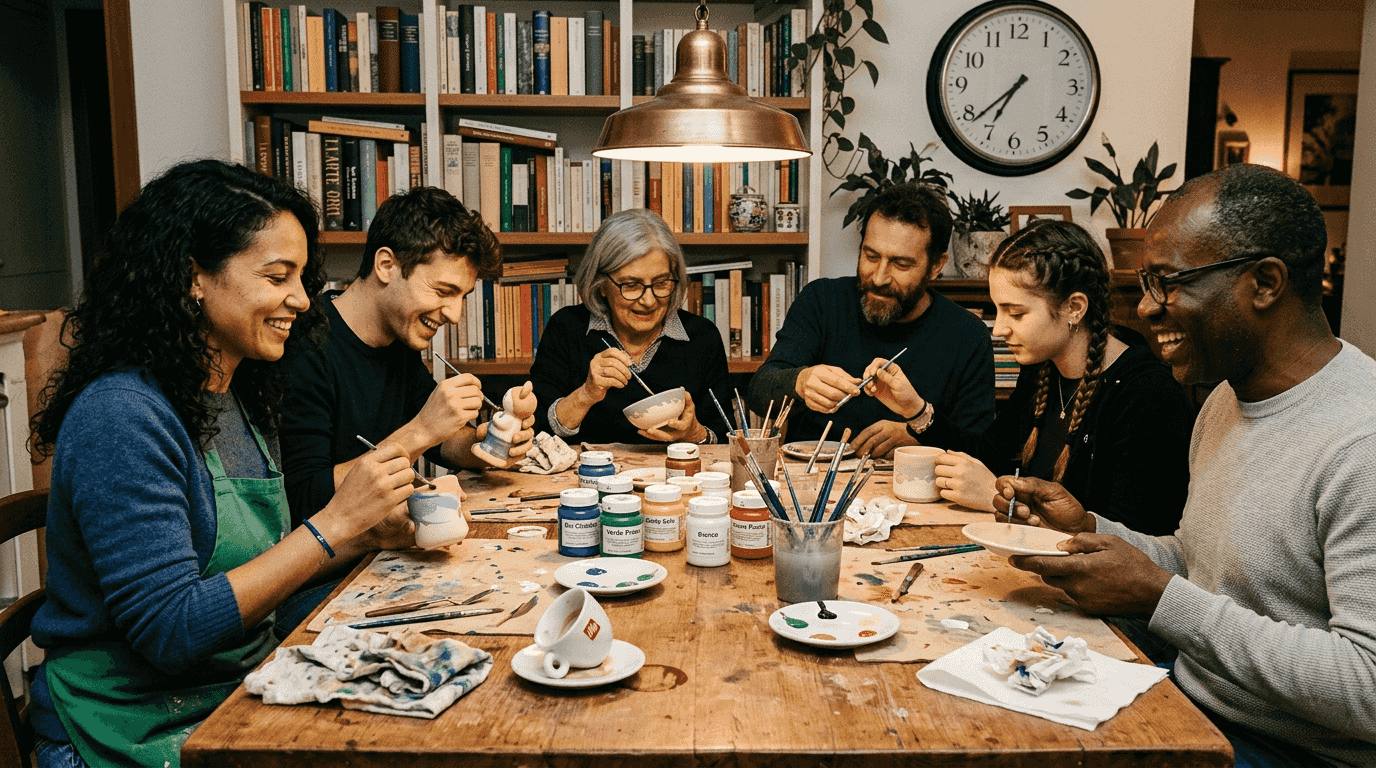
Corporate events benefit enormously from this experiential dimension. Traditional team building often turns out to be artificial and unengaging. Experiential craftsmanship, on the other hand, creates authentic situations where colleagues collaborate naturally, communicate spontaneously, and discover new aspects of each other's personalities. Working together on the creation of an object breaks down hierarchical barriers and fosters more genuine relationships.
Concrete benefits for organizers and entities include:
- Superior memorability compared to conventional events based on presentations or speeches
- Creation of authentic visual content that participants spontaneously share on social media
- Flexibility in adapting activities to groups of different sizes and compositions
- Ability to customize the experience based on the specific objectives of the event
- Tangible memory of the experience through the object created by participants
For social events such as private parties, bachelorette parties, or family celebrations, experiential craftsmanship offers an original alternative to standardized formulas. Instead of simply dining together, participants create something unique that becomes a symbol of the occasion. A jewelry workshop for a bachelorette party, for example, allows friends to create tangible memories of that special moment together.
Pro Tip: When choosing a workshop for your event, make sure the artisan offers a balance between structured guidance and creative freedom. The best craft workshops provide clear basic techniques but allow room for personal expression, avoiding both total chaos and excessive rigidity.
Even in the public entertainment sector, museums and cultural centers are integrating experiential workshops to enrich their educational offerings. After visiting an exhibition on Renaissance ceramics, visitors can directly experiment with the observed techniques, transforming theoretical knowledge into deep understanding through direct experience.
Examples and Cases of Experiential Craftsmanship in the Italian Context
Italy offers an extraordinarily rich landscape of artisan experiences that perfectly embody this approach. Ceramics represent one of the most emblematic examples: the Italian ceramic sector is 90% handmade, reflecting deep experiential artisan traditions. Cities like Faenza, Deruta, and Caltagirone have transformed this heritage into workshops where visitors and enthusiasts can get their hands dirty with clay under the guidance of master potters.
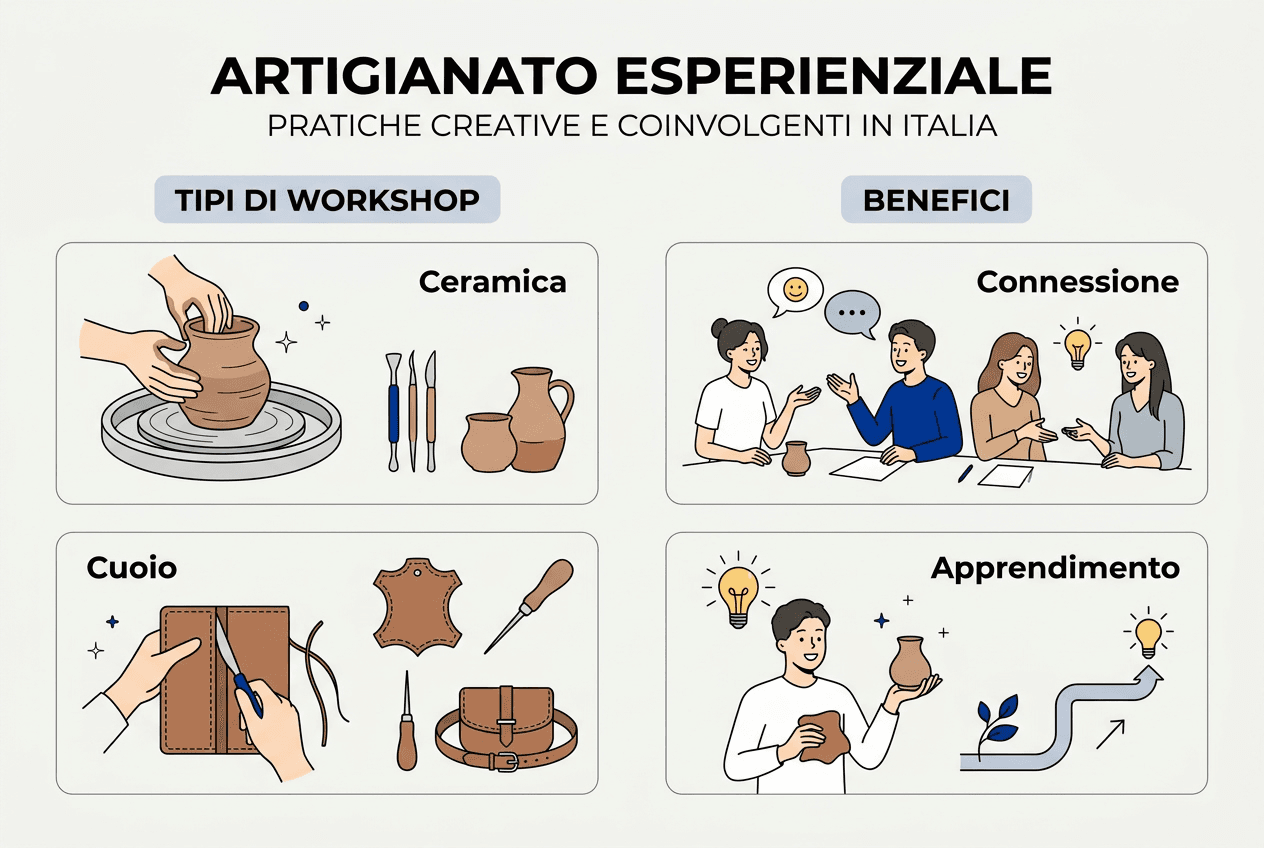
The types of workshops in Italy range from Florentine leatherworking to the creation of Venetian masks, from traditional bread making to weaving on antique looms. Each region offers unique experiences linked to its cultural heritage. In Tuscany, fresco workshops allow participants to experiment with Renaissance techniques. In Campania, lutherie workshops introduce the construction of Neapolitan mandolins.
Here is an overview of the main categories of experiential craftsmanship available:
| Type of Workshop | Typical Activities | Ideal Audience |
|---|---|---|
| Ceramics and Clay | Wheel throwing, majolica decoration, sculpture | Beginners and families |
| Textile Work | Weaving, natural dyeing, traditional embroidery | Fashion and design enthusiasts |
| Culinary Arts | Fresh pasta, bread making, regional pastry | Foodies and social groups |
| Metalworking | Jewelry making, forging, engraving | Seekers of technical challenges |
| Pictorial Arts | Watercolor, fresco, ceramic painting | Creatives of all levels |
Urban craftsmanship represents a particularly interesting contemporary evolution. In large Italian cities, historic workshops stand alongside new creative spaces where young artisans reinterpret traditional techniques with modern sensibility. In Milan, screen printing and letterpress workshops attract designers and communicators. In Rome, contemporary mosaic workshops combine ancient techniques with current aesthetics.
Some concrete examples of particularly appreciated experiential craftsmanship include:
- Murano glassblowing workshops where participants assist and collaborate in the creation of unique objects
- Lecce papier-mâché workshops that teach the Baroque technique to create decorations and sculptures
- Sardinian wicker weaving experiences that pass down millennia-old knowledge linked to pastoral culture
- Fresco courses in Umbria where natural pigments and lime supports are experimented with
- Cremonese lutherie workshops that allow the construction of small, functional musical instruments
These examples demonstrate how Italian experiential craftsmanship is not a superficial phenomenon but deeply rooted in the country's cultural richness. Each experience becomes a bridge between past and present, where centuries-old traditions are renewed through the direct involvement of new generations.
Use of Experiential Craftsmanship in Experiential Tourism and Entertainment
Italian cultural tourism is undergoing a profound transformation thanks to the integration of experiential artisan activities. Contemporary travelers are no longer just looking for monuments to photograph but authentic experiences that allow them to truly understand local culture. Artisan activities significantly enhance cultural tourism by promoting local artists and direct practical involvement.
For travelers who wish to integrate experiential craftsmanship into their itinerary, here are the fundamental steps to follow:
- Prior research into the specific artisan traditions of the chosen destination to identify authentic and meaningful experiences
- Advance booking of desired workshops, especially during high season when spots fill up quickly
- Mental preparation to abandon a hurried tourist mindset and fully immerse oneself in the creative experience
- Active interaction with the artisan guide, asking questions about the history and cultural context of the techniques learned
- Preservation of the created object as a tangible souvenir that keeps the connection with the visited place alive
Creative tourism in Italy generates direct economic benefits for local communities. When a tourist participates in a ceramics workshop in Deruta or a lace-making workshop in Burano, the fee goes directly to the artisan, bypassing intermediaries and large chains. This model supports local economies and encourages young people to continue traditional crafts that would otherwise be at risk of extinction.
Italian tourist destinations are developing integrated strategies that combine traditional cultural attractions with artisan experiences. Florence offers packages that combine visits to the Uffizi with gilding and restoration workshops. Venice proposes itineraries that alternate canal exploration with workshops in historic shops. This approach enriches the tourist experience and distributes visitor flows over wider areas, reducing pressure on the most famous sites.
Pro Tip: To identify authentic artisan workshops and avoid tourist traps, look for experiences led by artisans with permanent workshops and documented presence in the local community. Be wary of generic workshops near main attractions that offer standardized experiences. Artistic experience manuals can guide you towards quality choices.
In the entertainment sector, experiential craftsmanship is also conquering non-traditional spaces. Cultural festivals integrate areas dedicated to practical workshops. Shopping centers host artisan events to attract an audience interested in experiences beyond shopping. Even cruises and resorts include artisan workshops in their entertainment programs, recognizing the value of activities that engage mind and hands.
This phenomenon responds to a deep need of contemporary society. In an era dominated by screens and virtual interactions, experiential craftsmanship offers a concrete antidote. It reconnects people with the physical dimension of creativity, with the pleasure of creating something tangible with their own hands. For Italian tourism, this represents a formidable competitive advantage, as the country possesses an unparalleled artisan heritage that can be transformed into memorable experiences.
Discover Club Joy's Expressive Drawing Workshop in the Studio
If the idea of exploring your creativity through experiential craftsmanship has intrigued you, now is the time to act. Club Joy offers a unique opportunity with the expressive drawing workshop specifically designed for teams that want to develop creative skills in an engaging and fun way.
This workshop combines expressive drawing techniques with group dynamics that foster collaboration and mutual discovery. No prior artistic skills are needed, just the desire to get involved and experiment with new forms of visual communication. The experience takes place in a well-equipped studio where a professional artist guides the group through progressive exercises that unleash creativity and break down expressive blocks. Each participant discovers abilities they didn't know they possessed, while the team develops a shared visual language that strengthens cohesion. Book now and transform your next corporate event into a memorable creative experience.
Frequently Asked Questions about Experiential Craftsmanship
What is experiential craftsmanship?
Experiential craftsmanship is a participatory approach to manual activities where learning occurs through direct doing. It differs from traditional craftsmanship in that it prioritizes the experience of the creative process over the technical perfection of the final result.
What skills are needed to participate in an experiential craftsmanship workshop?
No prior skills are needed. Workshops are designed to welcome absolute beginners and provide all necessary guidance. The goal is creative exploration, not professional production, so anyone can participate regardless of their manual skill level.
What is the average cost of an experiential craftsmanship experience in Italy?
Prices typically range between 40 and 120 euros for 2-4 hour sessions, depending on the complexity of the technique, included materials, and duration. Specialized workshops with renowned artisans may cost more, while group experiences often benefit from reduced per-participant rates.
Is experiential craftsmanship suitable for children?
Many workshops welcome families and offer experiences adapted to the age of younger participants. Activities such as clay modeling, ceramic painting, or creating simple objects are particularly suitable for children aged 6 and up, always with adequate supervision.
How do you choose a quality experiential craftsmanship workshop?
Verify that the workshop is led by professional artisans with documented teaching experience. Read reviews from previous participants, check that the space is adequately equipped, and that the materials are of high quality. A good indicator is the presence of a permanent workshop or a portfolio of the artisan's work.
Can I organize a corporate event based on experiential craftsmanship?
Absolutely. Many artisans and specialized platforms offer packages dedicated to corporate team building. These experiences are particularly effective for improving communication, collaboration, and creativity within the group, offering an engaging alternative to conventional team building activities.