
Creative hobby trends 2026: news and workshops in Italy
In 2026, creative hobbies in Italy are experiencing a surprising transformation that challenges the idea that they are static or declining activities. New trends like cozy hobbies for well-being are attracting enthusiasts of all ages, while innovative artistic forms blend tradition and technology. From national fairs to local workshops, opportunities to develop creative skills have never been so accessible and diverse. This article explores the main new developments in the Italian creative landscape, from emerging new hobbies to unmissable events, offering a practical guide for those who wish to enrich their free time with authentic and stimulating artistic experiences.
Table of Contents
- Main trends in creative hobbies in Italy in 2026
- New creative hobbies and emerging artistic experimentations
- Fairs, workshops, and practical growth opportunities for enthusiasts
- Contrasts and cultural influences in the creative trends of 2026
- Discover creative experiences and courses in Italy with Club Joy
- Frequently Asked Questions
Key Points
| Point | Details |
|---|---|
| Cozy hobbies dominate 2026 | Activities such as knitting, bullet journaling, and painting emphasize personal well-being and relaxation |
| New experimental hobbies | Bio-art, stop-motion, and digital collage with AI combine tradition and technological innovation |
| Unmissable national fairs | Abilmente 2026 and Il Mondo Creativo offer practical workshops in Vicenza, Rome, Milan, and Modena |
| Stimulating cultural contrasts | Romantic cozy trends confront rebellious styles and contemporary digital experimentations |
| Learning opportunities | Local workshops and hobbycations allow skill development with professional artisans |
Main trends in creative hobbies in Italy in 2026
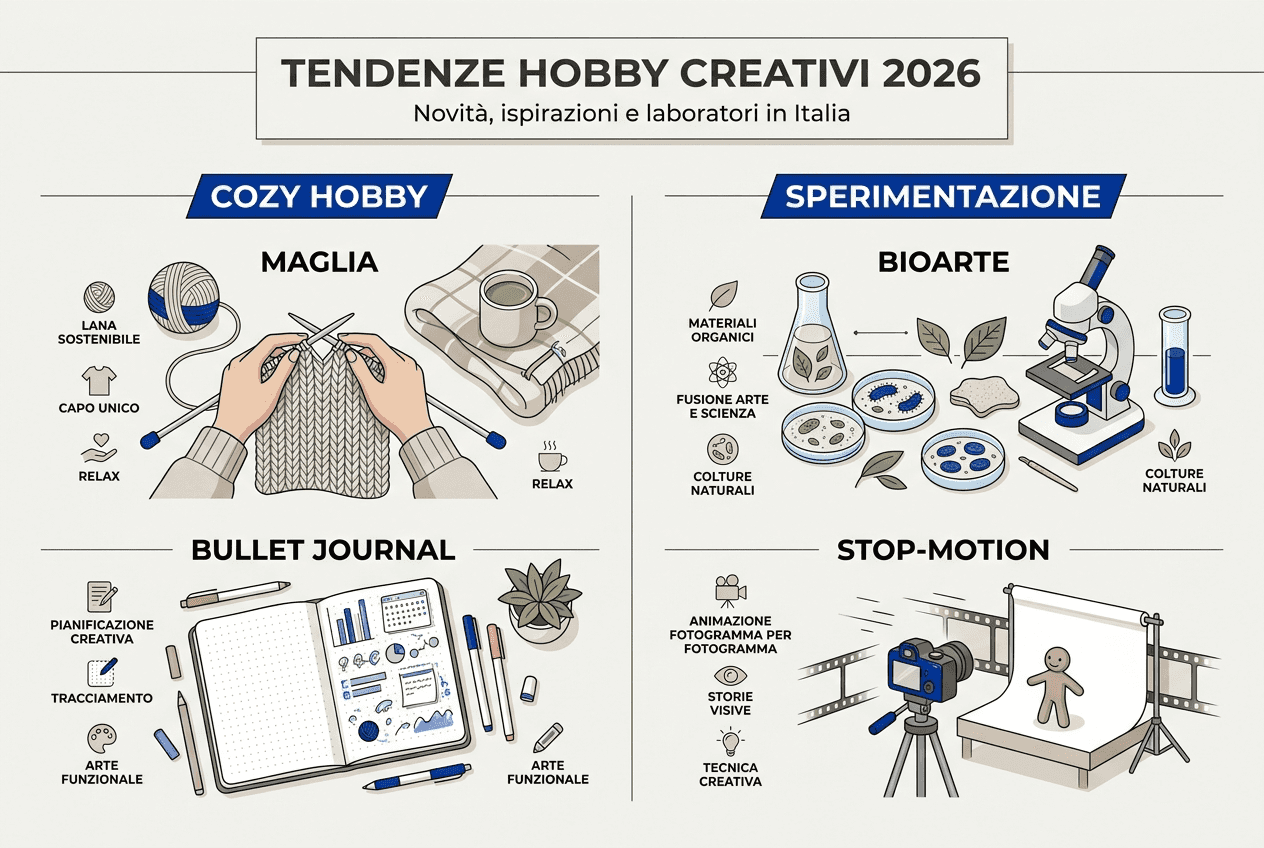
2026 marks the affirmation of cozy hobbies as a dominant cultural phenomenon in the Italian creative landscape. These activities focus on psycho-physical well-being, offering refuge from daily frenetic pace through relaxing manual practices. Knitting, crocheting, bullet journaling, painting, and indoor gardening are the preferred choices for enthusiasts seeking moments of productive calm.
These hobbies are not mere pastimes but effective tools for reducing stress and anxiety. The repetitive movements in knitting, for example, induce a meditative state similar to mindfulness. Bullet journaling combines personal organization and artistic expression, allowing individuals to track goals while exploring creativity through decorations and personalized layouts. Indoor gardening brings nature into urban spaces, creating green corners that improve air quality and mood.
Cozy activities are distinguished by accessibility and flexibility. They do not require expensive equipment or dedicated spaces, making them ideal for those living in city apartments. Many beginners start with complete kits that include materials and instructions, removing entry barriers. The Italian online community of enthusiasts shares projects, tutorials, and encouragement, strengthening the sense of belonging.
Pro Tip: Dedicate 20 minutes a day to your favorite cozy hobby to maximize the benefits on creativity and free time. Daily consistency produces better results than sporadic long sessions.
Cozy hobbies are also influencing the Italian retail market. Specialized shops and online platforms are experiencing significant growth in sales of natural yarns, quality watercolors, and houseplants. This trend reflects a collective desire to slow down, create with one's hands, and reconnect with more human rhythms in an increasingly accelerated digital age.
- Knitting and crocheting offer scalable projects from simple scarves to complex garments
- Bullet journaling customizes productivity with unique artistic elements
- Watercolor painting requires minimal investment for immediate expressive results
- Indoor gardening purifies air and improves domestic psychological well-being
New creative hobbies and emerging artistic experimentations
In addition to traditional cozy hobbies, 2026 sees an explosion of experimental creative forms that merge classic craftsmanship with contemporary technologies. Bio-art with natural dyes, stop-motion with everyday objects, non-traditional creative writing, and digital collage with AI represent the most innovative frontiers of the current Italian artistic landscape.
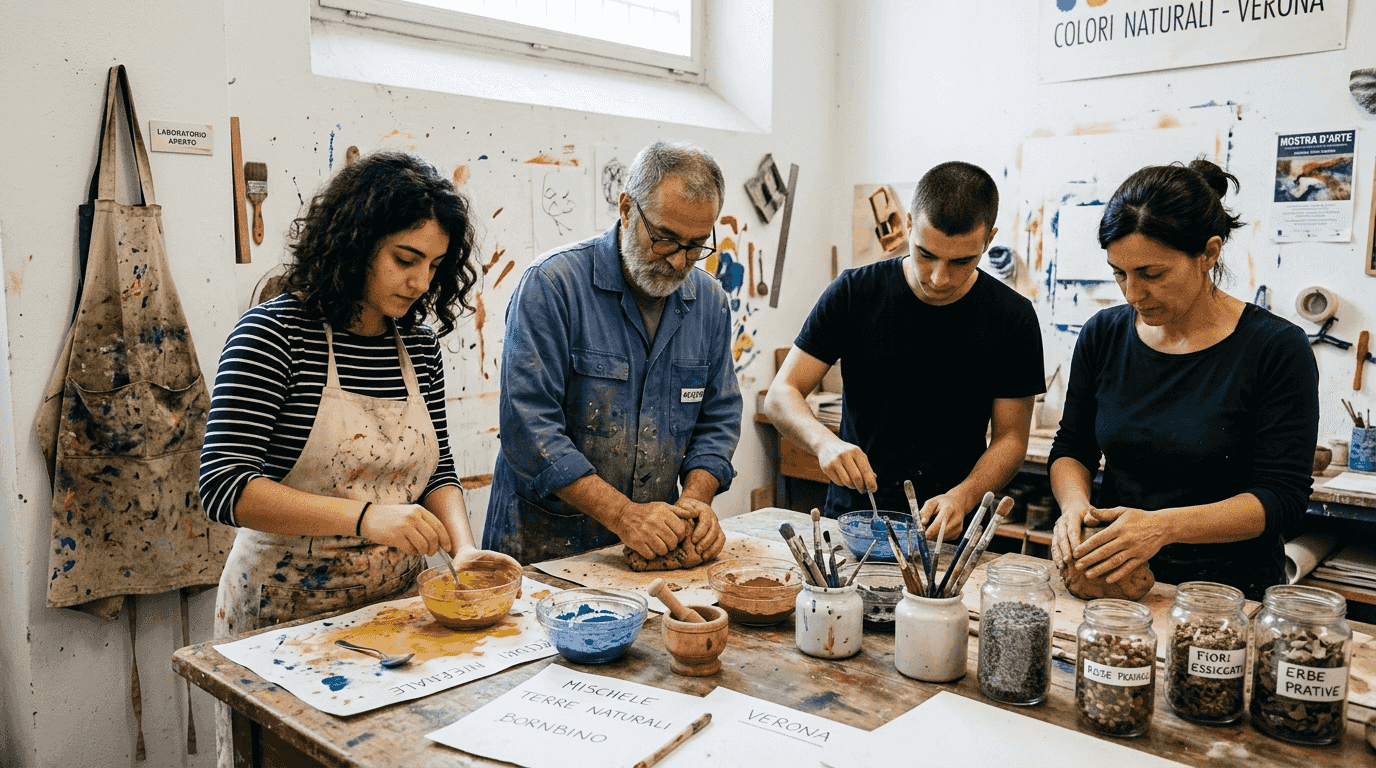
Bio-art uses organic materials and dyes extracted from plants, flowers, and minerals to create sustainable works. Artists experiment with beets for intense reds, turmeric for bright yellows, and red cabbage for blue-violet shades. This practice combines natural chemistry, visual art, and ecological awareness, attracting those who wish to reduce the environmental impact of their creations. Bio-art workshops teach extraction techniques, color fixing, and application on fabrics and paper.
Stop-motion with everyday objects democratizes cinematic animation. Using smartphones, free apps, and household materials, anyone can produce short animated films. This technique stimulates creative problem-solving, narrative planning, and patience, requiring hundreds of photos for a few seconds of video. Italian online communities organize monthly challenges where participants share projects made with pasta, Lego, or origami.
Non-traditional creative writing abandons conventional structures to explore hybrid formats. Visual poetry, micro-fiction on social media, interactive storytelling, and collaborative online writing redefine what it means to be a writer in 2026. These approaches attract young creatives who grow up immersed in a fragmented and multimedia digital culture.
AI-assisted digital collage represents perhaps the most disruptive innovation. Artificial intelligence tools generate visual elements from textual prompts, which artists combine with photographs, scans, and traditional drawings. This fusion creates a distinctive aesthetic impossible to achieve with pure analog techniques. The debate on the artistic legitimacy of AI remains heated, but enthusiasm among experimenters continues to grow.
- Bio-art teaches natural chemistry while producing unique eco-sustainable works
- Stop-motion transforms common objects into protagonists of creative animated narratives
- Non-traditional writing frees expression from rigid academic formal constraints
- AI digital collage allows compositions impossible with manual techniques alone
These ideas for artistic hobbies demonstrate how tradition and innovation are not opposites but can feed each other. Contemporary artists draw from Italian cultural heritage while embracing 21st-century tools, creating original expressive languages that reflect the complexity of the current historical moment.
Fairs, workshops, and practical growth opportunities for enthusiasts
2026 offers a rich calendar of events where enthusiasts can learn techniques, discover materials, and connect with creative communities. The Abilmente 2026 fairs in Vicenza, Rome, and Milan, along with Il Mondo Creativo Modena, represent unmissable appointments for those who wish to immerse themselves in the world of manual hobbies through practical experiences guided by experts.
Abilmente 2026 takes place in three Italian locations with programs dedicated to various creative disciplines. Vicenza hosts the spring edition, Rome the autumn one, and Milan concludes the year with a focus on emerging trends. Each fair presents hundreds of exhibitors, live demonstrations, and Edu Labs where participants create complete projects under the supervision of professional artisans. The workshops cover ceramics, weaving, scrapbooking, decoration, and much more.
Il Mondo Creativo Modena stands out for its intimate atmosphere and curated selection of master artisans. This fair prioritizes quality over quantity, offering limited-number workshops that guarantee personalized attention. Participants receive complete material kits and can take home creations made during the sessions. The event attracts an interregional audience willing to travel to access specialized teachings difficult to find locally.
Pro Tip: Book fair workshops weeks in advance because spots for the most requested courses sell out quickly. Many organizers offer early bird discounts that reduce costs by 15-20%.
In addition to national fairs, numerous Italian cities host permanent local workshops. Milan, Florence, Venice, and other metropolises offer hobbycations and weekly courses where residents and tourists learn from artisans in their studios. These immersive experiences allow individuals to explore different types of workshops suitable for absolute beginners and advanced practitioners seeking technical refinement.
| Event | 2026 Dates | City | Specialty |
|---|---|---|---|
| Abilmente Spring | March | Vicenza | Textile and decoration workshops |
| Il Mondo Creativo | May | Modena | Ceramics and painting techniques |
| Abilmente Autumn | October | Rome | Scrapbooking and paper crafts |
| Abilmente Winter | November | Milan | Innovative and digital trends |
Educational formats vary to adapt to different preferences. Small classes of 6-8 people encourage interaction and personalized feedback. Live demonstrations on central stages allow hundreds of spectators to observe masters at work, ideal for those who want to explore before committing. Pre-packaged material kits eliminate the stress of sourcing supplies, especially for beginners who don't yet know what they need.
- Identify the hobby that interests you most among the fair offerings
- Check the prerequisites required for advanced workshops before signing up
- Bring a notebook to jot down tips and techniques during demonstrations
- Connect with other participants to create a local support network
- Plan extra time to explore exhibitor booths and discover new materials
These opportunities transform passive interest into active competence, providing structure and guidance that accelerate the learning curve compared to self-study. The collective energy of hundreds of creatives gathered generates contagious enthusiasm that motivates continued practice even after the event concludes.
Contrasts and cultural influences in the creative trends of 2026
The landscape of Italian creative hobbies in 2026 is not monolithic but characterized by stylistic tensions between cozy romanticism and New Rebels rebellion, the tradition of cross-stitch and the innovation of AI collage. These contrasts reflect the generational, geographical, and ideological diversity of the national creative community, enriching the ecosystem with multiple perspectives that influence each other.
Cozy hobbies embody the search for comfort, security, and connection with natural rhythms. Pastel palettes, soft materials, and projects that require slow time attract those who desire refuge from contemporary complexity. This romantic aesthetic celebrates artisanal imperfections and sustainability values, prioritizing quality over speed. The cozy community tends to share values of care, community, and environmental awareness.
Conversely, the New Rebels movement embraces provocative aesthetics, saturated colors, and explicit political messages. These creatives use hobbies as a platform for social commentary, challenging traditional notions of what is acceptable in craftsmanship. Embroidery with feminist slogans, ceramics with explicit anatomical forms, and collages that deconstruct consumerist iconography characterize this current. The New Rebels audience skews younger and more urban, active on social platforms where visibility amplifies impact.
| Aspect | Cozy Hobby | New Rebels |
|---|---|---|
| Aesthetics | Pastel, soft, natural | Saturated, contrasting, provocative |
| Values | Well-being, community, slowness | Activism, disruption, expression |
| Techniques | Traditional with modern variations | Hybrid digital and experimental |
| Audience | Intergenerational, predominantly 30-50 years old | Young adult, 18-35 years old |
The tension between tradition and innovation is also manifested in the debate on the artistic legitimacy of technology-assisted techniques. Purists of traditional embroidery criticize the use of digital design software as a betrayal of authentic craftsmanship. Experimenters reply that every generation has adopted available tools, from the mechanical loom to the electric sewing machine. This dialogue, though sometimes heated, stimulates reflection on what defines value and authenticity in contemporary art.
"Italian creativity in 2026 lives in the productive tension between conservation and experimentation. We must not choose a side, but celebrate how both enrich our living cultural heritage."
These cultural dynamics subtly influence individual choices. An enthusiast might practice traditional cross-stitch on Sunday and experiment with bio-art on Wednesday, integrating multiple identities without contradiction. The richness of the present moment lies precisely in this accessible plurality, where local artists and creative tourism offer points of contact between different creative philosophies.
Social media amplifies the visibility of niches that historically remained isolated. Dedicated hashtags connect practitioners of obscure hobbies, creating global communities around specific interests. This connectivity accelerates the spread of techniques but also risks homogenizing aesthetics towards viral styles. Maintaining personal authenticity while participating in online conversations represents a continuous challenge for contemporary creatives.
Discover creative experiences and courses in Italy with Club Joy
If the trends and opportunities described have piqued your interest, Club Joy offers an ideal path to transform curiosity into practical skill. The platform connects enthusiasts with artist-led experiences 15 minutes from Milan and private cultural escapes that combine technical learning with immersion in authentic Italian cultural context.
Club Joy workshops cover ceramics, painting, creative cooking, and other disciplines, curated by professional artisans who share not only techniques but also the philosophy behind their work. Each experience is designed for small groups, ensuring personalized attention and the opportunity to ask specific questions. Whether you are an absolute beginner or a practitioner seeking refinement, you will find suitable proposals for your level.
The platform also facilitates the discovery of creative hobbies in your area, eliminating the barrier of searching and allowing you to focus on the most important aspect: creating. In 2026, investing time in creative development is not a luxury but a necessity for balanced well-being. Club Joy makes this investment accessible, enjoyable, and deeply enriching.
Frequently Asked Questions
What is the Abilmente 2026 fair and why participate?
Abilmente 2026 is the main Italian fair dedicated to creative hobbies, with editions in Vicenza, Rome, and Milan throughout the year. It offers hundreds of exhibitors, live demonstrations, and Edu Labs where participants learn techniques under the guidance of expert artisans. Participating allows you to discover new materials, connect with a community of enthusiasts, and complete practical projects in a stimulating environment. The workshops cover disciplines from ceramics to scrapbooking, suitable for all skill levels.
What are the new creative hobbies emerging in 2026?
Emerging new hobbies include bio-art with natural dyes, stop-motion with everyday objects, non-traditional creative writing, and AI-assisted digital collage. These activities merge traditional craftsmanship with contemporary technologies, creating innovative expressive forms. Bio-art uses organic materials for sustainable works, while stop-motion democratizes cinematic animation. Unconventional writing explores hybrid digital formats, and AI collage combines algorithmically generated elements with manual techniques.
Where to find workshops and courses for creative hobbies in Italy in 2026?
Workshops and courses are primarily found at national fairs such as Abilmente and Il Mondo Creativo, which host intensive workshops during events. Many Italian cities also offer hobbycations and weekly courses in local artisan studios, particularly in Milan, Florence, Venice, and Monza. Platforms like Club Joy facilitate the discovery of creative opportunities in your area, connecting enthusiasts with experiences guided by professionals. Workshops range from single sessions to continuous training programs for in-depth skill development.
How to choose between cozy hobbies and more experimental creative activities?
The choice depends on personal goals and creative temperament. Cozy hobbies like knitting and bullet journaling prioritize relaxation, meditative repetition, and immediate tangible results, ideal for those seeking well-being through calming routines. Experimental activities such as bio-art or digital collage appeal to those who wish to explore expressive boundaries, embrace the uncertainty of the creative process, and want to master emerging technologies. Many practitioners integrate both approaches, alternating relaxing projects and innovative experiments according to mood and available time.
What materials are needed to start with the most popular cozy hobbies?
For knitting and crochet, you need knitting needles or a crochet hook in appropriate sizes and medium-weight yarn, with an initial investment under 20 euros. Bullet journaling only requires a dotted notebook and colored pens, expandable with washi tape and stencils. Watercolor painting requires a basic set of paints, synthetic brushes, and specific paper, available in beginner kits for 30-40 euros. Apartment gardening starts with resilient plants like pothos or sansevieria, pots with drainage, and universal potting soil. All these hobbies allow for gradual expansion of equipment as skills grow.