
Craft workshops: a guide to choosing the perfect experience
Finding the right artisan workshop among hundreds of creative offerings can seem complicated. Whether you want to explore pottery, work with leather, or learn ancient weaving techniques, the choice depends on personal interests, experience level, and creative goals. This article will guide you through practical criteria and concrete ideas to identify the manual activity best suited to your needs in 2026.
Table of Contents
- Criteria for Choosing Artisan Workshops
- Popular Artisan Workshop Ideas in 2026
- Comparing Artisan Workshops: Features and Benefits
- Tips for Choosing and Making the Most of an Artisan Workshop
- Discover Our Artisan Workshops on Club Joy
- FAQ
Key Points
| Point | Details |
|---|---|
| Accessibility for all | Artisan workshops welcome participants of all ages and experience levels, from beginners to experts. |
| Value of traditional techniques | Italian workshops preserve ancient crafts through immersive and hands-on experiences. |
| Economic and social impact | Italian craftsmanship involves 1.3 million businesses with strong innovative value. |
| Concrete creative benefits | Participating in workshops stimulates creativity, practical skills, and authentic social connections. |
| Diversified offerings | You can choose from pottery, leatherwork, weaving, painting, and many other artisanal disciplines. |
Criteria for Choosing Artisan Workshops
Choosing the right workshop requires attention to several key factors that will determine the quality of your experience. The first element to consider is your preparation level: many workshops welcome beginners without prerequisites, while others cater to those who already possess basic skills. Benedetta Bruzziches' School confirms that workshops are suitable for people with varying experience, requiring only curiosity and a desire to learn.
The teaching method represents another crucial aspect. Verify that the workshop offers a practical approach where you learn by doing, not just by watching demonstrations. Experiential learning accelerates skill development and makes the experience memorable. Duration matters: some workshops are intensive over a weekend, while others extend over several days, allowing for in-depth exploration of complex techniques.
Pro Tip: Before enrolling, contact the organizer to clarify which materials are included and which you will need to bring yourself. This avoids surprises and allows you to prepare adequately.
Also, evaluate thematic compatibility with your interests. If you love fashion and accessories, a leatherworking workshop might be ideal. Those who prefer more contemplative activities will find satisfaction in pottery or weaving. Finally, consider whether you want an individual experience to concentrate fully or a shared activity with family and friends. Some workshops are specifically designed for groups and offer collaborative dynamics that enrich learning.
These criteria will help you filter options and quickly identify the workshops most aligned with your expectations. To further explore the characteristics of the best workshops, discover how to choose practical art workshops in the Italian context.
Popular Artisan Workshop Ideas in 2026
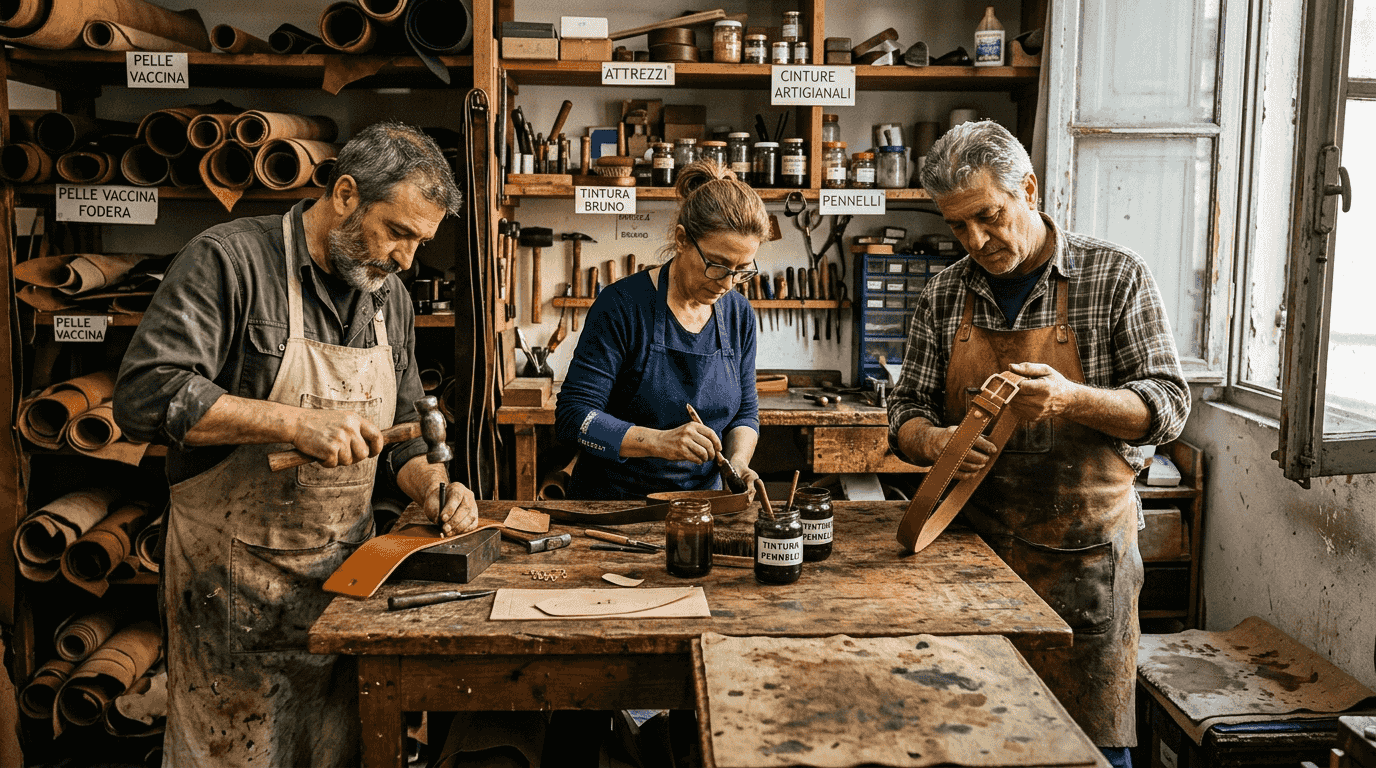
Leatherworking workshops are experiencing a true renaissance. These workshops teach traditional techniques such as raw-edge cutting, stitching, and bag making in two days, allowing participants to return home with a unique, personally crafted accessory. The direct contact with natural materials and the skill required in hand-stitching make this experience particularly rewarding for those seeking an activity that combines aesthetics and functionality.
Weaving represents another fascinating option. Loom weaving workshops are perfect for families and all ages, offering a direct link to ancient traditions. Handling threads, choosing colors, and watching fabric take shape under your hands creates an immediate sense of accomplishment. These workshops combine cultural history and manual skill in an experience accessible even to the youngest.
Pro Tip: Many workshops include an initial design phase where you sketch your object before creating it. Take advantage of this moment to express your creative vision without fear.
Other highly sought-after workshops include:
- Pottery and wheel throwing: shaping clay develops coordination and patience, with tangible results you can use daily.
- Expressive painting and drawing: ideal for those who want to explore visual creativity without rigid technical constraints.
- Basic woodworking: building small wooden objects teaches precision and practical problem-solving.
- Jewelry making: from metalworking to stone setting techniques for personalized accessories.
- Artisan printing: from screen printing to botanical printing to create decorative fabrics and papers.
These activities reflect a growing desire to reconnect with authentic production processes. Many participants seek alternatives to digital pastimes, finding in artisan workshops an effective antidote to daily stress. If you want to explore other creative possibilities, discover six types of craft courses to develop creativity suitable for different personalities.
Comparing Artisan Workshops: Features and Benefits
To simplify the choice, it is useful to compare different types of workshops according to objective parameters. The following table highlights key features, ideal audiences, and distinct advantages of some popular options.
| Workshop Type | Typical Duration | Required Level | Ideal Audience | Main Benefits |
|---|---|---|---|---|
| Leatherworking | 2 intensive days | Beginner | Creative adults | Professional skills, usable finished product |
| Loom Weaving | 4-6 hours | None | Families, all ages | Historical connection, intergenerational activity |
| Pottery and Wheel Throwing | 3-4 hours per session | Beginner | Individuals or couples | Active meditation, personalized functional objects |
| Expressive Drawing | 2-3 hours | None | Groups, corporate teams | Creative unblocking, visual communication |
| Basic Woodworking | 1 day | Beginner | Adults interested in DIY | Transferable practical skills, autonomy |
In addition to technical aspects, artisan workshops offer significant psychological and social benefits. Developing manual skills boosts self-esteem and provides a concrete sense of accomplishment. Interaction with other participants creates authentic socialization opportunities, different from the superficial connections typical of social media.
The Italian artisan sector involves 2.5 million employees and represents an economic pillar with a strong innovative vocation. Participating in workshops also means supporting this vital ecosystem and contributing to the preservation of traditional knowledge. Many workshops collaborate with local master artisans, ensuring authenticity and quality of teaching.
When evaluating options, also consider practical aspects such as location, overall cost, and equipment provided. Some workshops include all materials in the price, others require separate purchases. Geographical location influences accessibility: workshops in historic centers offer a unique atmosphere but may present logistical challenges. To better understand the community value of these experiences, read about artisan community, experiences, and social benefits.
Tips for Choosing and Making the Most of an Artisan Workshop
Mental preparation matters as much as material preparation. Approach the workshop with an open mind and a willingness to accept imperfections in the learning process. Learning by doing is the fundamental component for developing authentic artisan skills, so expect to make mistakes and consider them an integral part of the experience.
Pro Tip: Bring a notebook to jot down techniques, proportions, and instructor tips. These notes will become invaluable when you want to replicate the activity at home.
Here's a practical sequence to maximize the value of your workshop:
- Research the artisan or organizer: check reviews, portfolios, and credentials to ensure you are entrusting yourself to competent professionals.
- Clarify personal goals: do you want to learn a new technique, create a specific object, or simply relax creatively?
- Prepare targeted questions: instructors appreciate curious participants who are actively involved in the process.
- Document the process: take photos of intermediate stages to later study techniques and sequences.
- Connect with other participants: sharing experiences enriches learning and can lead to future collaborations.
- Practice after the workshop: dedicate time in the following days to consolidate what you've learned before the concepts fade.
During the workshop, interact frequently with the instructor. Master artisans possess tacit knowledge acquired over decades of practice, much of which emerges only through direct dialogue. Do not hesitate to ask for repeated demonstrations of complex steps: deep understanding requires time and repetition.
Approach each phase of the workshop with complete mindfulness. From initial design to final finishing, each moment offers unique learning opportunities. Haste is the enemy of quality craftsmanship: respect the natural timing of materials and processes. To delve deeper into effective learning strategies, consult the practical guide to artistic experiences with advice contextualized to the Italian landscape of 2026.
Discover Our Artisan Workshops on Club Joy
If this guide has inspired you to explore the world of creative workshops, Club Joy offers selected artisan experiences in various Italian cities. You can create a ceramic vase by shaping clay with your hands under the guidance of expert potters, or participate in an expressive drawing workshop in a studio, perfect for corporate teams looking to strengthen collective creativity.
Our experiences are designed for people of all levels, from families seeking shared activities to professionals wanting to develop new manual skills. Each workshop includes materials, tools, and continuous support from qualified artisans. If you possess crafting skills and want to share your passion, become a host on Club Joy and connect with a community of manual creativity enthusiasts across Italy.
FAQ
Which artisan workshops are best suited for beginners?
Many workshops are designed specifically for those with no prior experience. Workshops like leatherworking welcome beginners, requiring only curiosity and a willingness to learn. Look for workshops that specify "no prerequisites" and offer individual support during the practical phases.
How can I involve the whole family in craft activities?
Numerous workshops are designed for intergenerational participation. Weaving workshops are ideal for families because they combine accessible manual activities with engaging educational moments. Look for offerings that explicitly state "family-friendly" or specify low minimum ages.
What are the benefits of craftsmanship for young people today?
Craftsmanship offers young people concrete skills and real professional opportunities. Over 4 million young Italians show interest in the artisan sector as a path for personal and professional growth. It develops practical problem-solving, aesthetic sense, and transferable entrepreneurial skills.
What is the average cost of artisan workshops?
Prices vary significantly based on duration, materials, and complexity. Short workshops of 2-3 hours start from 40-60 euros, while intensive multi-day workshops can cost 200-400 euros. Many include all materials and the finished item you take home, making the investment proportionate to the value received.
Can I turn an artisan hobby into a professional activity?
Absolutely yes. Many professional artisans started by participating in workshops as a hobby. The path requires constant practice, in-depth technical knowledge, and the development of entrepreneurial skills. Consider attending advanced workshops, seeking mentorship with master artisans, and gradually building a portfolio before launching professionally.